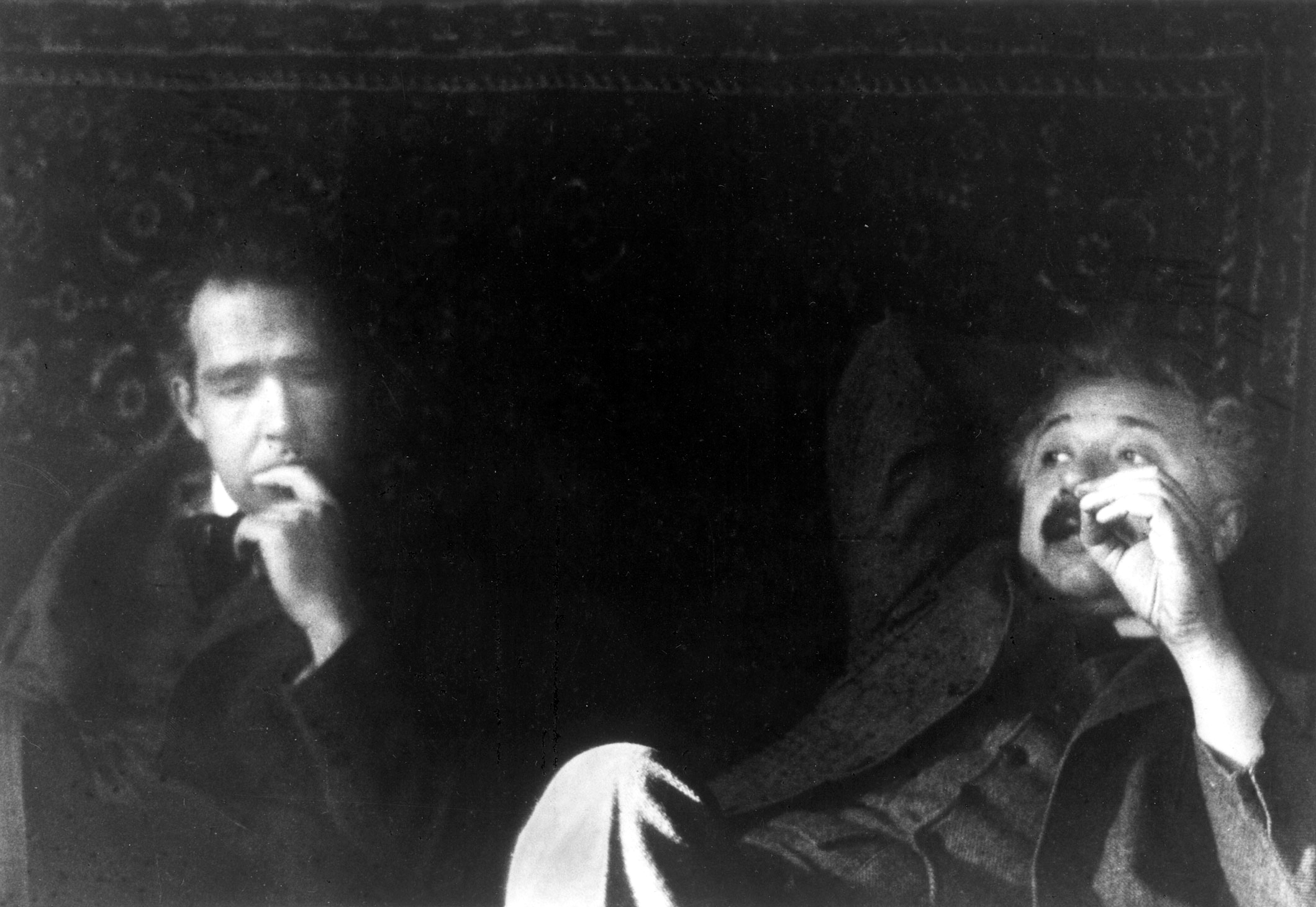
Book Review: Five Billion Years of Solitude

As long as humans have roamed the Earth, they have looked up to the skies, speculating and pondering about the celestial wonders populating the distant cosmos. From the early astronomers and natural philosophers until today’s (including me), people have observed and studied the billions of twinkling dots, all the while wondering whether there are other worlds out there and whether they might host lifeforms like us.
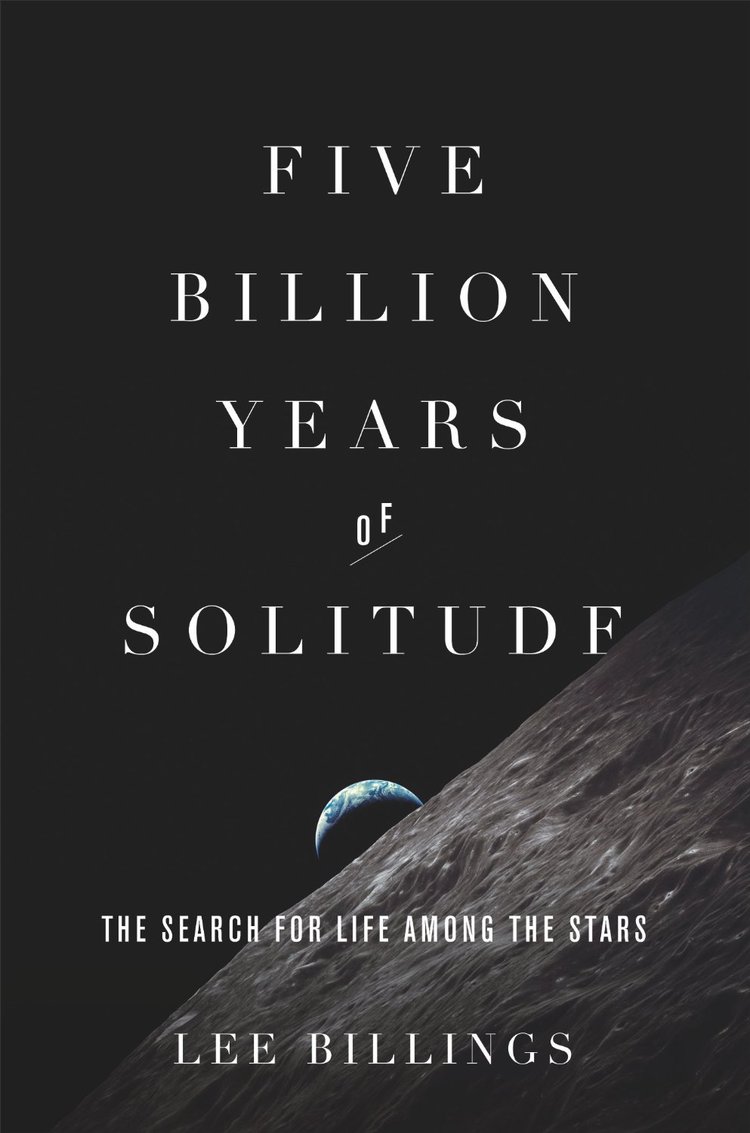
FiveBillionYearsofSolitude

In his first book, “Five Billion Years of Solitude: The Search for Life Among the Stars,” Lee Billings explores these and related questions. He chronicles the story of space exploration, planet-hunting and the growing field of astrobiology, while meeting fascinating characters and discussing their research, telescopes, discoveries and challenges. He offers clear and compelling explanations, such as of planetary physics and habitability, and he takes important asides into debates on space exploration budgets and the fate of our own planet, including the ongoing climate change crisis.

Billings is a talented science journalist. Like his work for Scientific American and other publications, the book is excellently written and researched. It won the 2014 American Institute of Physics science communication award in the book category, announced at the American Astronomical Society meeting in January.

Over the course of the book, Billings tracks down and speaks with important figures in planetary astronomy. He begins with Frank Drake, who along with nine other scientists in 1961 attempt to quantify the abundance of life-supporting planets in the galaxy in a calculation now known as the Drake Equation. He also meets with other astrophysicists, including University of California, Santa Cruz professor Greg Laughlin, Space Telescope Science Institute director Matt Mountain and MIT professor Sara Seager.

Since the time-scale or life-time of civilizations plays a role in the Drake Equation, his investigations lead to an examination of our own history and the longevity of humanity on Earth. Billings discusses the planet’s changing climate and other looming threats, for which our society appears unprepared. His reporting takes him to southern California too, where he quotes from my former colleague, UC San Diego physicist Tom Murphy, who considered the question of growing global energy consumption.

Other important questions come up as well. How far away are planets beyond our solar system and how long would it take to get there? What kind of atmospheric, geological and climatic conditions must a habitable planet have? How do astronomers detect planets, when they are so small, so faint and so close to their brightly glowing suns? What are our prospects for finding more Earth-like planets?

And what will happen to the Earth and humankind—if we’re still around—over the next few billion years, as our sun brightens, expands and transforms into a red giant star? As Billings starkly puts it in his interview for The Atlantic, “We may have—we may be—the only chance available for life on Earth to somehow escape a final, ultimate planetary and stellar death.”
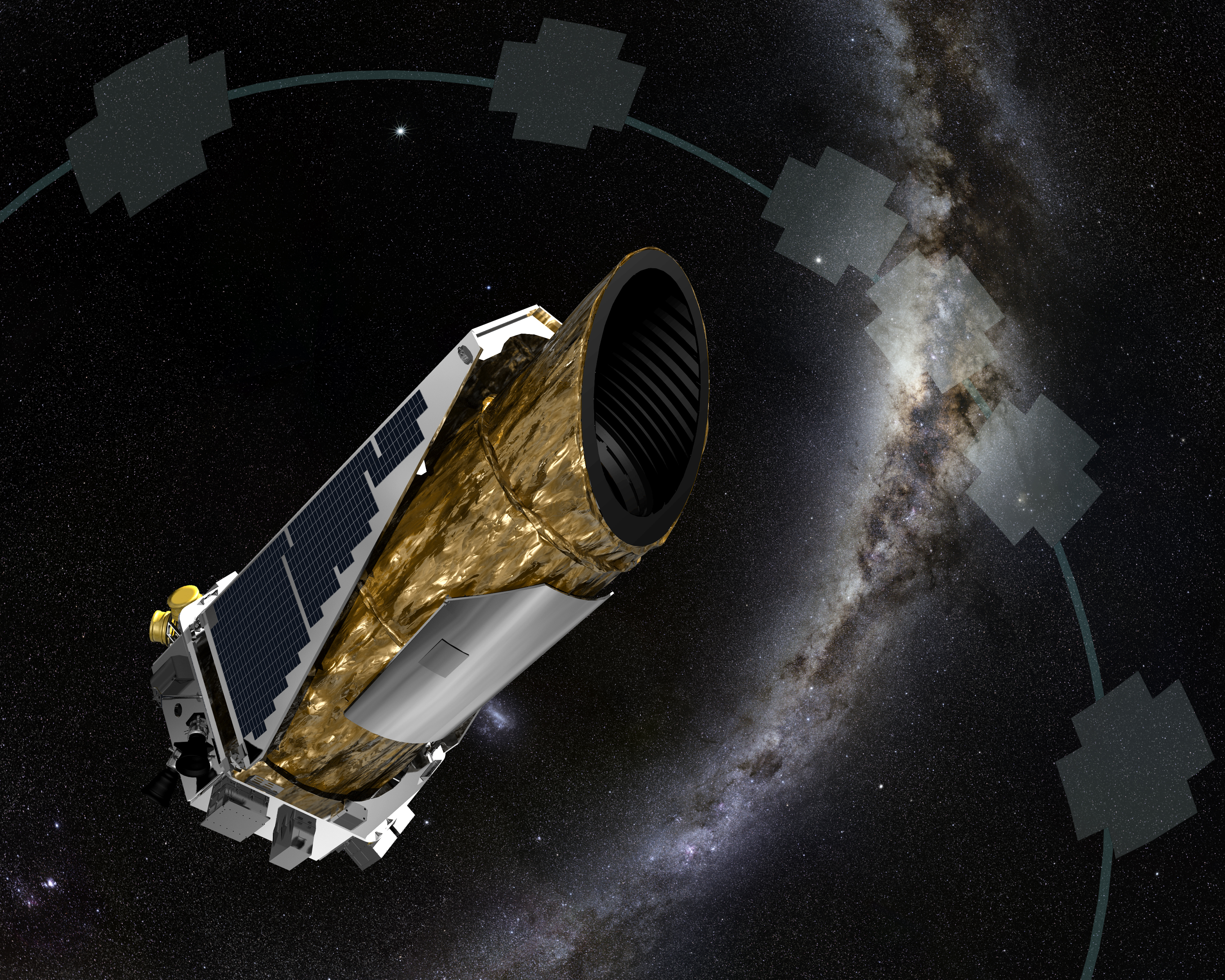
Artist's conception of NASA's Kepler spacecraft. (Image credit: NASA/Ames/JPL-Caltech)

Artist’s conception of NASA’s Kepler spacecraft. (Image credit: NASA/Ames/JPL-Caltech)

With the Kepler telescope, we have the good fortune to be living at a time when actually Earth-like worlds, not just super-Earths and gas dwarfs, can be identified. Astronomers have already used the telescope to find a few potential Earth cousins, which have the right size and the right “Goldilocks” distance from their stars, and many many more candidates are on the horizon. Under certain conditions, follow-up observations can measure the planets’ atmospheres and climates to further assess their habitability.

It’s an exciting time! With even more advanced planet-finding telescopes coming up, such as the Hubble successors, the James Webb Space Telescope and High-Definition Space Telescope, we can look forward to more detailed images and observations of exoplanets in the near future. Maybe Earth has twins and maybe we are not alone.

I have a few criticisms of Five Billion Years, but they’re very minor ones. I liked the analysis of federal budget debates at multiple points in the book, but Billings could have written a little more about why as a society we should prioritize space exploration and astronomical research. If, say, a member of the House Science Committee (or more likely, their staffer) were to read this, it would be helpful to spell that out. Early in the book, he provides an engaging historical survey of astronomy, but he neglected Eastern contributions, such as from Persians, Arabs and Chinese. A few chapters meandered quite a bit too, but I enjoyed his writing style.

In any case, this is a beautifully written and thoroughly researched book, and I recommend it. Billings puts the search for extraterrestrial life in a broader context and pushes us to think about our place in the vast universe. The story continues.

[P.S. I’m extremely busy these days with the UC Santa Cruz science communication program and writing internships, so I may write posts here less often. But I will link to pieces I’ve written elsewhere, which have the benefit of rigorous editing, so if you like my blog, you’ll like them even more.]

My Surprising and Exciting Journey from Scientist to Science Writer

I’ve been drawn to science since I was a kid. I had many excellent and creative teachers along the way, including one who taught us students to be more observant and to think critically and another who smashed bowling balls into desks and who ran into a wall (while wearing pads and a helmet, of course) to demonstrate momentum conservation. I grew up in Colorado, and I enjoyed gaping at the Milky Way and the beautiful night sky while in the Rockies, even if I couldn’t name many constellations. Carl Sagan’s Cosmos program and the Star Trek TV shows also inspired me to explore astrophysics later in life.

Milky Way over Great Sand Dunes National Park, Colorado. (Photo by Carl Fredrickson)

Milky Way over Great Sand Dunes National Park, Colorado. (Photo by Carl Fredrickson)

But my head isn’t always in the stars. I have many other interests too, including sociology, political science and philosophy of science, and I’ve always enjoyed literature and poetry too. I’m not just interested in doing science and analyzing datasets and phenomena; that, by itself, is not enough. I also desire to use science and critical thinking to help people and connect with them. Since science plays such an important role in human society, I’d like to communicate scientists’ research and debates and the scientific process as well as I can. While the behavior of neutrinos, ice sheets and red pandas might sound interesting, for example, we always have to ask, why are they important? What do scientists claim to have learned about them and how did they learn it? What are the broader implications and context for the research?

Ever the lifetime student, a couple years ago I thought I might become an absent-minded, nerdy, activist professor, maybe widening my scope beyond astronomy and physics into interdisciplinary research and public outreach. But then I realized that I wanted to do more. I examined many interconnections between science and policy—often posting about them on this blog—and I investigated ways I could utilize and develop my science writing skills. I earned fellowship opportunities in both science writing and science policy, and I considered going on both directions. As the head of our astrophysics and space sciences department told me while I mulled over the options, “Those aren’t actually that different. They both involve communicating science to people who might not understand it well.”

In the end, after fifteen years working as a Ph.D. student, teaching and research assistant, postdoctoral researcher, research scientist and lecturer, I decided that I would make the shift and become a science writer! It’s a big step, and I felt a bit nervous about it. Now that I’ve made the decision, I am happy and excited to be trying something new, and I look forward to improving my skills and working on it full-time.

For those of you considering working in science writing or science policy, or for those of you just interested in learning more, I am happy to help. In any case, here are a few suggestions and pieces of advice, which will be particularly relevant for you if you’re coming from a science background as I did.

First, I recommend becoming involved in public outreach and education programs. You may even decide to organize your own events. Just connect to people in whatever ways work well for you, such as speaking in local school classrooms, making demonstrations for students at your university, mentoring prospective students, interacting with members of the public at museums and planetaria, talking to people at cafes and pubs (such as Two Scientists Walk into a Bar, Astronomy on Tap, and other programs), etc.

Second, become more involved in and volunteer for the relevant professional scientific societies, such as the American Astronomical Society, American Physical Society, American Geophysical Union, etc. Be more than just a card-carrying member. All of these societies, and especially the American Association for the Advancement of Science (AAAS), have many useful resources, scholarships and internships at your disposal.

Third, it is crucially important to talk to a variety of people who work in science writing or science policy (or whatever you might be interested in), get involved and try it yourself. Make sure that you don’t merely like the concept of it but that you actually enjoy and excel at doing it. You will need to make the time to do this. You may find new people in your own college, university or community working in these professions who have much to teach you. Try a variety of media and styles too, possibly including social media, blogs, podcasts, news articles, feature stories, videos, etc. If you’re curious about what I’ve done over the past year or so, look here.

Fourth, check out professional science writing organizations. In particular, I recommend looking up the National Association of Science Writers, the Society of Environmental Journalists and the Association of Healthcare Journalists. Furthermore, you might find useful local organizations too. (We have the San Diego Press Club here, for example). Science writing workshops, such as those in Santa Fe, New Mexico and in Banff, Alberta, could be beneficial for you and could introduce you to others like yourself who are also just starting to venture into the profession. Finally, if you are interested, the AAAS has mass media and science policy fellowships, and the University of California, Santa Cruz, MIT, NYU, and other universities have graduate programs you may consider, though these involve an investment of time and money.

Before diving in, consider the job prospects. Although we have our ideals, we also want to work for a livable salary with sufficient job security. Staff writers, editors, freelancers and public information officers (PIOs) all have pros and cons to their jobs, and it’s important to understand them well.

I’ll make it official: I decided to head to the UC Santa Cruz science communication program, and I’m looking forward to it! In a few days I will be on my way north to Santa Cruz. I plan to try my hand working with a local newspaper, magazine, and an online news outlet, and this fall I will be working with PIOs at Stanford Engineering. Stay tuned for my new articles!

Coming from a science background, I have many challenging things to learn, but I think I’m up to it. I’m trying to learn to write more creatively and evocatively, while identifying compelling characters. I’m learning to assess which scientific discoveries and developments make for the most intriguing stories. Moreover, scientists and science writers have different ways of thinking, and bridging the gap between them involves more steps than you might think it does. Perhaps most importantly, after thinking of myself as a scientist for so many years, it’s hard to craft a new identity. It turns out that while I am an astronomer and a physicist, I am many other things too. I’m continuing to explore the universe, just in a myriad different ways than before. I’m boldly going where I haven’t gone before, and the sky’s the limit!

Reproducibility in Science: Study Finds Psychology Experiments Fail Replication Test

Scientists toiling away in their laboratories, observatories and offices don’t just fabricate data, plagiarize other research, or make up questionable conclusions when publishing their work. Participating in any of these dishonest activities would be like violating a scientific Hippocratic oath. So why do many scientific studies and papers turn out to be unreliable or flawed?

(Credit: Shutterstock/Lightspring)

(Credit: Shutterstock/Lightspring)

In a massive analysis of 100 recently published psychology papers with different research designs and authors, University of Virginia psychologist Brian Nosek and his colleagues find that more than half of them fail replication tests. Only 39% of the psychology experiments could be replicated unambiguously, while those claiming surprising effects or effects that were challenging to replicate were less reproducible. They published their results in the new issue of Science.

Nosek began crowdsourcing the Reproducibility Project in 2012, when he reached out to nearly 300 members of the psychology community. Scientists lead and work on many projects simultaneously for which they receive credit when publishing their own papers, so it takes some sacrifice to take part: the replication paper lists the authors of the Open Science Collaboration alphabetically, rather than in order of their contributions to it, and working with so many people presents logistical difficulties. Nevertheless, considering the importance of scientific integrity and investigations of the reliability of analyses and results, such an undertaking is worthwhile to the community. (In the past, I have participated in similarly large collaboration projects such as this, which I too believe have benefited the astrophysical community.)

The researchers evaluated five complementary indicators of reproducibility using significance and p-values, effect sizes, subjective assessments of replication teams and meta-analyses of effect sizes. Although a failure to reproduce does not necessarily mean that the original report was incorrect, they state that such “replications suggest that more investigation is needed to establish the validity of the original findings.” This is diplomatic scientist-speak for: “people have reason to doubt the results.” In the end, the scientists in this study find that in the majority of cases, the p-values are higher (making the results less significant or statistically insignificant) and the effect size is smaller or even goes in the opposite direction of the claimed trend!

Effects claimed in the majority of studies cannot be reproduced. Figure shows density plots of original and replication p-values and effect sizes (correlation coefficients).

Effects claimed in the majority of studies cannot be reproduced. Figure shows density plots of original and replication p-values and effect sizes (correlation coefficients).

Note that this meta-analysis has a few limitations and shortcomings. Some studies or analysis methods that are difficult to replicate involve research that may be pushing the limits or testing very new or little studied questions, and if scientists only asked easy questions or questions to which they already knew the answer, then the research would not be particularly useful to the advancement of science. In addition, I could find no comment in the paper about situations in which the scientists face the prospect of replicating their own or competitors’ previous papers; presumably they avoided potential conflicts of interest.

These contentious conclusions could shake up the social sciences and subject more papers and experiments to scrutiny. This isn’t necessarily a bad thing; according to Oxford psychologist Dorothy Bishop in the Guardian, it could be “the starting point for the revitalization and improvement of science.”

In any case, scientists must acknowledge the publication of so many questionable results. Since scientists generally strive for honesty, integrity and transparency, and cases of outright fraud are extremely rare, we must investigate the causes of these problems. As pointed out by Ed Yong in the Atlantic, like many sciences, “psychology suffers from publication bias, where journals tend to only publish positive results (that is, those that confirm the researchers’ hypothesis), and negative results are left to linger in file drawers.” In addition, some social scientists have published what first appear to be startling discoveries but turn out to be cases of “p-hacking…attempts to torture positive results out of ambiguous data.”

Unfortunately, this could also provide more fuel for critics of science, who already seem to have enough ammunition judging by overblown headlines pointing to increasing numbers of scientists retracting papers, often due to misconduct, such as plagiarism and image manipulation. In spite of this trend, as Christie Aschwanden argues in a FiveThirtyEight piece, science isn’t broken! Scientists should be cautious about unreliable statistical tools though, and p-values fall into that category. The psychology paper meta-analysis shows that p<0.05 tests are too easy to pass, but scientists knew that already, as the Basic and Applied Social Psychology journal banned p-values earlier this year.

Furthermore, larger trends may be driving the publication of such problematic science papers. Increasing competition between scientists for high-status jobs, federal grants, and speaking opportunities at high-profile conferences pressure scientists to publish more and to publish provocative results in major journals. To quote the Open Science Collaboration’s paper, “the incentives for individual scientists prioritize novelty over replication.” Furthermore, overextended peer reviewers and editors often lack the time to properly vet and examine submitted manuscripts, making it more likely that problematic papers might slip through and carry much more weight upon publication. At that point, it can take a while to refute an influential published paper or reduce its impact on the field.

Source: American Society for Microbiology, Nature

Source: American Society for Microbiology, Nature

When I worked as an astrophysics researcher, I carefully reviewed numerous papers for many different journals and considered that work an important part of my job. Perhaps utilizing multiple reviewers per manuscript and paying reviewers for their time may improve that situation. In any case, most scientists recognize that though peer review plays an important role in the process, it is no panacea.

I know that I am proud of all of my research papers, but at times I wished to have more time for additional or more comprehensive analysis in order to be more thorough and certain about some results. This can be prohibitively time-consuming for any scientist—theorists, observers and experimentalists alike—but scientists draw a line at different places when deciding whether or when to publish research. I also feel that sometimes I have been too conservative in the presentation of my conclusions, while some scientists make claims that go far beyond the limited implications of uncertain results.

Some scientists jump on opportunities to publish the most provocative results they can find, and science journalists and editors love a great headline, but we should express skepticism when people announce unconvincing or improbable findings, as many of them turn out to be wrong. (Remember when Opera physicists thought that neutrinos could travel faster than light?)

When conducting research and writing and reviewing papers, scientists should aim for as much transparency and openness as possible. The Open Science Framework demonstrates how such research could be done, where the data are accessible to everyone and individual scientist’s contributions can be tracked. With such a “GitHub-like version control system, it’s clear exactly who takes responsibility for what part of a research project, and when—helping resolve problems of ownership and first publication,” writes Katie Palmer in Wired. As Marcia McNutt, editor in chief of Science, says, “authors and journal editors should be wary of publishing marginally significant results, as those are the ones that are less likely to reproduce.”

If some newly published paper is going to attract the attention of the scientific community and news media, then it must be sufficiently interesting, novel or even contentious, so scientists and journalists must work harder to strike that balance. We should also remember that, for better or worse, science rarely yields clear answers; it usually leads to more questions.

As Galaxies’ Light Gradually Fades, the Universe is Slowly Dying!

The Universe, long past retirement at an age of 13.8 billion years, appears to be gradually “dying.” New observations strongly indicate that galaxies, vast collections of billions of stars such as our Milky Way and neighbors Andromeda and Triangulum, generate much less energy than they used to across the wavelength spectrum, a clear trend revealing the fading cosmos.

This composite picture shows how a typical galaxy appears at different wavelengths in the GAMA survey. The energy produced by galaxies today is about half what it was two billion years ago, and this fading occurs across all wavelengths. (Credit: ICRAR/GAMA and ESO.)

This composite picture shows how a typical galaxy appears at different wavelengths in the GAMA survey. The energy produced by galaxies today is about half what it was two billion years ago, and this fading occurs across all wavelengths. (Credit: ICRAR/GAMA and ESO.)

Scientists with the Galaxy and Mass Assembly (GAMA) survey, led by Simon Driver of the International Centre for Radio Astronomy Research in Australia, extensively and thoroughly examined more than 200,000 galaxies. Driver and his colleagues presented the results of their analysis at the general assembly of the International Astronomical Union (IAU) in Honolulu, Hawaii, which came to a close last weekend. Their announcement coincided with their data release and the submission of their paper to the journal, Monthly Notices of the Royal Astronomical Society. The paper has not yet been peer-reviewed or published, but the authors’ main conclusions are unlikely to change.

“While most of the energy sloshing around in the Universe arose in the aftermath of the Big Bang, additional energy is constantly being generated by stars as they fuse elements like hydrogen and helium together,” Driver said. “This new energy is either absorbed by dust as it travels through the host galaxy, or escapes into intergalactic space and travels until it hits something, such as another star, a planet, or, very occasionally, a telescope mirror.”

Stars of all ages throughout this multitude of galaxies convert matter into energy (remember E=mc2?) in the form of radiation ranging from ultraviolet to optical to infrared wavelengths, and astronomers have long known that the total energy production of the universe has dropped by more than a factor of 1.5 since its peak about 2.25 billion years ago. But GAMA scientists, utilizing the Anglo-Australian Telescope at Siding Spring Observatory in eastern Australia, were the first to document the declining energy output so comprehensively over 21 wavebands.

Check out this fly-through of the volume mapped out by the GAMA survey, which is expected to be approximately representative of the rest of the “nearby” universe, with the galaxies’ images enlarged (video courtesy of ICRAR/GAMA/Will Parr, Mark Swinbank and Peder Norberg (Durham University) and Luke Davies (ICRAR)):

The GAMA astronomers’ results point toward the universe’s continued “gentle slide into old age,” as Driver put it, but there is no need to panic! The time-scales involve billions of years, and we humans have only been around for about 100,000th of the universe’s lifespan so far. (That’s like the incredibly short lifetime of mayflies relative to ours.) We should be careful to note that the scientists’ conclusions come from a statistical assessment of numerous and diverse galaxies, similar to the way pollsters or census takers evaluate a population by studying a large number of its members. Individual galaxies and their stars may be young or old, but the general population continues to age with no indication of deviations from the demographic trend, much like the gradual aging of people in Japan.

Filled with galaxies and much more dark matter and much much more empty space, the universe rapidly expands and pulls objects away from each other, countering gravitational forces. Old stars within galaxies provide the fuel for new stars to form, but eventually it becomes harder and harder to scrape enough fuel together to make those new stars and galaxies, and on average the aging universe becomes fainter and fainter. It’s as if potential parents become increasingly unlikely to meet with random encounters and many ultimately die alone.

The universe will eventually pass away, but long after our sun has exploded in its red giant phase and destroyed the Earth and long after the Milky Way and Andromeda collide. I think the universe—and humans—has many more good years left though.

Happy Birthday to Vera Rubin, Discoverer of Dark Matter

Peering through their powerful telescopes, scientists observe a stunningly diverse array of phenomena, including comets, planets, stars, gaseous nebulae, novae, quasars, galaxies, and numerous other exciting things. But astrophysicists argue that these light-emitting objects only amount to a tiny fraction of the universe. According to the latest measurements from the European Space Agency’s Planck telescope earlier this year, they account for less than 5% of the universe’s matter and energy, while mysterious-sounding “dark matter” accounts for nearly six times as much. Nevertheless, dark matter cannot be seen and does not interact with normal matter, so how did astronomers figure out that so much invisible, intangible stuff exists out there?

Vera Rubin measuring spectra, circa 1970. (Credit: American Institute of Physics)

Vera Rubin measuring spectra, circa 1970. (Credit: American Institute of Physics)

As I recently wrote in a post for the International Year of Light, the story of scientists’ discovery and exploration of dark matter began many decades ago. Physicists had long utilized Newton’s and Einstein’s gravitational laws to estimate our sun’s mass by measuring planets’ distances from it and examining how fast they travel around it. For example, Mercury is very close to the sun and orbits it much faster than Pluto, which takes 248 Earth-years to complete an orbit. (If you’re wondering, the sun has a mass larger than a trillion billion billion kilograms. That’s a lot!) Similarly, it turns out that one can make such calculations for stars within galaxies and infer the enclosed mass, but the results of the analysis are not so simple to understand.

Detailed image of the Andromeda Galaxy, recently surveyed by the Panchromatic Hubble Andromeda Treasury
. (Credit: NASA, ESA, J. Dalcanton et al.)

Detailed image of the Andromeda Galaxy, recently surveyed by the Panchromatic Hubble Andromeda Treasury
. (Credit: NASA, ESA, J. Dalcanton et al.)

In the 1960s and 1970s, American astronomer Vera Rubin measured and analyzed the precise velocities of stars in spiral galaxies and came to a startling conclusion. Most stars at outer radii orbit the center at surprisingly large speeds, much faster than they should be based on the mass of the stars themselves, but the galaxies do not tear themselves apart or fling their stars hurtling away. Studying galaxies, such as Andromeda, as a whole, she found that they rotate too quickly for their stars’ gravity to keep them intact. It was as if the galaxies contain and are surrounded by much more unseen dark matter, which gravitationally binds the galaxies together. Rubin’s crucial discovery has not yet received the recognition it deserves.

This critically important area of research came to be known as galaxy “rotation curves,” in which Rubin became an influential figure. Rotation curve measurements of spiral galaxies from two of her many highly-cited publications appear in the reference, Galactic Astronomy, which every respectable astrophysicist has on their bookshelf. Her measurements from hundreds of galaxies constitute strong evidence for the existence of massive clumps of dark matter extending to many thousands of light-years beyond the edge of the galaxies themselves. Astrophysicists also considered the alternative hypothesis that Newton’s gravitational laws need to be modified for objects separated by large distances, but that approach has been less successful and lacks support among the community.

Rotation curves of three spiral galaxies of varying brightness, adapted from an influential 1985 paper by Rubin. (Credit: Binney & Merrifield, "Galactic Astronomy," Princeton, 1998.)

Rotation curves of three spiral galaxies of varying brightness, adapted from an influential 1985 paper by Rubin. (Credit: Binney & Merrifield, “Galactic Astronomy,” Princeton, 1998.)

Vera Rubin turns 87 years old today. She continues her work at the Department of Terrestrial Magnetism at the Carnegie Institution of Washington, and she still publishes research in galactic astronomy. In addition, she writes popularly such as in Scientific American and Physics Today. Moreover, she inspires, supports, and encourages young people, especially women, in science. This includes her four children, all of whom have earned Ph.D. degrees in the natural sciences or mathematics.

In 1965, Vera Rubin was the first woman permitted to observe at Palomar Observatory. When she applied to graduate schools, she was told that “Princeton does not accept women” in the astronomy program; she went to Cornell instead. As she put it in a recent astronomical memoir, “Women generally required more luck and perseverance than men did.” In her 1996 book, Bright Galaxies, Dark Matters, she wrote

Since the 1950s, opportunities for women in astronomy have increased, but serious problems have not disappeared…The saddest part, of course, is that only about one-fifth of the women who enter college intend to study science. Lack of support and encouragement at an early age has by then taken its toll. A young woman who enters graduate school to study science is a rare creature indeed…but the colleges are often a part of the problem rather than part of the solution.

Now with many years of hard work and persistence, people are making gradual progress. For example, Meg Urry leads the American Astronomical Society, France Córdova is the director of the National Science Foundation, and Marcia McNutt now heads the National Academy of sciences. But much more work needs to be done to reduce gender inequality and underrepresentation throughout science research and education.

Many people argue that Vera Rubin would be a strong contender for a Nobel Prize in Physics, and I join that call. She has already won many other awards, including the National Medal of Science, but the Nobel would officially recognize her enormous contributions to astrophysics and her critical role in illuminating the way to dark matter. Considering that the 2011 Nobel Prize went to Saul Perlmutter, Brian Schmidt, and Adam Riess for discovering dark energy, it’s time for dark matter to have its day.

New Discoveries as New Horizons Flies by Pluto!

You may be wondering, what’s the deal with Pluto? First, astronomers demote Pluto’s planetary status in a controversial move, to say the least, and then NASA sends a spacecraft on a mission to observe it in detail? Why is this important, and what could we learn about Pluto that we didn’t know already?

Image from the Long Range Reconnaissance Imager (LORRI) aboard NASA's New Horizons spacecraft, taken on 13 July 2015. Pluto is dominated by the feature informally named the "Heart." (Image Credit: NASA/APL/SwRI)

Image from the Long Range Reconnaissance Imager (LORRI) aboard NASA’s New Horizons spacecraft, taken on 13 July 2015. Pluto is dominated by the feature informally named the “Heart.” (Image Credit: NASA/APL/SwRI)

Of course, we have quite a bit to learn. Moreover, as one of the least studied objects in the outer regions of our solar system, Pluto is ripe for exploration and investigation. Within a few days, NASA’s New Horizons probe already produced detailed and exquisite photos of Pluto, much better than has been done with Hubble or any other telescope. Its mission is far from over, but it’s already an amazing success and has inspired public interest in space exploration once again.

Back in 1930, 85 years ago, a young astronomer by the name of Clyde Tombaugh at Lowell Observatory in Flagstaff, Arizona noticed a distant possibly planet-like object moving across photographic plates. When other astronomers confirmed the discovery, thousands of people suggested names for the planet. In the end, the name that caught on in the community came from an 11-year-old girl in Oxford, Venetia Burney, and the Lowell astronomers approved “Pluto” unanimously. (Contrary to some rumors, she did not name it after the cartoon dog.) Burney (later Phair) lived to witness the launching of New Horizons, but she passed away in 2009. Some of Tombaugh’s ashes are aboard the spacecraft, and his children and grandchildren were present for the events of New Horizons.

NASA's New Horizons spacecraft.  (Artist's impression.)

NASA’s New Horizons spacecraft.
(Artist’s impression.)

NASA’s New Horizons spacecraft launched from Cape Canaveral in January 2006. Its journey took it 3 billion miles (about 5 billion km) from Earth, including a slingshot around Jupiter—covering nearly 1 million miles per day!—to reach Pluto. To paraphrase Douglas Adams, you may think it’s a long way to the chemist’s, but that’s just peanuts compared to the distance New Horizons traveled. Principal investigator Alan Stern of the Southwest Research Institute in Boulder, Colorado leads the mission, which also includes a relatively large fraction of women on the team. In another important point, the mission had a relatively small cost ($700M) considering its huge impact on planetary physics, space exploration, and science outreach.

Once Pluto was demoted (or even dissed) by the astronomical community back in 2006, it’s never been more popular! New Horizons’ flyby only rekindled interest in Pluto in popular culture. I’ve seen many comics, memes and jokes about it, including XKCD, a cartoon showing Neil deGrasse Tyson and Pluto giving each other the finger, a cartoon with a sad Pluto as New Horizons flies by while saying “HEYWHATSUPGOTTAGOBYE!,” and another cartoon with Pluto saying, “So you dumped me years ago, but now you’re driving by my house real slow?”

As I wrote in a previous post, Pluto has many characteristics, including its small size and mass, that give it a questionable planetary status. It is one of many objects hurtling about the edge of our solar system called the Kuiper Belt, named after Dutch-American astronomer Gerard Kuiper. According to the International Astronomical Union (IAU), these are some of the solar system’s non-planets, ranked by size: Ganymede (Jupiter moon), Titan (Saturn moon), Callisto (Jupiter moon), Io (Jupiter moon), Earth’s moon, Europa (Jupiter moon), Triton (Neptune moon), Pluto, and Eris. Much further down the list comes Ceres (in the asteroid belt between Mars and Jupiter), which is actually smaller than Charon, one of Pluto’s moons. Eris, which was previously known as 2003 UB313 (and also as Planet X, and then Xena, as in the Warrior Princess) is slightly more massive than Pluto. In addition to Pluto, Eris, and Ceres, Haumea (a trans-Neptunian object) and Makemake (another Kuiper Belt object) are the other two dwarf planets the IAU recognizes. In any case, Pluto may be small and may be less unique than we thought and may have an abnormally elliptical orbit, but we all love it anyway.

New Horizons made its closest approach on 14 July, Tuesday morning, about 50 years after the first spacecraft landed on Mars, Mariner 4. It will take many months for New Horizons to transmit all of the Pluto flyby data back to Earth, but what has the probe discovered so far? First, New Horizons already obtained the most detailed images of Pluto ever. Second, based on the imagery, astronomers calculated that Pluto is slightly larger than previously thought: it turns out to have a radius 1.9% larger than Eris’s, making it the largest dwarf planet.

New Horizons scientists also found that Pluto is icier than previously thought, with its polar ice cap and with icy mountains nearly as high as the Rockies. The ice consists of a frozen mixture of methane, ethane, carbon monoxide and nitrogen—not the sort of thing you’d want to put in a drink. Pluto’s mountains likely formed less than 100 million years ago, which is a relatively short time in the history of a (dwarf) planet. At least some of Pluto’s surface might still be geologically active today—some scientists think they have spotted potential geysers as well—but planetary physicists are not sure about what could have caused this activity. Furthermore, Pluto exhibits very few impact craters from Kuiper belt objects (KBOs), which would also be consistent with recent geological activity.

Charon also lacks such craters—a surprising observation considering that it appears to have no atmosphere. Charon’s diameter is over half of Pluto’s, which makes it big enough to cause Pluto to wobble as it orbits. Scientists believe that Charon likely formed from a huge collision with a young Pluto, and debris also settled into Pluto’s four other moons: Nix, Hydra, Kerberos, and Styx. Alternatively, Pluto could have gravitationally captured Charon a few hundred million years ago, which could explain the “tidal interactions” between them.

Finally, New Horizons astronomers discovered vast frozen craterless plains in the center of Pluto’s “heart,” which they have informally named the “Tombaugh Regio.” The plains region has a broken surface of irregularly-shaped segments that either may be due to the contraction of surface materials, like when mud dries, or may be the result of convection. The New Horizons team released the following zoom-in images at a press conference today, and we expect more to come.

What’s next for New Horizons? The probe continues to send more valuable data from its seven instruments in our general direction. Project scientists will sift through these data to try to learn more about Pluto and Charon’s surface, geology, and atmosphere, and therefore to infer how these interesting objects formed and evolved. In the meantime, New Horizons continues on its merry way throughout the Kuiper Belt. Assuming NASA approves funding for its extended mission, in a couple years it will use its limited fuel to investigate much smaller and newly discovered KBOs, such as 2014 MT69. In any case, we shall keep in touch with New Horizons as it follows the Voyager spacecrafts into the outskirts of our solar system and boldly ventures beyond.

[For further reading, you can find great coverage about these exciting discoveries in many places. For example, take a look at Nature (Alexandra Witze), Science, Scientific American, National Geographic (Nadia Drake), Wired, NBC (Alan Boyle), as well as New York Times, Los Angeles Times, Guardian, BBC, etc… For the most up-to-date information, I suggest taking a look at NASA’s website and the Planetary Society (Emily Lakdawalla).]

Tussles in Brussels: How Einstein vs Bohr Shaped Modern Science Debates

In one corner, we have a German-born theoretical physicist famous for his discovery of the photoelectric effect and his groundbreaking research on relativity theory. In the opposite corner, hailing from Denmark, we have a theoretical physicist famous for his transformational work on quantum theory and atomic structure. Albert Einstein and Niels Bohr frequently butted heads over the interpretation of quantum mechanics and even over the scope and purpose of physics, and their debates still resonate today.

Niels Bohr and Albert Einstein (photo by Paul Ehrenfest, 1925).

Niels Bohr and Albert Einstein (photo by Paul Ehrenfest, 1925).

In a class on “Waves, Optics, and Modern Physics,” I am teaching my students fundamentals about quantum physics, and I try to incorporate some of this important history too. In the early 20th century, physicists gradually adopted new concepts such as discrete quantum energy states and wave-particle duality, in which under certain conditions light and matter exhibit both wave and particle behavior. Nevertheless, other quantum concepts proposed by Bohr and his colleagues, such as non-locality and a probabilistic view of the wave function, proved more controversial. These are not mere details, as more was at stake—whether one can retain scientific realism and determinism, as was the case with classical physics, if Bohr’s interpretation turns out to be correct.

Bohr had many younger followers trying to make names for themselves, including Werner Heisenberg, Max Born, Wolfgang Pauli, and others. As experimental physicists explored small-scale physics, new phenomena required explanations. One could argue that some of Bohr and his followers’ discoveries and controversial hypotheses were to some extent just developments of models that managed to fit the data, and the models needed a coherent theoretical framework to base them on. On the other hand, Einstein, Erwin Schrödinger, and Louis de Broglie were skeptical or critical about some of these proposals.

The debates between Einstein and Bohr came to a head as they clashed in Brussels in 1927 at the Fifth Solvay Conference and at the next conference three years later. It seems like all of the major physics figures of the day were present, including Einstein, Bohr, Born, Heisenberg, Pauli, Schrödinger, de Broglie, Max Planck, Marie Curie, Paul Dirac, and others. (Curie was the only woman there, as physics had an even bigger diversity problem back then. The nuclear physicist Lise Meitner came on the scene a couple years later.)

Conference participants, October 1927. Institut International de Physique Solvay, Brussels.

Conference participants, October 1927. Institut International de Physique Solvay, Brussels.

Einstein tried to argue, with limited success, that quantum mechanics is inconsistent. He also argued, with much more success in my opinion, that (Bohr’s interpretation of) quantum mechanics is incomplete. Ultimately, however, Bohr’s interpretation carried the day and became physicists’ “standard” view of quantum mechanics, in spite of later developments by David Bohm supporting Einstein’s realist interpretation.

Although the scientific process leads us in fruitful directions and encourages us to explore important questions, it does not take us directly and inevitably toward a unique “truth.” It’s a messy nonlinear process, and since scientists are humans too, the resolution of scientific debates can depend on historically contingent social and cultural factors. James T. Cushing (my favorite professor when I was an undergraduate) argued as much in his book, Quantum Mechanics: Historical Contingency and the Copenhagen Hegemony.

Why do the Einstein vs Bohr debates still fascinate us—as well as historians, philosophers, and sociologists—today? People keep discussing and writing about them because these two brilliant and compelling characters confronted each other about issues with implications about the scope and purpose of physics and how we view the physical world. Furthermore, considering the historically contingent aspects of these developments, we should look at current scientific debates with a bit more skepticism or caution.

Implications for Today’s Scientific Debates

In recent years, we have witnessed many intriguing disagreements about important issues in physics and astrophysics and in many other fields of science. For example, in the 1990s and 2000s, scientists debated whether the motions, masses, and distributions of galaxies were consistent with the existence of dark matter particles or whether gravitational laws must be modified. Now cosmologists disagree about the likely nature of dark energy and about the implications of inflation for the multiverse and parallel universes. And string theory is a separate yet tenuously connected debate. On smaller scales, we have seen debates between astrobiologists about the likelihood of intelligent life on other planets, about whether to send missions to other planets, and even disagreements about the nature of planets, which came to the fore with Pluto‘s diminished status.

Scientists play major roles in each case and sometimes become public figures, including Stephen Hawking, Neil deGrasse Tyson, Roger Penrose, Brian Greene, Sean Carroll, Max Tegmark, Mike Brown, Carolyn Porco, and others. Moreover, many scientists are also science communicators and actively participate in social media, as conferences aren’t the only venues for debates anymore. For example, 14 of the top 50 science stars on Twitter are physicists or astronomers. Many scientists communicate their views to the public, and people want to hear them weigh in on important issues and on “what it all means.” (Contrary to an opinion expressed by deGrasse Tyson, physicists are philosophers too.)

In any case, as scientific debates unfold, we should keep in mind that sometimes we cannot find a unique elegant explanation to a phenomenon, or if such an explanation exists, it may remain beyond our grasp for a long time. Furthermore, we should keep our minds open to the possibility that our own interpretation of a scientific phenomenon could be incomplete, incoherent, or even incorrect.

Some Resources and Advice about Science Writing

Last week I enjoyed traveling to Santa Fe, the oldest capital city in the United States and a center of art, architecture, and literature. At an elevation of 7200 ft (2200 m), Santa Fe rises high above the desert floor at the southern edge of the massive Rocky Mountains. It presents an inspiring and scenic venue for the 20th annual Science-Writing Workshop, organized by renowned science writers Sandra Blakeslee and George Johnson.

A photo I took of the Ancestral Pueblo village, Tyuonyi, in the Bandelier National Monument near Santa Fe, NM (May 2015)

A photo I took of the Ancestral Pueblo village, Tyuonyi, in the Bandelier National Monument near Santa Fe, NM (May 2015)

The workshop included a variety of friendly and encouraging instructors: Pam Belluck, a medical writer for the New York Times; Alan Boyle, science editor for NBC News Digital (whose group I was in), Adam Rogers, science writer and editor for Wired, and David Corcoran, editor emeritus for the NYT‘s Science Times. It also included a day at the Santa Fe Institute, an interdisciplinary research and education center founded by physicists (including the Nobel laureate Murray Gell-Mann), which hosts scientists and authors in a variety of disciplines, including Cormac McCarthy and playwright Sam Shepard. The week included an afternoon excursion to the Bandelier National Monument as well.

We learned from the experts about: how to write a good pitch (or a bad pitch) for an article or feature story; how to conduct an effective interview; how to structure a story for a newspaper, magazine, or online media; how to write a simultaneously compelling and accurate science story; how to work with an editor and iteratively improve a story; how to deal with hype versus reality of popular and complex subjects; how to develop a successful book proposal and actually write the book; and more. I found it to be a helpful and stimulating workshop.

This is just an example of many opportunities for exploring and learning science writing skills and for meeting and networking with other science writers and communicators. For example, much further north, in the upper end of the Rockies, there will be a science communication workshop in Banff, Alberta at the end of July. If you live in a major city or near a university, you can probably find local resources and events as well. (I attended inspiring talks by Lynne Friedmann in San Diego.) Moreover, although science writing has its unique tools and skills, it can be useful to explore opportunities for developing fiction writing or general reporting techniques too.

It turns out that people follow a diverse variety of paths to become science writers and communicators. Some people begin as nonfiction writers or journalists and later realize that science is awesome and focus their energy on writing about scientists and scientific discoveries. Others are involved in technology or health-related fields and try to satisfy the demand for news and stories in these subjects. And some publicly engaged scientists (like Neil deGrasse Tyson) involved in outreach, education, or policy seek to expand or extend their efforts along these lines. Furthermore, keep in mind that there are proliferating ways to communicate science: with magazine and newspaper articles, online articles, blog posts, nonfiction and fiction books, children’s books, podcasts, videos, social media, and various combinations of these.

logo

If you are thinking about learning more or becoming more involved in science writing, I strongly suggest that you avail yourself of the resources of the National Association of Science Writers and the Council for the Advancement of Science Writing, and consider joining NASW especially if you’re based in the U.S. Their meetings are very useful, and they also organize activities and resources at American Association for the Advancement of Science (AAAS) meetings. Check out the World Federation of Science Journalists too. Depending on your field or beat, you also may be interested in the Society of Environmental Journalists or the Association of Health Care Journalists.

To get started, I recommend pursuing any writing and communication opportunities you can find, however small. If you have your own blog or occasionally write guest posts for other blogs, continue with this and use it as a springboard to hone your skills and determine whether you enjoy it. If you are more confident about your voice or speaking skills, then look for opportunities to give public talks or to volunteer at a museum or library or zoo or planetarium. Many institutions develop online videos as well. If you prefer writing, your local newspaper or magazine could be a good place to start too. You could try working as an intern there or with public information officers at your local college or university.

Needless to say, science writers write. I suggest checking out these compendia of resources: A Field Guide for Science Writers and the Science Writers’ Handbook. I’ve just begun to explore the annual anthologies, Best American Science Writing (with editors such as Alan Lightman and Rebecca Skloot) and Best American Science and Nature Writing (also with impressive editors like Elizabeth Kolbert and E. O. Wilson) too, and I recommend them.

When you find science writers you like, follow them and read more of them, and try to figure out what they do that piques your interest. Stay open-minded, and you might find that they lead you in a variety of fruitful directions. Also take a look at these resources here (Ed Yong), here (Carl Zimmer), here, and here.

Finally, if you have developed your skills and networks, consider trying your hand at freelance writing to see what it’s like. In addition, many universities offer one- or two-year graduate programs in science communication, writing, and journalism, and they may be a good investment of your time and effort. Rob Irion, the head of the UC Santa Cruz program, offers excellent advice about that, and if you are a scientist, read this article too. Whatever path you choose, I wish you good luck. The world needs more science communicators!

Does your social circle bias your view of the world?

You know who your friends are. You have common interests with them as well as some things you disagree about, and they’re the ones who respond to your texts, tweets and Facebook posts. You know how you compare to the Joneses next door, but what about to the rest of the neighborhood? It turns out that, based on extensive research by Dr. Mirta Galesic and other social psychologists, most people tend to be more similar to their social circle than to the general population, and this influences their views of others’ experiences. In other words, our limited social experiences affect how we perceive other people.

According to Dr. Mirta Galesic, one's social circle affects one's views and assessments of the general population.

According to Dr. Mirta Galesic, one’s social circle affects one’s views and assessments of the general population.

Mirta Galesic, now the Cowan Chair in Human Social Dynamics at the Santa Fe Institute in New Mexico, previously worked at the Max Planck Institute for Human Development in Berlin, Germany, and earned her Ph.D. in Croatia. She has lived and worked in a variety of places and accrued experience working with researchers around the world.

Many psychologists pry into the human mind, while many social scientists ask the question, “What is in the environment?” Galesic’s approach seeks to combine these viewpoints by both exploring the mind and environmental influences on social behavior as well as the complex interactions between them. She attempts to navigate the difficult path between nature and nurture.

Focusing only on the mind when studying human cognition only tells part of the story, according to Galesic.

Focusing only on the mind when studying human cognition only tells part of the story, according to Galesic.

Over the course of decades of research on human cognition, social psychologists have identified and coined more and more biases in how we interpret social interactions and the wider world. As Galesic put it, every year a researcher announces, “Oh, I’ve discovered a new bias!” Some of the biases seem contradictory too, such as false consensus and false uniqueness, where one overestimates how one’s views are similar to others’ or how unique they are.

Galesic’s recent research, which she presented to us in a fascinating lecture at the Santa Fe Institute on Monday, includes too opposing biases. She refers to the first one, self-enhancement, as the “Lake Wobegon effect,” which refers to the amusingly optimistic motto in Prairie Home Companion, where “all the women are strong, all the men are good-looking, and all the children are above average.” The glass is at least half full.

Steve Loughnan, a social psychologist at University of Edinburgh, has observed this effect in his independent research as well. In 2011, he found greater self-enhancement “in societies with more income inequality, and income inequality predicted cross-cultural differences in self-enhancement better than did individualism/collectivism.” In contrast, however, sometimes people exhibit the opposite, self-depreciation bias, in which one pessimistically believes that they or their group is below average. This tends to happen when one imagines that one is worse than others with apparently difficult tasks, where success is relatively rare. (How do your skills compare when it comes to understanding calculus or cooking a souffle?) Moreover, some people appear to be “unskilled and unaware of it,” according to University of Michigan professor Katherine Burson.

In two recent studies, Galesic collaborated with Henrik Olsson, a colleague at her former institute in Berlin, and Jörg Riesskamp, a psychologist at the University of Basel, Switzerland. They published their research on Dutch, German, and US populations in Psychological Science and Cognitive Science Society Proceedings. They start with the well-known observation of “homophily,” in which interactions between like-minded individuals creates a tendency for people to associate with others similar to themselves, for example with respect to socioeconomic status and ideology. Galesic and her co-workers perform a rigorous statistical analysis of thousands of randomly selected respondents with a “social sampling model,” in which people infer how others are doing by sampling from their own immediate social environments.

Galesic, Olsson & Riesskamp (2012): self-enhancement and self-depreciation in people's estimates of household wealth, work stress, and number of friends in their social circles and general population.

Galesic, Olsson & Riesskamp (2012): self-enhancement and self-depreciation in people’s estimates of household wealth, work stress, and number of friends in their social circles and general population.

It turns out that, as Galesic concludes, that “people are well attuned to their immediate social environments but not as well to broader society.” For example, people exhibit self-enhancement when it comes to work stress: they view their own position as better than it really is, especially for those who experience relatively high levels of stress. On the other hand, people have an apparent self-depreciation with respect to household wealth, in which one’s position appears worse than it really is, especially those who are better off. Both effects could be explained by Galesic’s model, which appears to demonstrate that a more complete picture of the nature of human cognition requires understanding people’s inference processes and their environments.

Although knowing one’s social circle does not translate into accurate knowledge of characteristics of the general population, with which they have less contact, that is not necessarily a problem especially if one is aware of the effect. In addition, one can attempt to reduce that bias by enlarging and diversifying one’s social circle. Galesic herself described how, since moving to the US last year, she has been trying to immerse herself in a wide range of social and political environments and expose herself to a variety of news sources, even going so far as to include Fox News and Sean Hannity.

These and related sociological and psychological effects continue to generate both scientific and public interest. Eytan Bakshy and collaborators recently found that Facebook and other social media tend to herd people into “filter bubbles,” where people selectively encounter news and views similar to their own, thus increasing political polarization. In addition, Shai Davidai and Thomas Gilovich polled 3,300 Americans and discovered that people overestimated upward economic mobility, especially if they are in poor or conservative groups. They continue to believe in the “American Dream.”

One can imagine important and interesting implications of this research, which Galesic outlined at the end of her presentation. For example, since beliefs travel through social networks, one might encourage support or awareness about particular policies through them. One could communicate important information, such as about medical screenings and vaccines, since “systematic peer-to-peer diffusion might be more effective.” Moreover, the differences between people’s immediate social circles and the larger society highlight the importance of encouraging diversity in neighborhoods and workplaces, communicating with people with different views, and the benefits of immersion in different communities.

Nine New Dwarfs Discovered in Our Local Group of Galaxies

Just as astronomers are examining dwarf planets, they’re investigating dwarf galaxies too. Two weeks ago, an international collaboration of scientists with the Dark Energy Survey (DES) peered around the southern hemisphere and announced in a paper in the Astrophysical Journal that they found candidates for nine new “satellite” galaxies around our Milky Way. For those of you keeping count—and many people are—if confirmed, this means that we now have 35 satellites in our Local Group of galaxies, which could even tell us something about the dark matter out there.

An illustration of the previously discovered dwarf satellite galaxies (in blue) and the newly discovered candidates (in red) as they sit outside the Milky Way. (Image: Yao-Yuan Mao, Ralf Kaehler, Risa Wechsler.)

An illustration of the previously discovered dwarf satellite galaxies (in blue) and the newly discovered candidates (in red) as they sit outside the Milky Way. (Image: Yao-Yuan Mao, Ralf Kaehler, Risa Wechsler.)

The smallest known galaxies (as might be inferred from their name), dwarf galaxies are extremely faint and difficult to detect, sometimes only containing a few hundred stars and appearing to blend in with the stars in the disk of the Milky Way. They can also be difficult to distinguish from globular clusters, which are just clumps of stars that evolved with a galaxy and orbit around its core.

Astrophysicists refer to galaxies that travel around a larger galaxy as “satellite” galaxies. In many cases, these galaxies were previously floating through space, minding their own business, until the gravitational force of the massive galaxy pulled them in. Some astronomers think that that is what happened to the Small Magellanic Cloud and Large Magellanic Cloud, the brightest satellites of the Milky Way. (The Persian astronomer Abd-al-Rahman Al-Sufi discovered the LMC in 964 A.D., and it does sort of look like a “cloud.”) To give these satellites some perspective, they’re mostly between 100,000-200,000 light-years away, while the Milky Way’s radius is about 50,000 light-years, which is already much longer than the road to the chemist’s.

Keith Bechtol (University of Chicago) and Sergey Koposov (University of Cambridge) led parallel studies with the DES, which uses an optical/infrared instrument on a telescope at the Cerro Tololo Inter-American Observatory in the Chilean mountains. “The discovery of so many satellites in such a small area of the sky was completely unexpected,” says Koposov. These findings only include the first-year data of the DES though, and the research team stands poised to discover as many as two dozen more satellite galaxies as they continue their survey.

Six of the nine newly discovered dwarf satellite galaxies. (V. Belokurov, S. Koposov. Photo: Y. Beletsky.)

Six of the nine newly discovered dwarf satellite galaxies. (V. Belokurov, S. Koposov. Photo: Y. Beletsky.)

In 2005-2006, Koposov and his colleagues (Vasily Belokurov, Beth Willman, and others) found about half of the previously detected satellite galaxies of the Milky Way with the Sloan Digital Sky Survey (SDSS), the DES’s predecessor in the northern hemisphere. The SDSS and DES are powerful enough to detect and resolve faint dwarf galaxies that hadn’t been observed before, transforming this field and stimulating interest in the Milky Way’s neighborhood.

Dwarf galaxies could reveal new information about dark matter, since their mass in stars is outweighed by thousands of times by the mass of dark matter particles surrounding them. Astrophysicists developing numerical simulations of growing clumps of dark matter, thought to host galaxies within them, have been concerned that more satellite clumps form in the simulations than satellite galaxies have been observed in the Milky Way–a discrepancy referred to as the “missing satellites” problem. It’s not clear yet whether the newly discovered satellite galaxy candidates could solve or complicate this problem. Moreover, astrophysicists continue to worry about other problems, including disagreements between observed galaxies and simulations involving the masses and angular momenta of dark matter clumps. In any case, scientists working with the DES continue to push the debate further, and their ongoing survey will be of great interest to the astronomical community.

A simulated dark matter "halo" with satellites, possibly similar to the Milky Way. (Credit: Volker Springel, Aquarius Simulation.)

A simulated dark matter “halo” with satellites, possibly similar to the Milky Way. (Credit: Volker Springel, Aquarius Simulation.)

For more coverage, check out this article by Monica Young in Sky & Telescope and articles in Wired and Washington Post. If you’re interested, you can also see my own earlier research on satellite galaxies in dark matter models and on the Magellanic Clouds.