International Collaborations

(I actually wrote this post a week ago while I was in China, but many social media sites are blocked in China. Sites for books, beer, and boardgames weren’t blocked though—so they must be less subversive?)

Since I’m having fun on a trip to Nanjing and Xi’an now, seeing old friends and colleagues and attending a conference (From Dark Matter to Galaxies), I figured I’d write a lighter post about international collaborations. By the way, for you Star Trek fans, this month it’s been twenty years since the end of The Next Generation, which had the ultimate interplanetary collaboration. (And this image is from the “The Chase” episode.)

ST-TNG_The_Chase

In physics and astrophysics, and maybe in other fields as well, scientific collaborations are becoming increasingly larger and international. (The international aspect sometimes poses difficulties for conference calls over many timezones.) These trends are partly due to e-mail, wiki pages, Dropbox, SVN repositories, Github, remote observing, and online data sets (simulations and observations). Also, due to the increasing number of scientists, especially graduate students and postdoctoral researchers, many groups of people work on related subjects and can mutually benefit from collaborating.

On a related note, the number of authors on published papers is increasing (see this paper, for example). Single-author papers are less common than they used to be, and long author lists for large collaborations, such as Planck and the Sloan Digital Sky Survey, are increasingly common. Theory papers still have fewer authors than observational ones, but they too have longer author lists than before. (I’ll probably write more about scientific publishing in more detail in another post.)

Of course, conferences, workshops, collaboration meetings and the like are important for discussing and debating scientific results. They’re also great for learning about and exposing people to new developments, ideas, methods, and perspectives. Sometimes, someone may present a critical result or make a provocative argument that happens to catch on. Furthermore, conferences are helpful for advancing the career of graduate students and young scientists, since they can advertise their own work and meet experts in their field. When looking for their next academic position (such as a postdoctoral one or fellowship), it helps to have personally met potential employers. Working hard and producing research is not enough; everyone needs to do some networking.

Also, note that for international conferences and meetings, English has become the lingua franca, and this language barrier likely puts some non-native English speakers at a disadvantage, unfortunately. I’m not sure how this problem could be solved. I’m multilingual but I only know how to talk about science in English, and I’d have no confidence trying to talk about my research in Farsi or German. We’ve talked about privilege before, and certainly we should consider this a form of privilege as well.

Finally, I’ll make a brief point about the carbon footprint of scientists and the impact of (especially overseas) travel. For astrophysicists, the environmental impact of large telescopes and observatories in Hawaii and Chile, for example, is relatively small; it’s the frequent travel that takes a toll. I enjoy traveling, but we should work more on “sustainability” and reducing our carbon footprint. There are doubts about the effectiveness of carbon-offset programs (see the book Green Gone Wrong), so what needs to be done is to reduce travel. Since conferences and workshops are very important, we should attempt to organize video conferences more often. In order for video conferences and other such organized events to be useful though, I think more technological advances need to be made, and people need to be willing to adapt to them. Another advantage to these is that they’re beneficial for people who have family, children, or other concerns and for people from outside the top-tier institutions who have smaller budgets. In other words, video conferences could potentially help to “level the playing field,” as they say.

Frontiers of Citizen Science

Since some colleagues and I recently submitted a proposal for a symposium on citizen science at a conference next year, I thought this would be a good time to write some more about citizen science and what people are doing with it. I previously gave a brief introduction to the “citizen science” phenomenon (also called “crowd science”, “crowd-sourced science”, “networked science”, “civic science”, “massively-collaborative science”, etc.) in an earlier post. The presence of massive online datasets and the availability of high-speed internet access and social media provide many opportunities for citizen scientists to work on projects analyzing and interpreting data for research.

Citizen science (CS) is an increasingly popular activity, it’s produced impressive achievements already, and it clearly has potential for more. (It also even has a meme!) You don’t have to look hard to see accomplishments of CS projects in the news. A quick online search brought up citizen scientists studying bumblebees, bird nests, weather events, plankton, and other projects. The growing phenomenon of CS has drawn the interest of social scientists as well, and I’ll say more about their research later in this post.

herbcomparisons

I’m particularly familiar with the Zooniverse, a platform that hosts projects in a variety of fields. It began in 2007 with the Galaxy Zoo project, which I’ll say more about below, and its other astronomy/astrophysics projects include Disk Detective, Planet Hunters, Moon Zoo, and Space Warps. To give other examples, outside of astronomy, there are projects in zoology, such as Snapshot Serengeti to study animals and their behavior with “camera trap” photos (the graph above describes herbivores they’ve cataloged, from a recent blog post); in biology/medicine, such as Cell Slider to identify cancer cells and aid research; and in climate science, there is Old Weather, which examines ship’s logs to study historical weather patterns. In addition, people at Adler Planetarium and elsewhere are working on producing educational resources and public outreach programs.

fig1

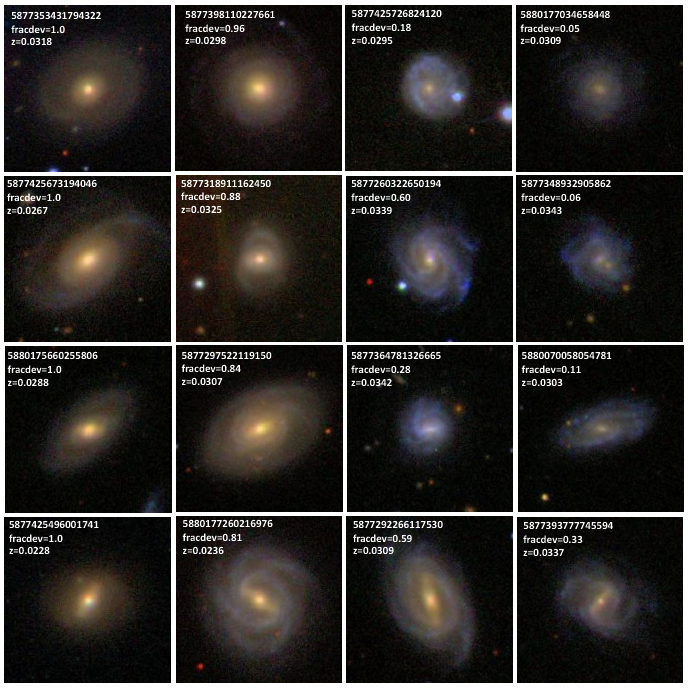
Galaxy Zoo (GZ) invites volunteers to visually classify the shapes and structures of galaxies seen in images from optical surveys. The project resulted in catalogs of hundreds of thousands of visually classified galaxies—much much better than anything achieved before—allowing for novel statistical analyses and the identification of rare objects and subtle trends. If you’re interested in my own research, I’m leading clustering and astrostatistical analyses of GZ catalogs to study the spatial distribution of galaxies and determine how their morphologies are related to the dark matter distribution and large-scale structure of the universe. For example, with more and better data than pre-GZ studies, my colleagues and I obtained statistically significant evidence that galaxies with stellar bars tend to reside in denser environments (see this paper). In the figure above, you can see examples of barred galaxies (lower panels) and unbarred ones (upper panels). In 2009, we used the impressive GZ datasets to disentangle the environmental dependence of galaxy color and morphology, since we tend to see redder and elliptical galaxies in denser regions (see this paper). Time permitting, I’d like to extend this work by using those results with detailed dark matter halo models, and we could potentially compare our results to galaxies in the Illustris simulation (which has been getting a lot of media attention and was misleadingly described as “the first realistic model of the universe“).

Galaxy Zoo scientists have many other achievements and interesting research. For example, a Dutch schoolteacher, Hanny van Arkel, discovered a unique image of a quasar light echo, which was dubbed “Hanny’s Voorwerp” (Lintott et al. 2009). GZ volunteers also identified galaxies that appeared to look like “green peas”, and most of them turned out to be small, compact, star-bursting galaxies (Cardamone et al. 2009). In addition, Laura Trouille is leading the Galaxy Zoo Quench project, in which participants contribute to the whole research process by classifying images, analyzing data, discussing results, and writing a paper about them.

Citizen science is related to “big data” and data-driven science (see also this article), and in particular to data mining and machine learning. According to a new astrostatistics book by Ivezic, Connolly, VanderPlas, & Gray, data mining is “a set of techniques for analyzing and describing structured data, for example, finding patterns in large data sets. Common methods include density estimation, unsupervised classification, clustering, principal component analysis, locally linear embedding, and projection pursuit.” Machine learning is a “term for a set of techniques for interpreting data by comparing them to models for data behavior (including the so-called nonparametric models), such as various regression methods, supervised classification methods, maximum likelihood estimators, and the Bayesian method.” Kaggle has data prediction competitions for machine learning, and their most recent one involved challenging people to develop automated algorithms to classify GZ galaxy morphologies like as well as the “crowd-sourced” classifications, and the winning codes performed rather well. Nothing beats numerous visual classifications, but there is clearly much to be learned along these lines.

Finally, sociologists, political scientists, economists and other social scientists have been studying CS, such as the organization and efficacy of CS projects, motivations of participants, and applications to industry and policy making. For example, Amy Freitag has written about how citizen science programs define “success” and their rigorous data collection. The sociologist Anne Holohan has written a book Community, Competition and Citizen Science on collaborative computing projects around the world. Eugenia Rodrigues is studying the views and experiences of participants in CS initiatives, and Hauke Riesch has written on this subject as well. (This is also related to the work by Galaxy Zoo scientists in Raddick et al. on participants’ motivations.)

In a recent interesting article, Chiara Franzoni & Henry Sauermann analyze the organizational features, dimensions of openness, and benefits of CS research. As case studies, they examine GZ, Foldit (an online computer game about protein folding), and Polymath (involving many mathematicians collectively solving problems). They argue that the open participation and open disclosure of inputs, which they mention is also characteristic of open source software, distinguish CS from traditional “Mertonian” science. (Robert Merton was a sociologist who emphasized—perhaps too much—social and cultural factors in science, such as scientists’ desire for peer recognition and career benefits, disputes between scientists, etc. I ended up not discussing him in my post on “paradigm shifts“.) They also discuss knowledge-related and motivational benefits, and they point out that CS projects that involve subjects less popular than astronomy or ornithology, for example, or that address very narrow and specific questions may face challenges in recruiting volunteers. Finally, they discuss organizational challenges, such as division of labor and the need for project leadership and infrastructure. If you’re interested, Bonney et al. in Science magazine is another shorter article about organizational challenges and developments in citizen science.

Diversity in Science

Diversity in science and diversity in STEM fields (science, technology, engineering, and math) in general are important issues, and I’d like to write more about them. This post is related to my previous post, in which I discussed work-life balance issues. I’ll only review some of the relevant issues here, and I plan to follow up and write more about them in later posts. On diversity in astronomy and astrophysics, I recommend checking out the Women in Astronomy blog, the American Astronomical Society’s Committee on the Status of Women in Astronomy (CSWA), and the STEM Women blog. I focus on the situation in the United States here, but these are issues that people are seeking to address internationally, though the specific situation and possible solutions vary among different countries. (For statistics on members of the International Astronomical Union, see this paper.)

By diversity, I mean the distributions of people in the scientific workforce, including graduate students, postdocs, and tenure-track and tenured faculty as a function of gender, race, ethnicity, and sexual orientation don’t reflect their distribution in the overall population. In other words, the disproportionate majority of the scientific workforce is composed of white men. Of course, this phenomenon is not limited to STEM fields; we also see a lack of diversity in the media, law, among policy-makers, the tech industry, corporate boardrooms, etc. I will take it as given that diversity is an important goal: it’s important for equality, and everyone benefits when work environments are more diverse.

Status2014_Fig1

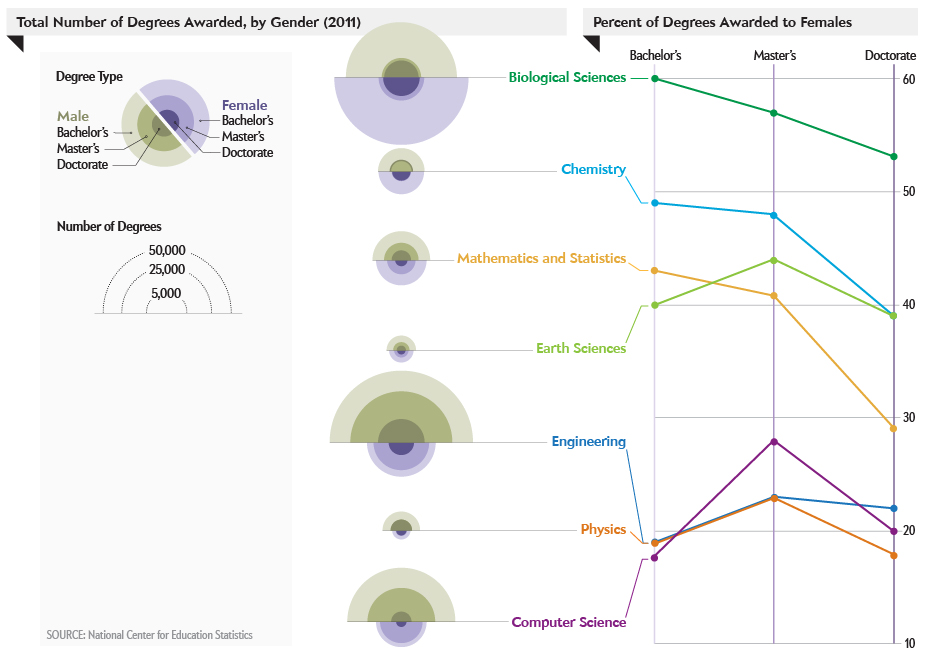
To give some specific numbers, according to the CSWA nearly half of undergraduate students who obtain bachelors of science degrees are women, but only a third of astronomy graduate students and ~30% of Ph.D. recipients are. Women compose ~25-30% of postdocs and lower-level faculty, and this drops by half (to ~15%) of tenured faculty. The female participation rate drops as you look up the “ladder”. Unfortunately, the situation is worse in non-astronomy physics, engineering, and math. For example, only 18% of physics Ph.D.s are women. Among the physical sciences, biology is doing the best on gender diversity. The following figure (taken from this Scientific American article) shows the breakdown among these sciences.

women-earning-greater-share-stem-degrees-doctorates-remain-gender-skewed_sidebar

While I’m focusing on gender in this post, the lack of diversity by race and ethnicity is also a major problem. Fewer than 3% of US citizens receiving Ph.D’s are African-American and Hispanic, though together they represent more than a quarter of the US population. Clearly much more work needs to be done to rectify this situation and improve racial diversity. People are working on the whole “pipeline”, from elementary school students to people holding faculty and other senior positions. I should also make the obvious point that there generally appears to be a lack of class diversity as well within higher education and graduate programs. In addition, according to the US Census Bureau, the income discrepancy between the working class and the professional class with the higher academic degrees is growing.

These are not encouraging numbers, but at least they are an improvement over the situation a decade ago and much better than two decades ago. Nonetheless, the rate of improvement is very slow, and the problem will be not be solved simply by waiting for the pipeline to flow (i.e., the senior people retire and the more diverse lower ranks are gradually promoted). Even if overt sexism and racism did not exist at all in departments and hiring decisions, some inequality would persist in STEM fields. Many people are asking what is causing this and what can be done about it.

These are issues with which physical scientists could benefit from the research and input of social scientists. For example, consider these articles by Aanerud et al. (2007) and Timmers et al. (2010), which I found from a quick search of the literature. Aanerud et al. argue that in order to understand women’s tenure status, we should widen our lens and consider the role of labor market alternatives to academic careers; consequently, “we must be cautious about women’s favorable tenure ratio in fields with interpreting gender strong alternatives to academic tenure as indicating academic gender equity.” (In other words, in physics and astronomy we may not necessarily want to emulate the policies used in more diverse fields.) Timmers et al. argue that “Three sets of factors explain women’s low shares at higher job levels, notably individual, cultural, and structural or institutional perspectives, and policies to increase the proportion of women therefore should address these factors.” Policy measures that address the cultural perspective (such as expressing responsibility for applying a gender equality policy at department levels and women in selection committees) and structural perspective (such as accounting for the recruitment of women, adapting job advertisements, and bonuses for hiring women) appear to work effectively in combination.

Also, sociology professor Crystal Fleming has a well-written blog post on privilege and the importance of resilience in the face of rejection and failure while working in academia. This is important because scientists and academics, but more female than male ones, are affected by “imposter syndrome.” (Personally, I can tell you that I’ve had to work hard applying for numerous positions, fellowships, research grants, etc., and it’s difficult to be rejected by the vast majority of them.) As one more example, Adam Burgasser, a faculty in my department at UCSD, has worked with social scientists recently to better recruit and retain diverse graduate students. They’ve found that it’s important to follow-through and continue mentoring students through their graduate career.

What other kinds of things are being done or can be done to improve the situation? It’s important to encourage and mentor undergrads, grad students, and postdocs, and also to talk to them about alternative career paths outside academia, as there are many possible careers for scientists. As important, it’s good to reach girls and boys in primary and secondary school about science, and it’s important to try to reduce currently prevalent cultural stereotypes. For example, when many people think of typical scientists, they imagine a nerdy white man (such as in the TV show “Big Bang Theory”) in a lab coat. There are many ways to encourage girls’ interest in science, though some ways may be more effective than others (see this Slate article, for example). Members of university departments and other organizations have developed a wide range of outreach programs targeting girls and children of color, including numerous programs at UC San Diego that bring secondary school students and underprivileged youth to UCSD for interactive demonstrations, labs, lectures, and other activities aimed at enhancing their interest in science.

There are other cultural issues to deal with as well. For example, some people have stereotypes about their own bosses, but women are great leaders (maybe better than men) and people’s views about female bosses vis-à-vis male bosses are improving in some ways. It’s also difficult for people of color; an African American leader who appear authoritative or offers criticism of particular policies, for example, can be stereotyped as an “angry black man” or “angry black woman.” Whites and males should be more aware of gender and race privilege, and this is something that should be more frequently and openly discussed. (See this excellent blog post by Caitlin Casey.) In addition, some people, inadvertently or not, might act in a sexist or racist manner at work, and this should be challenged and called out. And we have to be very careful about “unconscious bias”: for example, both men and women surprisingly have the same biases against women in male-dominated fields, though the biases are reduced when people are aware of them and when diverse committees make decisions about hiring and leadership decisions (see this article by Meg Urry).

It seems like the literature on “confidence gap” issues has been growing rapidly, encouraging women to “lean in” and be more confident and self-assured at work. All of this is great and important. In my opinion, however, it’s also potentially misleading. We can’t neglect persistent structural problems, power relations, pernicious cultural frames, and we can’t forget gender and race inequality.

Increasing diversity is an important goal, but it’s also a means to an end. In my opinion, we need to set our sights higher than merely having a few more women and people of color among faculty members. We need *paid* maternity leave, universal or child-care options, better dual-career policies, and paternal leave should be expected. There should be no benefit for men who continue working full-time rather than spending time with their new children, and we still have a long way to go until men share housework equally with women. This is related to work-life balance issues, which are definitely not a “women’s problem”. (See also these NY Times articles continuing the struggle for gender equality.) We’re gradually making progress, but much more work remains to be done.

Climate Change is an Environmental Justice issue

In a previous blog post, I introduced the concept of environmental justice (EJ), which refers to the fair treatment of people regardless of race or class with respect to the development, implementation, and enforcement of environmental laws, regulations, and policies. I’ve also previously written about climate change here and about some efforts to address it here. Now my point here that climate change is an EJ issue, especially because anthropogenic greenhouse gas emissions (GHGs) have been primarily produced by people in wealthier countries, while people in poorer countries and regions will likely bear the brunt of the effects of climate change, including rising sea levels, drought, and access to food staples.

The new report from the Intergovernmental Panel on Climate Change (IPCC) was just released a week ago, soon before Earth Day. (You can read news coverage of the report in the Guardian, NY Times, and Atlantic.) The IPCC report was produced by 1,250 international experts and approved by 194 governments, and it is the last of three reports to assess climate research conducted since 2007. The authors argue that only an intensive push in the immediate future can limit climate change to less than catastrophic levels, but lowering costs of alternative energies have made transitioning on a mass scale practical and affordable. Avoiding (the worst of) climate change will be less costly than attempting to adapt to it later with unpredictable geoengineering technologies. The report also discusses “co-benefits“: for example, efforts to reducing air pollution (including GHGs) would improve public health and save millions of lives, balancing the cost of reducing the emissions. The report states that putting a price on GHG emissions, such as through carbon taxes or emission permits (which I’ll write about in a later post), would help to redirect investment toward more climate-friendly technologies and away from fossil fuels.

It’s also interesting to see what was not included in the IPCC report. For example, rich countries (including the US) pushed to remove a proposed section that called for hundreds of billions of dollars of aid per year to be paid to developing countries. The report does refer to “issues of equity, justice, and fairness [that] arise with respect to mitigation and adaptation,” but these are issues that should be further discussed and addressed. For example, we are already seeing extreme climate events, including heat waves, floods, wildfires, and droughts, and poor countries and small island nations are particularly vulnerable to storm surges, coastal flooding, and rising sea levels.

In order to mitigate climate change, the report views favorably the cutting energy waste and improving efficiency and the shift toward renewable energies, especially the zero-emission sources like wind and solar, whose costs are dropping and becoming competitive. Wealthier countries can lead these efforts, and they could fund low-carbon growth in poorer countries, which are unfortunately expanding the use of coal-fired power plants. Archbishop Desmond Tutu has even advocated for an anti-apartheid style campaign against ­fossil fuel companies to respond to the “injustice of climate change.” On that note, I’ve noticed that the term “climate justice” has become increasingly common.

Many vulnerabilities to climate change are visible in the US as well (see this UCS blog), and much more can be done to work toward climate change mitigation and adaptation. In addition, unfortunately, climate change has not yet been connected to EJ in US policy, in spite of the Executive Order signed by Pres. Bill Clinton twenty years ago, which instructed all federal agencies to consider impacts on people of color, the elderly, and those of low-income when crafting new policies and rules. (See this post by post by Robert Bullard, one of the leaders of the EJ movement.) The Environmental Protection Agency’s new Plan EJ 2014 briefly mentions climate change, and at least this is a start.

In order to mobilize people, governments, and institutions to active address climate change, we should discuss how climate change issues are framed. A week ago, I attended an interesting political science talk by Sarah Anderson, professor of environmental politics at UC Santa Barbara. (By the way, I have to admit that the political scientists at UCSD have more comfy chairs than us astrophysicists. We’ll have to work on that!) She mentioned the “moral foundations theory” (proposed by Jonathan Haidt; and Lakoff & Wehling): political liberals construct their moral systems primarily upon two psychological foundations (fairness/justice and harm/care), while conservatives’ moral systems are also based on others (including ingroup/loyalty, authority/respect, purity/degradation). So if the goal is to address climate change–which may be one of the greatest environmental and socioeconomic problems of our generation–then we should try to appeal to everyone, not just those identified as liberals or leftists. To do so, maybe we need to use additional frames, such as by emphasizing the importance of avoiding environmental degradation and the potential economic benefits of mitigating climate change.

Finally, political scientists often focus on the workings of the state and on policies and regulations, but there are many important actors outside the state, especially among social movements and civil society. Fortunately, organized opposition to the Keystone pipelines and fracking, for example, have made these climate change issues more pressing for policy-makers.
Harvard poli sci professor Theda Skocpol (quoted in a New Yorker article) criticizes the tactic of mobilizing support exclusively through the media; instead, she argues, “reformers will have to build organizational networks across the country, and they will need to orchestrate sustained political efforts that stretch far beyond friendly Congressional offices, comfy board rooms, and posh retreats.” Perhaps what the environmental movement need are more “federated structures,” which have national leaders to interact with political officials in the White House and Congress as well as local chapters which regularly meet (and organize rallies or teach-ins) to develop their larger goals.

How scientists reach a consensus

Following my previous post on paradigm shifts and on how “normal science” occurs, I’d like to continue that with a discussion of scientific consensus. To put this in context, I’m partly motivated by the recent controversy about
Roger Pielke Jr., a professor of environmental studies at the University of Colorado Boulder, who is also currently a science writer for Nate Silver’s FiveThirtyEight website. (The controversy has been covered on Slate, Salon, and Huffington Post.) Silver’s work has been lauded for its data-driven analysis, but Pielke has been accused of misrepresenting data, selectively choosing data, and presenting misleading conclusions about climate change, for example about its effect on disaster occurrences and on the western drought.

This is also troubling in light of a recent article I read by Aklin & Urpelainen (2014), titled “Perceptions of scientific dissent undermine public support for environmental policy.” Based on an analysis of a survey of 1000 broadly selected Americans of age 18-65, they argue that “even small skeptical minorities can have large effects on the American public’s beliefs and preferences regarding environmental regulation.” (Incidentally, a book by Pielke is among their references.) If this is right, then we are left with the question about how to achieve consensus and inform public policy related to important environmental problems. As the authors note, it is not difficult for groups opposed to environmental regulation to confuse the public about the state of the scientific debate. Since it is difficult to win the debate in the media, a more promising strategy would be to increase awareness about the inherent uncertainties in scientific research so that the public does not expect unrealistically high degrees of consensus. (And that’s obviously what I’m trying to do here.)

Already a decade ago, the historian of science Naomi Oreskes (formerly a professor at UC San Diego) in a Science article analyzed nearly 1000 article abstracts about climate change over the previous decade and found that none disagreed explicitly with the notion of anthropogenic global warming–in other words, a consensus appears to have been reached. Not surprisingly, Pielke criticized this article a few months later. In her rebuttal, Oreskes made the point that, “Proxy debates about scientific uncertainty are a distraction from the real issue, which is how best to respond to the range of likely outcomes of global warming and how to maximize our ability to learn about the world we live in so as to be able to respond efficaciously. Denying science advances neither of those goals.”

The short answer to the question, “How do scientists reach a consensus?” is “They don’t.” Once a scientific field has moved beyond a period of transition, the overwhelming majority of scientists adopt at least the central tenets of a paradigm. But even then, there likely will be a few holdouts. The holdouts rarely turn out to be right, but their presence is useful because a healthy and democratic debate about the facts and their interpretation clarifies which aspects of the dominant paradigm are in need of further investigation. The stakes are higher, however, when scientific debate involves contentious issues related to public policy. In those situations, once a scientific consensus appears to be reached and once scientists are sufficiently certain about a particular issue, we want to be able to respond effectively in the short or long term with local, national, or international policies or regulations or moratoria, depending on what is called for. In the meantime, the debates can continue and the policies can be updated and improved.

Of course, it is not always straightforward to determine when a scientific consensus has been reached or when the scientific community is sufficiently certain about an issue. A relevant article here is that of Shwed & Bearman (2010), which was titled “The Temporal Structure of Scientific Consensus Formation.” They refer to “black boxing,” in which scientific consensus allows scientists to state something like “smoking causes cancer” without having to defend it, because it has become accepted by the consensus based on a body of research. Based on an analysis of citation networks, they show that areas considered by expert studies to have little rivalry have “flat” levels of modularity, while more controversial ones show much more modularity. “If consensus was obtained with fragile evidence, it will likely dissolve with growing interest, which is what happened at the onset of gravitational waves research.” But consensus about climate change was reached in the 1990s. Climate change skeptics (a label which may or may not apply to Pielke) and deniers can cultivate doubt in the short run, but they’ll likely find themselves ignored in the long run.

Finally, I want to make a more general point. I often talk about how science is messy and nonlinear, and that scientists are human beings with their own interests and who sometimes make mistakes. As stated by Steven Shapin (also formerly a professor at UC San Diego) in The Scientific Revolution, any account “that seeks to portray science as the contingent, diverse, and at times deeply problematic product of interested, morally concerned, historically situated people is likely to be read as criticism of science…Something is being criticized here: it is not science but some pervasive stories we tend to be told about science” (italics in original). Sometimes scientific debates aren’t 100% about logic and data and it’s never really possible to be 0% biased. But the scientific method is the most reliable and respected system we’ve got. (A few random people might disagree with that, but I think they’re wrong.)

Water Policy Issues, with a Focus on the US Southwest

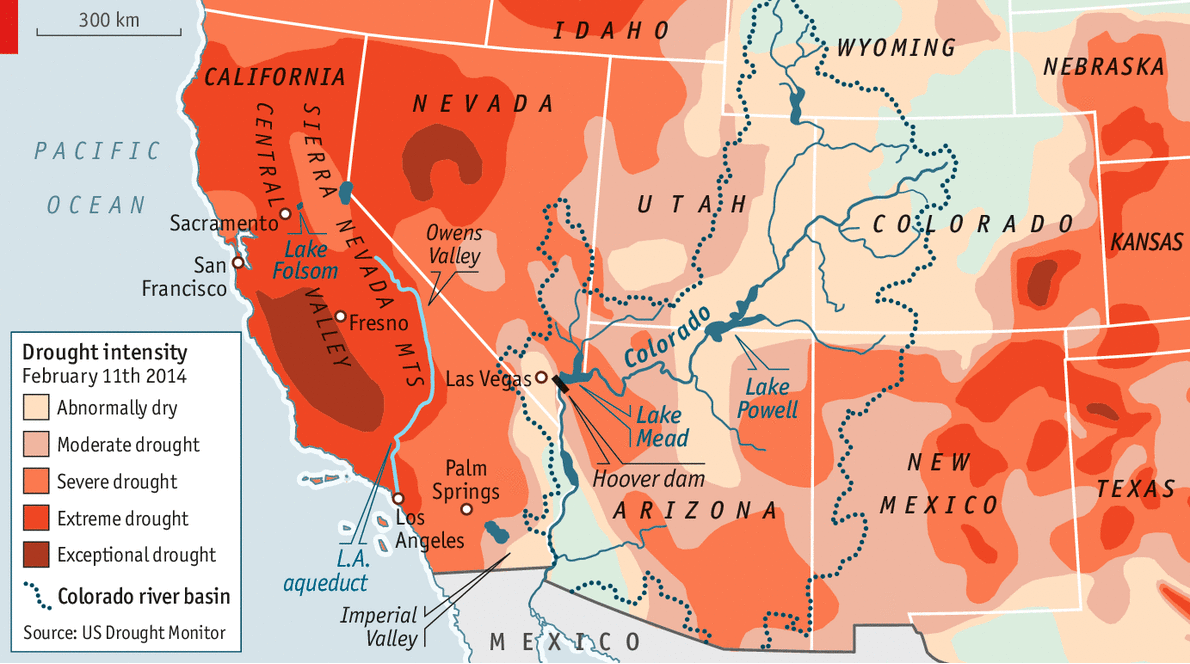
Water policy issues are very important, but we haven’t discussed them much on this blog yet. Much of my information here comes from Ellen Hanak and other analysts of the Public Policy Institute of California (PPIC), analysts from the Union of Concerned Scientists (UCS), a recent article by Christopher Ketchum in Harper’s, a book by Robert Glennon (Unquenchable), and other sources. I’m not an expert on water policy, and any errors are my own. As usual, please let me know if you notice any errors, and I’m happy to hear any comments. I’ll focus on the southwestern US (mainly because I grew up in Colorado and now live in California), but many of these issues apply elsewhere as well. And while the Southwest is dealing with drought and water scarcity, other places, such as the UK and the Midwest US, are dealing with flooding.
water_scarcity_figure_1

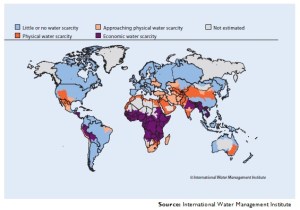
According to the Worldwatch Institute, already some 1.2 billion people live in areas of physical water scarcity, while another 1.6 billion face “economic water shortage”. By 2025, almost half of the world will be living in conditions of water stress. Some analysts predict that water wars (see Vandana Shiva’s book) and conflicts will increase in the future. Considering that we need water to live, it’s not surprising that the United Nations General Assembly voted in a resolution declaring that access to clean water and sanitation is a fundamental human right.

At least conditions on Earth are not as bad as Mars, which has experienced 600 million years of drought and which probably hasn’t supported life, at least on its surface. But water scarcity is an extremely important problem that we’re probably not taking seriously enough; as Stephen Colbert put it, “if the human body is 60 percent water, why am I only two percent interested?”

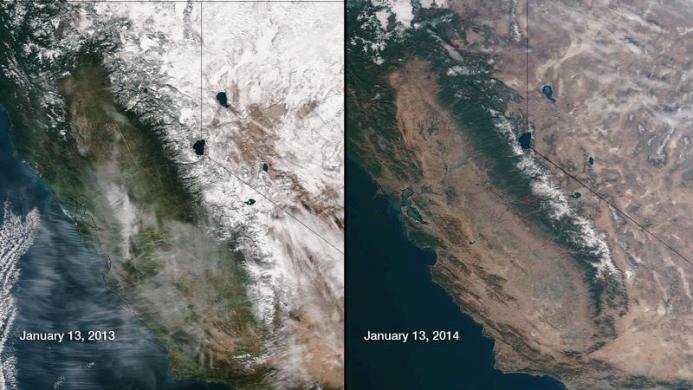
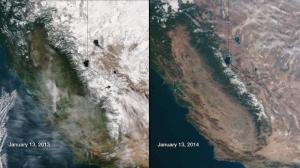
The Southwest and California in particular are experiencing their worst recorded drought (for example, see the NASA satellite images below). In response, the California state legislature and Gov. Brown passed a drought relief package last month, while Sen. Feinstein and others are seeking to pass a bill in Congress to aid drought-stricken states.

20140222_USM904
ReutersNASA

Now here’s some historical and legal context. The Colorado River Compact of 1922 was negotiated by members of the upper-basin states (Colorado, New Mexico, Utah, Wyoming) and the lower-basin states (Arizona, California, Nevada), and it was an agreement for hydraulic management of the Southwest. According to the US system of water rights, however, the person who first made “beneficial use” of a stream or river had first right to it. Under this doctrine, the earliest users of the Colorado River (California) could legally establish a monopoly over regional water supply, even though most of that water came from another state (Colorado). A major problem was that because 1922 happened to occur during an unusually wet period, people assumed that the Colorado held more water than it really did: its annual water flow as estimated to be 17-18 million acre feet, though it was later more accurately estimated at 14 million acre-feet (17 billion cubic-meters) on average. It was therefore already overallocated from the start. The lower basin (including southern CA) is now overusing its share of the Colorado River, and it’s not a sustainable situation. A court case (Arizona v. California) that was decided by the Supreme Court in 1963 affirmed that Arizona was owed 2.8 million acre feet of water annually, but under the doctrine of prior appropriation, Arizona’s rights would remain secondary to California’s.

For water use, it’s useful to distinguish between water withdrawal (from surface or ground sources) and the consumption of water already withdrawn. Consequently, as argued by Ellen Hanak at a recent PPIC event in Sacramento, we need to consider not just water supplies but also water management and (in)efficient water consumption. Although one usually thinks of water for drinking, washing, cleaning, and other residential uses, much more water is used for irrigation (agriculture), industry, and power plants; according to the UCS, power plants account for 41% of freshwater withdrawals in the US. It’s also useful to distinguish between direct and indirect water use, and I’ll get into that more below.

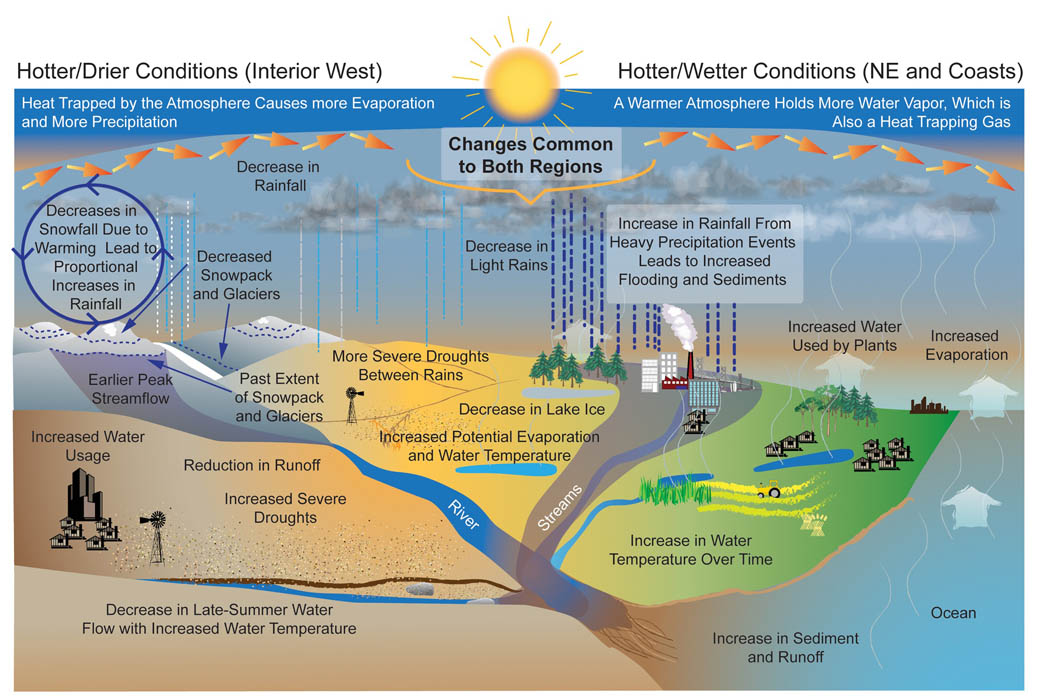
Water shortages, already a critical issue in the Southwest, are likely to become far worse with climate change (although the extent to which it’s due to climate change is still debated). Rivers such as the Colorado, which is primarily supplied by snowmelt and is already overallocated, are particularly vulnerable. For the past fourteen years, the Colorado River has been at its lowest level since the ninth century. According to Tim Barnett from UC San Diego’s Scripps Institution of Oceanography (SIO), with climate change, currently scheduled water deliveries from the Colorado River are unlikely to be met by mid-century. Rising air temperatures due to global warming will result in reduced snowfall: by the end of this century, California’s ski season could disappear with a 80% loss of Sierra snowpack, and Washington and Oregon would experience reduced snowfall as well. In addition, although per capita water use has been gradually decreasing, population growth in the Southwest is likely to increase urban water demand in some regions. In a high carbon emissions scenario, annual losses to agriculture, forestry, and fisheries could reach $4.3B in California alone, and the prices of fresh fruit, vegetables, dairy, and fish, will rise. There will be more competition between human water use and water needed to support fish and other wildlife, and potential solutions will involve difficult trade-offs. (The following figure from the EPA summarizes climate impacts on the hydrologic cycle.)

Print

In the studies mentioned above by SIO scientists, the Colorado River’s average annual flow could decline by as much as 30% by 2050. As a result, without massively reducing water usage, Lake Mead has a 50% chance of declining to “dead pool” by 2036. At that level, water deliveries to millions of people in California and Arizona and to millions of acres of farmland will cease, and hydroelectric production at the dam will already have stopped. It is incredible to consider that this could happen in our lifetime, as the Colorado is the same river that carved the Grand Canyon over tens of millions of years, and it is one of the rivers on which the Ancient Puebloan depended until around 1300, when drought, decreased rainfall, and a drop in water table levels appeared to drive the people away from their civilization. (See also this article in National Geographic about ancient “megadroughts” in human history.)

The largest fraction of water consumption is due to agriculture, power plants, and industry. Considering the fact that we indirectly need water because of our need for energy, this points to the issue of the “water-energy nexus.” The average U.S. family of four directly uses 400 gallons of freshwater per day, while indirectly using 600-1800 gallons through power plant water withdrawals. We need energy for water production and distribution (and the desalination plant being constructed near San Diego will require quite a bit), and we also need water for energy-related infrastructure. Coal and nuclear power plants use large amounts of freshwater to cool the plants: for example, a typical 600-MW coal-fired plant consumes more than 2 billion gallons of water per year from nearby lakes, rivers, aquifers, or oceans. In addition, as we discussed in my previous blog post, fracking techniques for extracting shale gas require millions of gallons of water to be injected into a well, and they can contaminate groundwater as well. Fortunately, wind turbines and solar photovoltaic modules require essentially no water at all, but other renewable energies, like hydroelectric, bioenergy, and geothermal, can be water intensive. As argued by Laura Wisland, since we expect climate change to increase the frequency and severity of droughts in California, it will be important to hedge our electricity supplies with predictable, renewable resources, especially wind and solar.

What can be done? As a “silver lining” of the current situation, the ongoing drought in the Southwest provides a window for reform, and here are a few ideas. We should shift toward less water-intensive sources of energy such as wind and solar. Water should cost more: we should modernize water measurement and pricing with better estimates of water use and prices that reflect water’s economic value. We could learn from cities in dry places elsewhere (such as Australia) about how to make urban areas more water efficient, and we could have tiered water rates with higher prices for greater use. In agriculture, crops that cannot be grown without subsidies should not be grown. We need improvements to local groundwater management. Since surveys show that most Californians believe that there are environmental inequities between more and less affluent communities in the state, it’s also important to consider environmental justice issues while developing new water policy programs (see this article, for example). We need to develop more reliable funding (through state bonds or local ratepayers), especially for environmental management, flood protection, and statewide data collection and analysis. Finally, as argued in this PPIC report, water management agencies at all levels should aim to develop more coordinated, integrated approaches to management and regulatory oversight, drawing on scientific and technical analysis to support sound and balanced decisions.

Big Science and Big Data

I’d like to introduce the topic of “big science.” This is especially important as appropriations committees in Congress debate budgets for NASA and NSF in the US (see my previous post) and related debates occurred a couple month’s ago in Europe over the budget of the European Space Agency (ESA).

“Big science” usually refers to large international collaborations on projects with big budgets and long time spans. According to Harry Collins in Gravity’s Shadow (2004),

small science is usually a private activity that can be rewarding to the scientists even when it does not bring immediate success. In contrast, big-spending science is usually a public activity for which orderly and timely success is the priority for the many parties involved and watching.

He goes on to point out that in a project like the Laser Interferometer Gravitational-Wave Observatory (LIGO), it’s possible to change from small science to big but it means a relative loss of autonomy and status for most of the scientists who live through the transition. Kevles & Hood (1992) distinguish between “‘centralized’ big science, such as the Manhattan Project and the Apollo program; ‘federal’ big science, which collects and organizes data from dispersed sites; and ‘mixed’ big science, which offers a big, centrally organized facility for the use of dispersed teams.”

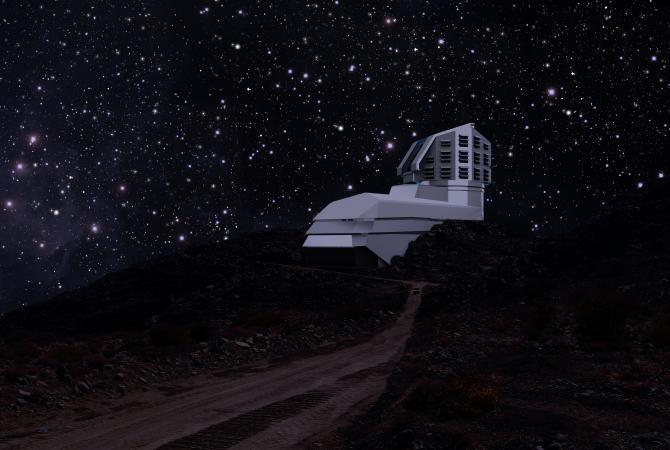
In addition to LIGO, there are many other big science projects, such the Large Hadron Collider (LHC, which discovered the Higgs boson), the International Thermonuclear Experimental Reactor (ITER), and in astronomy and astrophysics, the James Webb Space Telescope (JWST, the successor to Hubble), the Large Synoptic Survey Telescope (LSST, pictured below), and the Wide-Field InfraRed Survey Telescope (WFIRST), for example.

Dome_at_Night-half

Note that some big science projects are primarily supported by government funding while others receive significant funding from industry or philanthropists. LSST and LIGO are supported by the NSF, JWST and WFIRST are supported by NASA, and LHC is supported by CERN, but all of these are international. In the case of the fusion reactor ITER (see diagram below), on which there was a recent detailed New Yorker article, it has experienced many delays and has gone over its many-billion-dollar budget, and it has had management problems as well. While budget and scheduling problems are common for big science projects, ITER is in a situation in which it needs produce results in the near future and avoid additional delays. (The US is committing about 9% to ITER’s total cost, but its current contribution is lower than last year’s and its future contributions may be reevaluated at later stages of the project.)

in-cryostat overview 130116

As scientists, we try to balance small-, mid-, and large-size projects. The large ones are larger than before, require decades of planning and large budgets, and often consist of collaborations with hundreds of people from many different countries. It’s important to be aware that relatively small- and mid-scale projects (such as TESS and IBEX in astronomy) are very important too for research, innovation, education, and outreach, and as they usually involve fewer risks, they can provide at least as much “bang for the buck” (in the parlance of our times).

In the context of “big science” projects these days, the concepts of “big data” and “data-driven science” are certainly relevant. Many people argue that we are now in an era of big data, in which we’re obtaining collections of datasets so large and complex that it becomes difficult to process them using on-hand database management tools or traditional data processing applications. Since the volume, velocity, and variety of data are rapidly increasing, it is increasingly important to develop and apply appropriate data mining techniques, machine learning, scalable algorithms, analytics, and other kinds of statistical tools, which often require more computational power than traditional data analyses. (For better or for worse, “big data” is also an important concept in the National Security Agency and related organizations, in government-funded research, and in commercial analyses of consumer behavior.)

In astronomy, this is relevant to LSST and other projects mentioned above. When LSST begins collecting data, each night for ten years it will obtain roughly the equivalent amount of data that was obtained by the entire Sloan Digital Sky Survey, which was until recently the biggest survey of its kind, and it will obtain about 800 measurements each for about 20 billion sources. We will need new ways to store and analyze these vast datasets. This also highlights the importance of “astrostatistics” (including my own) and of “citizen science” (which we introduced in a previous post) such as the Galaxy Zoo project. IT companies are becoming increasingly involved in citizen science as well, and the practice of citizen science itself is evolving with new technologies, datasets, and organizations.

I’ll end by making a point that was argued in a recent article in Science magazine: we should avoid “big data hubris,” the often implicit assumption that big data are a substitute for, rather than a supplement to, traditional data collection and analysis.

My Experience with the Congressional Visit Day

[A previous version of this first appeared as a Guest Post on the AAS Policy Blog.]

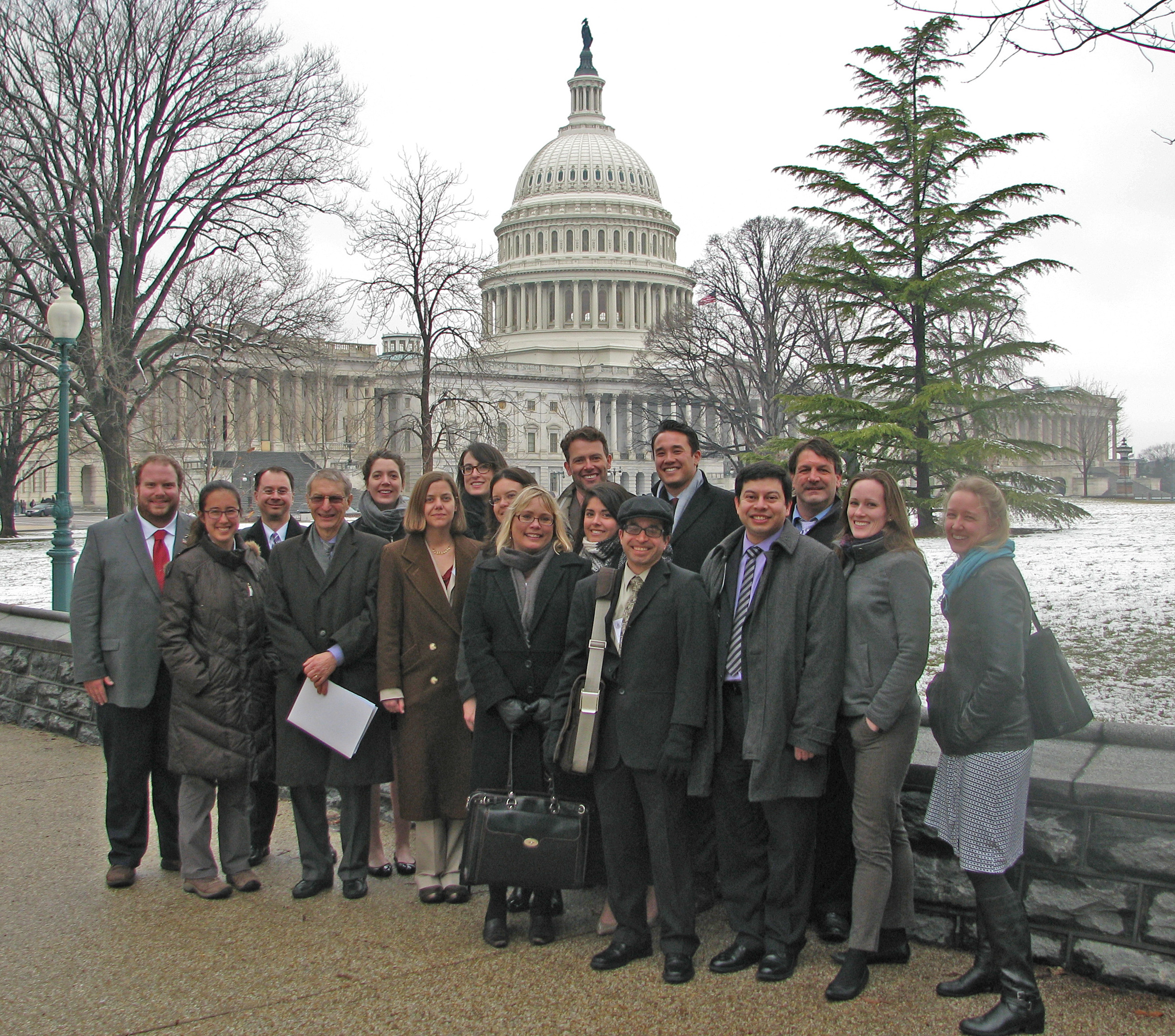
Last week, I participated in the Congressional Visit Day (CVD) with the American Astronomical Society (AAS). I was just one member in a group of eighteen AAS members—a diverse group from around the country involved in many different subspecialties of astronomical research, as well as various teaching and outreach programs. Below, is a nice photo of us is (and I’m the guy wearing a hat). Our AAS delegation was part of a larger group of scientists, engineers, and business leaders involved in a few dozen organizations participating in the CVD, which was sponsored by the Science-Engineering-Technology Work Group. Go here for a further description of our program.

aas_cvd_2014

As scientists and members of the AAS, we had a few primary goals. We argued first and foremost for the importance of investing in scientific research (as well as education and outreach) through funding to the National Science Foundation (NSF), NASA, and science in particular departments (especially the Depts. of Energy and Defense). If you’re interested, you can see our handout here. We also encouraged our Representatives to sign two “Dear Colleague” letters that are currently passing through the House: the first letter is by Rep. G. K. Butterfield (D-NC) and is asking for a 3% increase to NSF’s FY 2015 budget to $7.5 billion, and the second letter is by Rep. Rush Holt (D-NJ), Rep. Randy Hultgren (R-IL), and Rep. Bill Foster (D-IL) and is asking the appropriators to “make strong and sustained funding for the DOE Office of Science one of your highest priorities in fiscal year 2015.”

We also told our Congress members about our personal experiences. In my case, I have been funded by NASA grants in the past and am currently funded by a NSF grant. I am applying for additional research grants, but it’s not easy when there is enough funding available only for a small fraction of submitted grant proposals. In the past, I have also benefited from projects and telescopes that were made possible by NASA and the NSF, and I plan to become involved in new telescopes and missions such as the Large Synoptic Survey Telescope (LSST), the Wide-Field InfraRed Survey Telescope (WFIRST), and possibly the James Webb Space Telescope (JWST, the successor to the Hubble Space Telescope). Also, if a NSF grant I’ve submitted is successful (fingers crossed!), I will be able to participate more actively in public outreach programs especially in the San Diego area in addition to continuing my research.

Not only did we explain the importance of stable funding for basic research, we also talked with our legislators about how astronomy is a “gateway science” that draws people in and inspires them to learn more, become more involved, and even potentially become scientists themselves.

We talked about the importance of improving science and math literacy, which also improves US competitiveness with respect to other countries, and about how investment in science spurs innovation in industry and leads to new and sometimes unexpected developments in computing, robotics, optics, imaging, radar, you name it. Since “all politics is local,” as they say, we also emphasized that these investments in scientific research are important for strong local, as well as national, economies. As we were visiting shortly after the introduction for the President’s Budget Request (PBR) for FY 2015, we also expressed our concern that the proposed budget reduces funding for NASA’s education and outreach activities within the Science Mission Directorate by two-thirds, and would require mothballing the Stratospheric Observatory For Infrared Astronomy (SOFIA) outside of the well-established senior review process.

My Congress members are Senators Barbara Boxer and Dianne Feinstein, whose staff we met, and Representative Susan Davis (CA-53), with whom we met personally (along with a member of her staff). We had a quick photo-op too, right before she had to get back to the House chamber for a vote. I was in a group with two other astronomers who were from Oklahoma and Illinois, and we met with their respective Congress members as well. Our larger group was split into teams of three to four for the days visits, and each met with the representatives and senators of all team members.

photo 4

Senators and Representatives serve on different committees and subcommittees, each with a specific jurisdiction over parts of the federal government. For example, Sen. Boxer is on the Science & Space Subcommittee of Senate’s Commerce Committee and is the chair of the Committee on Environment & Public Works. Sen. Feinstein is chair of the Senate Appropriations Committee’s Subcommittee on Energy & Water, which has jurisdiction over the Department of Energy (among many other things). The appropriations committee is responsible for writing legislation that grants federal agencies the ability to spend money, that is, they appropriate the budgets for the agencies under their jurisdiction. Rep. Davis is a member of the House Education & Workforce Committee and has done a lot of work on educational reform, promoting youth mentoring, and civic education.

I think that we received a largely positive responsive from our congressional representatives. My three Congress members were very supportive and in agreement with our message. Some of the other members we met with, while generally positive about our message, left me with the impression that they approved of our “hard sciences” but didn’t want as much funding going to social sciences, climate science, and other particular fields. It seems to me that we must get ourselves out of this highly constrained budget environment, in which discretionary programs like those funding the sciences are capped each year; we need to either find additional sources of revenue (e.g., reducing tax breaks) or make other changes to current law.

In my previous blog post, I talked about the proposed budget and the negotiations taking place in Congressional committees. We also need to consider the current political situation with the upcoming mid-term elections. Once a budget (which may be significantly different than the PBR) is passed by the House and Senate Appropriations Committees, it will be considered by the House and Senate, which are currently controlled by Republicans and Democrats (who have 53 seats plus 2 independents who caucus with them). However, it appears possible that Republicans may retake the Senate in the 114th Congress, and in that case their leadership may resist even small additions to the current budget request and may attempt to simply pass a “continuing resolution” instead.

On the same day as our CVD (26th March), Office of Science and Technology Policy Director John Holdren appeared before the House Committee on Science, Space, and Technology, where there were considerable disagreements among the committee members about STEM education, SOFIA, and other issues. (Note that the committee is particularly polarized and has been criticized for its excessive partisanship and industry influence.) Fortunately, on the following day, a hearing before House appropriators on the NSF budget request fared better. This is encouraging, but in any case it will be a difficult struggle to produce a good budget (that is, good for science) within a short time-scale.

The Proposed Fiscal Year 2015 Budget: Thoughts on its Implications for Science

I’d like to make a few comments on the proposed US federal budget for Fiscal Year 2015 (FY15, which starts in October), especially on its implications for science research and education in this country. First, I’ll acknowledge articles and blogs by Matt Hourihan (at the American Association for the Advancement for Science) and Josh Shiode (at the American Astronomical Society), which I’ve used for some of the information and figures below. I’m responsible though if I’ve misstated any facts or numbers, and as usual, any opinions I express about the current state of affairs are my own. I look forward to discussing these issues with scientists and other interested people, and as usual, you’re welcome to write or send me comments.

President Obama’s administration officially released its President’s Budget Request (PBR, but not the beer!) on 4th March, and the details are available on the White House’s website. The PBR is formulated by the Office of Management and Budget (OMB), and it soon be evaluated and revised by the Appropriations Committees in Congress. The White House’s Office of Science & Technology Policy (OSTP) plays a role in developing the budget, but naturally there are many other considerations involved as well, such as ensuring national security, strengthening the economy, maintaining healthcare and education programs, etc. Nonetheless, from the perspective of science research and education, the budget certainly could be better.

15p R&D Pie_AAAS

Unfortunately, the Budget Control Act puts spending caps on support for research and development (R&D). Assuming little to no additional revenue, there is not much room in the discretionary budget above FY 2014 levels. With three-quarters of the post-sequester spending reductions still in place (see my previous blog post), many agency R&D budgets are stagnant. The $3.901 trillion budget includes $136.5 billion for R&D, which is a 0.5% increase over FY 2014 but that doesn’t account for the 1.7% inflation rate. The divisions by agency are described by the above pie chart (courtesy: AAAS) and in this article. Funding for the physical sciences largely comes from the National Science Foundation (NSF), NASA, the Department of Energy (DOE) Office of Science, and other agencies and departments. Total research funding (basic+applied research) has dropped 1.9% below FY 2014 levels, which is only slightly above FY 2013 post-sequester levels.

budget_diffs_WP

The President has also proposed additional $56B of funding through the Opportunity, Growth, and Security Initiative (OSGI), which would help the situation for many agencies, but it appears that Congress won’t have the stomach for it. As can be seen in the figure above (courtesy: Washington Post), an additional difficulty comes from differences between the revenue projections of the President and the Congressional Budget Office (CBO); the former assumes revenue increases from some reduced tax breaks for wealthy Americans, to which Congress likely won’t agree. In that case, we may be headed back toward sequestration funding levels in FY 2016.

RandDprojections_AAAS

The Association of American Universities (AAU) and the American Astronomical Society (AAS, of which I’m a member) have expressed some criticism of the proposed budget: while they acknowledge the caps on discretionary spending, they argue that basic research and education could receive higher priority. A surprising cut that was proposed was to the Stratospheric Observatory for Infrared Astronomy (SOFIA), which is an aircraft telescope. The axing of SOFIA in 2015 is particularly vexing for astronomers because it occurred outside the established review process. The FY 2014 budget proposed a controversial government-wide reorganization of science, technology, engineering and mathematics (STEM) education programs, and this year’s budget includes a surprising cut (by 2/3!) to the STEM education budget within NASA’s Science Mission Directorate (SMD). Time will tell how education programs adapt to these changes, but cuts like these potentially hurt US competitiveness relative to Europe and East Asia as well as efforts toward improving science and math literacy.

According to Jack Burns (U. of Colorado, Boulder), “by lowering overall spending on the astronomical sciences, the Administration threatens the health of our technical workforce and the education and training of the next generation of space scientists. This is hard to swallow at a time when other countries are increasing their investments in science and technology.” Similarly, in Science magazine, William Press argues that, “it appears that [nations] who spend close to 3% of their GDP on R&D are the ones that compete most successfully. The United States is in that club now. We don’t want to fall out of it.”

I’m most interested in astronomy/astrophysics, because it’s my field, but other fields are affected as well. For example, the budget of the National Institutes of Health (NIH) only received a sub-inflationary increase (like most agencies), and the proposed budget includes a substantial cut to fusion energy research and to the US contribution to the International Fusion Experiment (ITER), though funding for energy efficiency and renewables would increase. The Environmental Protection Agency (EPA) would also receive a cut in this budget.

fedspending_AAAS

Finally, as this bar graph shows, the budget prospects for nondefense discretionary spending will likely worsen in the coming years. “Mandatory spending” is controlled by different mechanisms than discretionary spending, and it includes Medicare, Medicaid, Social Security, which are large programs, as well as food stamps, unemployment compensation, and other smaller ones. As a fraction of GDP, we can expect mandatory spending to continue increasing. On this point, I’ll first say that in my personal view, I’m wary of those who criticize these programs (or who refer to them pejoratively as “entitlements”), because such criticisms give space for extreme conservatives who would rather gut these programs and let the poor, ill, hungry, and elderly suffer on their own. Nonetheless, it appears that, the way that they are currently funded, the cost of Medicare and Medicaid programs is growing at an unsustainable rate (faster than inflation). The Affordable Care Act is helping, but it’s probably insufficient to resolve this situation, especially as more baby boomers draw on retirement and health care benefits. Long-term fiscal problems remain.

We also need to consider the current political situation in Congress. I participated in a Congressional Visit Day with the AAS this week, and I’ll soon write my next blog post about that.

Paradigm Shifts?

In addition to physics and astronomy, I used to study philosophy of science and sociology. In my opinion, many scientists could learn a few things from sociologists and philosophers of science, to help them to better understand and consider how scientific processes work, what influences them and potentially biases scientific results, and how science advances through their and others’ work. In addition, I think that people who aren’t professional scientists (who we often simply call “the public”) could better understand what we are learning and gaining from science and how scientific results are obtained. I’ll just write a few ideas here and we can discuss these issues further later, but my main point is this: science is an excellent tool that sometimes produces important results and helps us learn about the universe, our planet, and ourselves, but it can be a messy and nonlinear process, and scientists are human–they sometimes make mistakes and may be stubborn about abandoning a falsified theory or interpretation. The cleanly and clearly described scientific results in textbooks and newspaper articles are misleading in a way, as they sometimes make us forget the long, arduous, and contentious process through which those results were achieved. To quote from Carl Sagan (in Cosmos), who inspired the subtitle of this blog (the “pale blue dot” reference),

[Science] is not perfect. It can be misused. It is only a tool. But it is by far the best tool we have, self-correcting, ongoing, applicable to everything. It has two rules. First: there are no sacred truths; all assumptions must be critically examined; arguments from authority are worthless. Second: whatever is inconsistent with the facts must be discarded or revised.

As you may know, the title of this post refers to Thomas Kuhn (in his book, The Structure of Scientific Revolutions). “Normal science” (the way science is usually done) proceeds gradually and is based on paradigms, which are collections of diverse elements that tell scientists what experiments to perform, which observations to make, how to modify their theories, how to make choices between competing theories and hypotheses, etc. We need a paradigm to demarcate what is science and to distinguish it from pseudo-science. Scientific revolutions are paradigm shifts, which are relatively sudden and unstructured events, and which often occur because of a crisis brought about by the accumulation of anomalies under the prevailing paradigm. Moreover, they usually cannot be decided by rational debate; paradigm acceptance via revolution is essentially a sociological phenomenon and is a matter of persuasion and conversion (according to Kuhn). In any case, it’s true that some scientific debates, especially involving rival paradigms, are less than civil and rational and can look something like this:
calvin_arguing

I’d like to make the point that, at conferences and in grant proposals, scientists (including me) pretend that we are developing research that is not only cutting edge but is also groundbreaking and Earth-shattering; some go so far as to claim that they are producing revolutionary (or paradigm-shifting) research. Nonetheless, scientific revolutions are actually extremely rare. Science usually advances at a very gradual pace and with many ups and downs. (There are other reasons to act like our science is revolutionary, however, since this helps to gain media attention and perform outreach in the public, and it helps policy-makers to justify investments in basic research in science.) When a scientist or group of scientists does obtain a critically important result, it is usually the case that others have already produced similar results, though perhaps with less precision. Credit often goes to a single person who packaged and advertised their results well. For example, many scientists are behind the “Higgs boson” discovery, and though American scientists received the Nobel Prize for detecting anisotropies in the cosmic microwave background with the COBE satellite, Soviets actually made an earlier detection with the RELIKT-1 experiment.

einstein-bohr

Let’s briefly focus on the example of quantum mechanics, in which there were intense debates intense debates in the 1920s about (what appeared to be) “observationally equivalent” interpretations, which in a nutshell were either probabilistic or deterministic and realist ones. My favorite professor at Notre Dame, James T. Cushing, wrote a provocative book on the subject with the subtitle, “Historical Contingency and the Copenhagen Hegemony“. The debates occurred between Neils Bohr’s camp (with Heisenberg, Pauli, and others, who were primarily based in Copenhagen and Göttingen) and Albert Einstein’s camp (with Schrödinger and de Broglie). Bohr’s younger followers were trying to make bold claims about QM and to make names for themselves, and one could argue that they misconstrued Einstein’s views. Einstein had essentially lost by the 1930s, in which the nail in the coffin was von Neumann’s so-called impossibility proof of “hidden variables” theories–a proof that was shown to be false thirty years later. In any case, Cushing argues that in decisions about accepting or dismissing scientific theories, sometimes social conditions or historical coincidences can play a role. Mara Beller also wrote an interesting book about this (Quantum Dialogue: The Making of a Revolution), and she finds that in order to understand the consolidation of the Copenhagen interpretation, we need to account for the dynamics of the Bohr et al. vs. Einstein et al. struggle. (In addition to Cushing and Beller, another book by Arthur Fine, called The Shaky Game, is also a useful reference.) I should also point out that Bohr used the rhetoric of “inevitability” which implied that there was no plausible alternative to the Copenhagen paradigm. If you can convince people that your view is already being adopted by the establishment, then the battle has already been won.

More recently, we have had other scientific debates about rival paradigms, such as in astrophysics, the existence of dark matter (DM) versus modified Newtonian dynamics (MOND); DM is more widely accepted, though its nature–whether it is “cold” or “warm” and to what extent it is self-interacting–is still up for debate. Debates in biology, medicine, and economics, are often even more contentious, partly because they have policy implications and can conflict with religious views.

Other relevant issues include the “theory-ladenness of observation”, the argument that everything one observes is interpreted through a prior understanding (and assumption) of other theories and concepts, and the “underdetermination of theory by data.” The concept of underdetermination dates back to Pierre Duhem and W. V. Quine, and it refers to the argument that given a body of evidence, more than one theory may be consistent with it. A corollary is that when a theory is confronted with recalcitrant evidence, the theory is not falsified, but instead, it can be reconciled with the evidance by making suitable adjustments to its hypotheses and assumptions. It is nonetheless the case that some theories are clearly better than others. According to Larry Laudan, we should not overemphasize the role of sociological factors over logic and the scientific method.

In any case, all of this has practical implications for scientists as well as for science journalists and for people who popularize science. We should be careful to be aware of, examine, and test our implicit assumptions; we should examine and quantify all of our systematic uncertainties; and we should allow for plenty of investigation of alternative explanations and theories. In observations, we also should be careful about selection effects, incompleteness, and biases. Finally, we should remember that scientists are human and sometimes make mistakes. Scientists are trying to explore and gain knowledge about what’s really happening in the universe, but sometimes other interests (funding, employment, reputation, personalities, conflicts of interest, etc.) play important roles. We must watch out for herding effects and confirmation bias, where we converge and end up agreeing on the incorrect answer. (Historical examples include the optical or electromagnetic ether; the crystalline spheres of medieval astronomy; the humoral theory of medicine; ‘catastrophist’ geology; etc.) Paradigm shifts are rare, but when we do make such a shift, let’s be sure that what we’re transitioning to is actually our currently best paradigm.

[For more on philosophy of science, this anthology is a useful reference, and in particular, I recommend reading work by Imre Lakatos, Paul Feyerabend, Helen Longino, Nancy Cartwright, Bas van Fraassen, Mary Hesse, and David Bloor, who I didn’t have the space to write about here. In addition, others (Ian Hacking, Allan Franklin, Andrew Pickering, Peter Galison) have written about these issues in scientific observations and experimentation. For more on the sociology of science, this webpage seems to contain useful references.]