COMPETES Act: The House Science Committee’s Controversial Bill

Two weeks ago, the United States House Science Committee, chaired by Rep. Lamar Smith (R-TX), passed the America COMPETES Reauthorization Act (H.R. 1806) along party lines. Originally authored by Bart Gordon (D-TN) in 2007 to improve the US’s competitiveness and innovation in science, technology, engineering and mathematics (STEM) fields, it contributed substantial funding to research and activities in federal agencies including the National Science Foundation (NSF), Department of Energy (DOE), and the National Institute of Standards and Technology (NIST). (In a previous post, I was hopeful about the passage of an earlier version of the bill.) Its current version, however, includes contentious cuts to NSF and DOE research programs, and it now proceeds to the House floor.

Although the President’s Budget Request for fiscal year 2016 includes small increases for the NSF, DOE Office of Science, and NIST, the new COMPETES Act, if passed in its current version, would shift funding away from research in the social sciences, geosciences, renewable energy, energy efficiency, and biological and environmental research. In other words, federally funded research in some science fields would gain more support at the expense of these fields, whose funding would be cut by 10-50%. In particular, the bill would severely narrow the scope of NSF research and scientific facilities in the social, behavioral, and economic (SBE) and geoscience (GEO) directorates and would reduce the DOE’s basic and applied research programs in climate change and the Advanced Research Projects Agency-Energy (ARPA-E).

I suppose it could be worse. Lamar Smith’s earlier version included attacks and interference in the NSF’s scientific peer-review process (which I discussed in
this post in March), and he made a small concession by removing such language from the bill.

Clearly not happy with the COMPETES Act, scientists of all stripes continue to voice their opposition. While the House Science Committee’s Republican majority rejected one Democratic amendment after another, 32 scientific agencies submitted official letters for the record describing their concerns. (These agencies include the American Physical Society and American Institute of Physics, of which I am a member.) Moreover, the American Association for the Advancement of Science (AAAS)—the US’s premier scientific society—submitted a letter as well, pointing out that H.R. 1806 violates its own Guiding Principles. The letter also states, “NSF is unique among federal agencies in that it supports a balanced portfolio of basic research in all disciplines, using the scientific peer review system as the foundation for awarding research grants based on merit.”

In my opinion, the COMPETES Reauthorization Act needs serious revision so that scientists in all fields, including the social sciences and geosciences, may continue their work at an internationally respected level. This would certainly make the US more competitive in science and would aid people seeking STEM careers. If the bill’s proponents will not allow these necessary improvements to be made, then the bill should be rejected.

For more information, check out this well-written article in Wired and detailed coverage in Science magazine and Inside Higher Ed.

Dispute Continues between Astronomers and Native Hawaiians about Thirty Meter Telescope

The conflict over Mauna Kea, where astronomers seek to build one of the world’s largest telescopes and where Native Hawaiians consider sacred ground, continues. The situation escalated in early April when protesters, defending their land and angry about their concerns being ignored, managed to stop construction on the Thirty Meter Telescope (TMT), which was planned to be built by 2024 and begin detailed observations of distant galaxies and other objects at optical-infrared wavelengths.

Native Hawaiians protesting the Thirty Meter Telescope. (Credit: AP Photo/Anne Keala Kelly)

Native Hawaiians protesting the Thirty Meter Telescope. (Credit: AP Photo/Anne Keala Kelly)

After police arrested 31 peaceful protesters for blocking the road to the summit, the new Hawaii governor, David Ige, called for a temporary halt to construction of the telescope on 7 April. “This will give us some time to engage in further conversations with the various stakeholders that have an interest in Mauna Kea and its sacredness and its importance in scientific research and discovery going forward,” Ige said. The situation remains at an impasse, and he extended the construction moratorium multiple times since then.

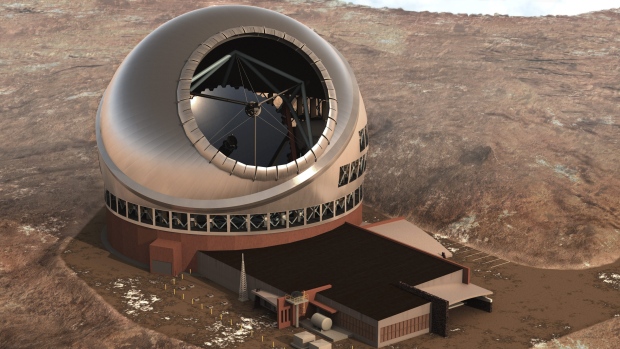
Artist's rendition of the planned Thirty Meter Telescope. (Credit: TMT/Associated Press)

Artist’s rendition of the planned Thirty Meter Telescope. (Credit: TMT/Associated Press)

This is only the latest battle in an ongoing dispute. (See my previous post on the TMT and protests last fall.) Astronomers have found that Mauna Kea, on Hawaii’s Big Island, is an ideal place to build ground-based telescopes because of its “seeing” statistics. Optical and infrared images are less distorted by light traveling through the atmosphere here than in many other places. Although many indigenous Hawaiians have allowed smaller telescopes to be built on the mountain, it becomes more controversial as astronomers try to construct more and larger telescopes on these protected lands which hold a great cultural importance for them. The TMT also drew opposition from celebrities of Native Hawaiian descent, including Jason Mamoa (Khal Drogo on Game of Thrones), who encouraged others to join the protests.

In addition, the protests drew more media attention than the last time, during the ground-breaking. For example, see these excellent articles by Azeen Ghorayshi on Buzzfeed and Alexandra Witze in Nature, as well as other articles in Science, New Scientist, and NPR. George Johnson also discussed the protests in the New York Times, though his column clearly sides with the TMT.

Supported by US and international universities as well as the National Science Foundation (in the form of “partnership-planning activities”), the TMT is the primary 30-meter-class telescope given priority by the US astronomical community in the 2010 Decadal Survey and highlighted in a recent National Research Council report. The other two planned telescopes in that class include the European-Extremely Large Telescope (E-ELT) led by the European Southern Observatory and the Giant Magellan Telescope (GMT) led by an international consortium of universities, both of which are under construction in northern Chile. All three telescopes are scheduled to have “first light” in the early 2020s. During the planning phase of the TMT, in addition to Mauna Kea, astronomers considered other possible locations as well, also including northern Chile and Baja California, Mexico.

The Native Hawaiian position is not monolithic, but some groups oppose the construction of the TMT and others would support it if negotiations took place in good faith and with respect and not only in Western spaces. The protesters are not a small minority, and they don’t believe that their voices have been heard. Many Hawaiians make it clear that they are not against science or astronomy; for example, the Mauna Kea Protectors “[take] a stand specifically against scientific practices that do a lot of damage—to our planet, to traditional native cultures, and to public health and safety.”

They and others make arguments on cultural, environmental, and legal grounds. If built, the TMT would dominate the landscape as it would rise 18 stories above the mountain, at an elevation of 4200m, and would disturb a large area of its slope. Moreover, the Mauna Kea summit lies within a conservation district, and therefore according to Hawaiian law certain (arguably unsatisfied) criteria must be met before construction there. Finally and most importantly, many believe that Mauna Kea is a sacred and special place that must be protected, and those beliefs have not been sufficiently respected by the authorities. (For more information, see here and here.)

The official position can be found on the TMT website and at Mauna Kea and TMT. Furthermore, Claire Max, Interim Director of UC Observatories, recently made an official statement promoting the latter as a source for information “with links to balanced news stories about the project and the protests” and that “TMT…[has] profound regard for Hawaii’s culture, environment and people.”

The TMT does have support among some native Hawaiians, and TMT authorities have set up a $1 million annual scholarship fund, named The Hawaii Island New Knowledge (THINK) Fund, which will be administered by the Hawaii Community Foundation. They have initiated a Workforce Pipeline Program in Hawaii as well. Like the Hawaiian organizations, they insist that they have the law on their side, but unlike them, they refer to the TMT as a done deal and fait accompli rather than as the subject of an ongoing dispute. According to the University of Hawaii position, “more than 20 public hearings have been held during the process and the project has been approved by then Governor Neil Abercrombie, the UH Board of Regents and the Board of Land and Natural Resources…The project has also cleared legal challenges and was upheld in the Third Circuit Court.”

From what I have seen, this dispute has generated heated debates in the astronomical community in various social media. For example, in the “Diversity in Physics and Astronomy” Facebook group (with 1700 members), astronomers made more posts and comments about the TMT and protests than about any other issue over the past few months. Astronomers expressed a wide range of views on Twitter as well, some of which were highlighted recently by Emily Lakdawalla’s Storify timeline, “Astronomy Progress is Not Universal.”

Like many astronomers and astrophysicists, I’m torn. While the TMT would be a boon for science and scientists, especially those who study galaxies, supernovae, stars, and planets, that is not the only criterion by which such a project should be evaluated. The state of Hawaii and the United States in general have a long history of colonialism and disrespect for indigenous peoples and cultures, and unfortunately the TMT risks falling onto the wrong side of that history. For now, I think that the moratorium on construction should continue and substantial negotiations should take place, and if that delays the schedule, so be it. If more native Hawaiians and organizations do not decide to support the TMT, the astronomical community should consider a different site or even terminate the telescope altogether. I realize that the cost of either action would be great, considering the huge international investment that has already taken place, but the price of desecrating native Hawaiians’ sacred and protected land is much higher.

I see strong opinions on each side, and many have distributed petitions and sought to gain more public and media support. How will astronomers and Hawaiians proceed? I hope that they will use this time to discuss the situation with respect and as equals, and they may determine whether a resolution that satisfies many eventually can be achieved.

Physics Diplomacy and the Iran Nuclear Deal

After much anticipation and cautious optimism, US, European, and Iranian negotiators managed to put together a nuclear framework in Lausanne, Switzerland earlier this month. It sets the stage for a final detailed agreement to be developed in June, which will transform Iran’s nuclear program and reduce sanctions against Iran that have weakened its economy. It appears that diplomats have nearly bridged a formidable foreign policy impasse that plagued their respective governments for over a decade.

Perhaps more importantly, a rapprochement with Iran could gradually end the country’s international isolation since 1979 following the revolution. In addition, from the perspective of Iran and some other Middle East countries, Iran’s improved relations with the US and its fair treatment under the nuclear Non-Proliferation Treaty (NPT) would make the US appear less hypocritical and less a source of instability. As an historical aside, it’s also worth noting that Iran started its nuclear program in 1967 with US help as part of Eisenhower’s “Atoms for Peace” program, and unlike Iran, three countries in the region with nuclear programs (Israel, Pakistan, and India) have not signed and ratified the NPT.

Iranian Foreign Minister Zarif and US Secretary of State Kerry in Paris on 16 Jan. 2015. (Source: US State Department)

Iranian Foreign Minister Zarif and US Secretary of State Kerry in Paris on 16 Jan. 2015. (Source: US State Department)

Important Characters

Many interesting aspects of this agreement and situation are worth discussing. First, much credit for this historic achievement goes to Iranian Foreign Minister Zarif, US Secretary of State Kerry, and EU foreign policy chief Federica Mogherini, though of course all of the negotiating teams put in a lot of hard and stressful work to make it happen. Both Kerry and Zarif now face a difficult balancing act: staying true to the framework and focusing on delivering a final agreement while navigating domestic political concerns.

The latter may reflect the different messages and emphases in the statements made by Kerry and Zarif as they returned to their home countries. For example, Zarif and President Rouhani spoke more about relief from sanctions and freedom to enrich uranium while Kerry and President Obama spoke about the limits and restrictions on Iran’s nuclear program. Furthermore, while some influential Iranian “hard-liners” like Hossein Shariatmadari criticized the deal, US senators in the Foreign Relations Committee led by Bob Corker (R-Tenn.) sought to pass a bill that would incorporate Congressional oversight but also had the potential to jeopardize diplomatic efforts.

US Energy Secretary Ernest J. Moniz and Ali Akbar Salehi, head of Iran’s Atomic Energy Organization also are important characters in this story. As pointed out in the New York Times and the Guardian, both had studied nuclear science at the Massachusetts Institute of Technology in the mid-1970s, and they became No. 2 negotiators and “atomic diplomats” during the nuclear talks. Perhaps having experienced physicists involved helped cooler heads to prevail? (I’m half-joking; remember the Manhattan Project?)

Technical Details

Let’s explore some of the technical elements of the nuclear framework. According to the International Atomic Energy Agency (IAEA) and US intelligence, Iran ended any weapons research it may have had in 2003. However, because of its power plant in Bushehr, its enrichment facilities in Natanz and Fordo, and its heave water reactor under construction near Arak, Iran has the capability to enrich weapons-grade uranium.

Only 0.3% of natural uranium is in the form of the 235U isotope. For power reactors, 3.5% enrichment is needed, while 20% is considered a threshold for “weapons-usable” uranium, and 90% enrichment is weapons-grade. Moreover, when uranium is burned, the spent fuel can be processed to extract plutonium. (And as we know from Fukushima, those spent fuel pools can be dangerous.)

Iran currently has 19,000 centrifuges for enriching uranium, and they are operating only 9,000 of them. If Iran wanted to, analysts predict that they are 2-3 months away from acquiring enough fissile material for one weapon; the US and Europe seek to prevent a nuclear “breakout” by extending this to at least one year, for a duration of at least 10 years. In addition, the international community will set up strict inspection and transparency measures that would allow it to detect any Iranian efforts to violate the accord.

For more information, see the US State Department’s detailed fact sheet and these Union of Concerned Scientists (UCS) and Science Insider articles. The UCS also recently held a webinar with directors and members of its Global Security Program: Drs. Lisbeth Gronlund, David Wright, and Edwin Lyman.

The agreement’s key provisions may be summarized as follows. The first one involves inspections and transparency: the IAEA will have access to Iran’s nuclear facilities, supply chain, uranium mines, centrifuge production, storage facilities, as well as any suspicious sites. Second, US and EU nuclear sanctions will be lifted after the IAEA verifies key steps, and they will “snap back” if necessary. Also, the UN Security Council will pass a new resolution and will set up a dispute resolution program. Third, for the enrichment, the number of centrifuges will be reduced to 6,104 IR-1s (1st-generation centrifuges), and Iran is not allowed to enrich uranium beyond 3.67% for at least 15 years or build new enrichment facilities during that time. Enrichment R&D will be limited as well, and there are plans to convert Fordo facility to an international research center. Fourth, Iran will modify the Arak research reactor to reduce plutonium production, ship spent fuel out of the country, and they are not allowed to engage in reprocessing or reprocessing R&D indefinitely.

The Fordo facility, built below a mountain, will be turned into a research lab. (Credit: IAEA Imagebank/Flickr)

The Fordo facility, built below a mountain, will be turned into a research lab. (Credit: IAEA Imagebank/Flickr)

According an interview with Seyed Hossein Mousavian, former ambassador and nuclear negotiator for Iran, the US and world powers got what they wanted: Iran has accepted the maximum level of transparency and verification, including confidence-building measures that would ensure there would be no breakout or diversion toward weaponization. For Iran, negotiators can say that their rights for peaceful nuclear technology under the NPT was accepted, and all unilateral and multi-lateral nuclear-related sanctions will be lifted.

Implications

This historic diplomatic achievement, assuming that it comes to fruition with a final detailed agreement in June, will satisfy many concerns on both sides. It likely will result in improved relations and more respect for Iran. Importantly, it will also aid scientists and scientific research in Iran. Over a history of thousands of years, Persians have contributed fundamental scientific discoveries, including for example, by 10th century luminaries, the physicist Alhazen and astronomer Biruni. Now Persian scientists can engage in more international collaboration, and the new physics laboratory in Fordo will be an excellent start. (For more, see these articles in Science, Nature, and NY Review of Books.)

Finally, this has implications for the region. If relations between Iran and world powers improve, Iran could play a much more important role in Middle Eastern affairs. I think this is as it should be, but those who see these relations as a zero-sum game, including some in Saudi Arabia and Israel, oppose the deal for that reason. Leaders of another regional power, Turkey, have not opposed it, however. Furthermore, the success of diplomacy helps to continue nonproliferation efforts under the NPT around the world. We should also acknowledge though, as long as people view nuclear power as the primary alternative to fossil fuels, many countries will invest in it, and the risk of nuclear breakout and proliferation will remain, in spite of IAEA efforts and the NPT.

Challenges of the James Webb Space Telescope, NASA’s Successor to Hubble

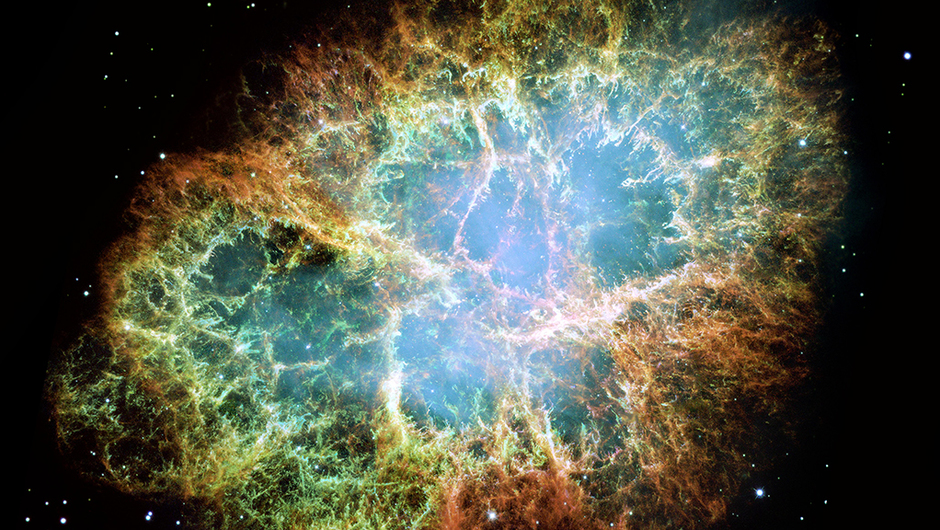
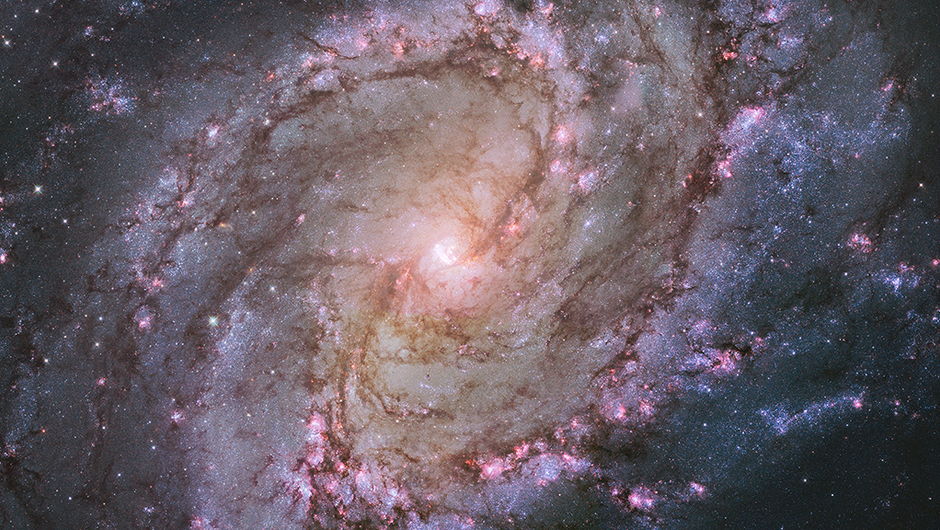
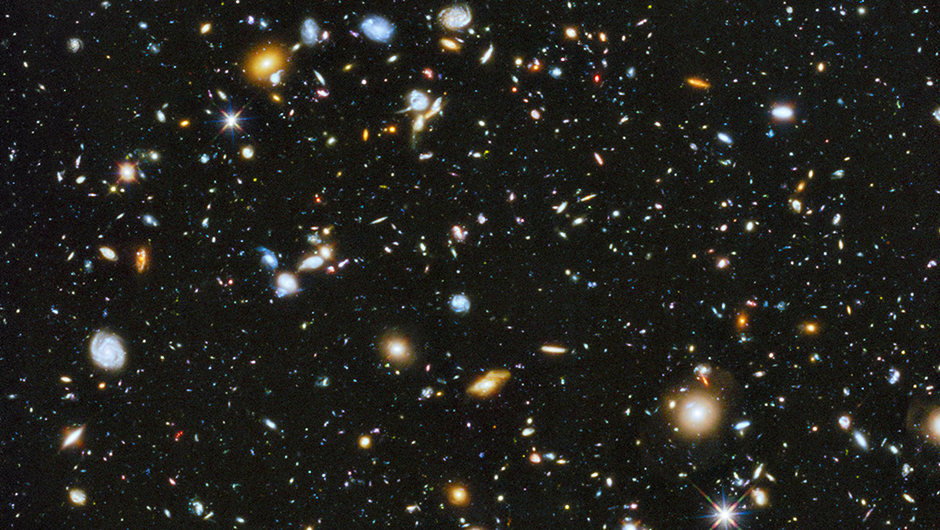
Everyone grows up eventually. It’s hard to believe, but the Hubble Space Telescope (HST), which many astronomers and astronomy fans consider to be one of the most important telescopes of our generation, turns 25 this month. Hubble, built and funded by NASA and the European Space Agency, was launched on 24th April 1990, only a half year after the fall of the Berlin Wall. Its instruments produced numerous iconic images, including the spectacular ones below.

Everyone is celebrating this anniversary! Check out hubble25th.org for more images, news, and information. The 2010 documentary, “Saving Hubble,” is now viewable for free. Plus, in a public lecture on 1st April as part of National Academies’ Space Science Week, Jason Kalirai (Space Telescope Science Institute) highlighted Hubble’s many scientific contributions.

Crab Nebula (Credit: Hubble Space Telescope)

Crab Nebula (Credit: Hubble Space Telescope)

Galaxy M83 (HST)

Galaxy M83 (HST)

Ultra Deep Field (HST)

Ultra Deep Field (HST)

Now astronomers and the astronomy-loving public are anticipating and preparing for Hubble’s successor, the James Webb Space Telescope (JWST, named after a former NASA administrator). Over its ambitious 5 to 10-year mission (a Star Trek-style time-scale!), its powerful cameras and spectrometers will focus on near- to mid-infrared wavelengths and will examine planetary systems in our galaxy as well as distant galaxies forming in the early universe, only a few hundred million years after the Big Bang. As you can see, it’s built with a folding segmented mirror and a deployable sunshield. It’s not servicable like Hubble was, as JWST will orbit one million miles from Earth.

Artist's impression of NASA's James Webb Space Telescope.

Artist’s impression of NASA’s James Webb Space Telescope.

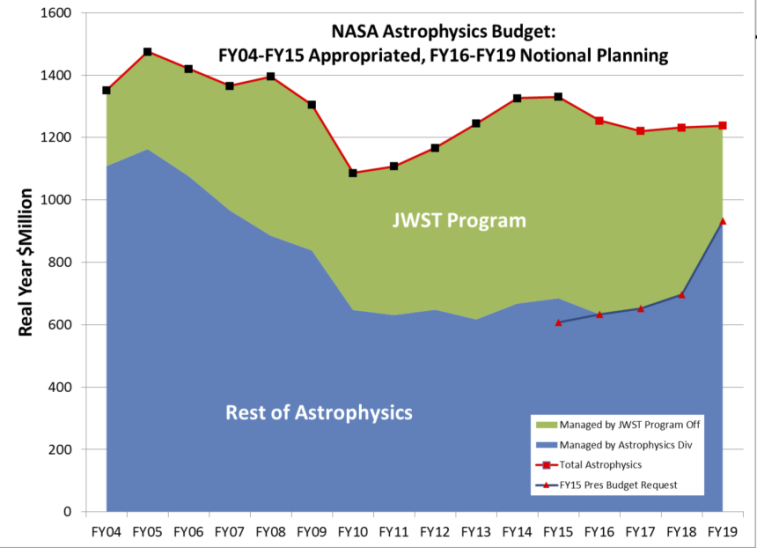
As I’ve written in previous posts, JWST’s gigantic budget has been contentious in the astronomical community. While astronomers believe that JWST will likely have a big scientific impact, especially on the fields of planetary physics and galaxy formation, others are unhappy that its cost inevitably results in smaller programs being cut. NASA officials prioritize the missions and programs the agency invests in, and it is simply not feasible to fund every exciting project astronomers propose. (JWST’s budget constituted nearly half of NASA’s astrophysics budget for FY 2015.) Based on my conversations with astronomers, the community remains divided about JWST, though many astronomers are excited about the telescope and note its importance for public outreach.

Credit: NASA Astrophysics Division Director Paul Hertz

Credit: NASA Astrophysics Division Director Paul Hertz

Large projects rarely stay on schedule and on budget in astrophysics, but JWST was perhaps an extreme case. A decade ago, JWST faced considerable criticism, such as in this Nature article by Lee Billings, because of its many delays and cost overruns. But after much pressure and threats from Congress to cancel the program, NASA officials rebaselined JWST’s budget and conducted a management overhaul in 2011. Since then, scientists have kept JWST within its new $8.8-billion budget and the telescope is on schedule for launch in 2018.

Last Tuesday, the House Science Committee held a hearing reviewing JWST’s progress, called “Searching for the Origins of the Universe: An Update on the Progress of the James Webb Space Telescope (JWST).” According to the American Institute of Physics, the committee’s Chair and Ranking Member, Rep. Steven Palazzo (R-MS) and Rep. Donna Edwards (D-MD), “expressed, as did other subcommittee members, great interest in and support for the telescope.” According to Cristina Chaplain of the Government Accountability Office, JWST has ten months of unused budget reserves, which will be more than enough as it moves into the integration and testing phase.

A few challenges remain. For example, technicians have had difficulty with a “cryocooler” component, which needs to operate at much colder temperatures than other such units in order to keep the Mid-Infrared Instrument sufficiently cool, but it is still scheduled to be delivered this summer. In any case, both John Grunsfeld, associate administrator of NASA’s Science Mission Directorate, and John Mather, JWST’s Senior Project Scientist, expressed confidence to the Committee that this observatory will launch in 2018. “Expect amazing discoveries,” Mather said.

For more coverage, take a look at these articles in Scientific American, Space News, and Space.com. [Full disclosure: I am a member of the American Institute of Physics, and former colleagues at the University of Arizona helped design JWST’s NIRCam instrument.]

Nine New Dwarfs Discovered in Our Local Group of Galaxies

Just as astronomers are examining dwarf planets, they’re investigating dwarf galaxies too. Two weeks ago, an international collaboration of scientists with the Dark Energy Survey (DES) peered around the southern hemisphere and announced in a paper in the Astrophysical Journal that they found candidates for nine new “satellite” galaxies around our Milky Way. For those of you keeping count—and many people are—if confirmed, this means that we now have 35 satellites in our Local Group of galaxies, which could even tell us something about the dark matter out there.

An illustration of the previously discovered dwarf satellite galaxies (in blue) and the newly discovered candidates (in red) as they sit outside the Milky Way. (Image: Yao-Yuan Mao, Ralf Kaehler, Risa Wechsler.)

An illustration of the previously discovered dwarf satellite galaxies (in blue) and the newly discovered candidates (in red) as they sit outside the Milky Way. (Image: Yao-Yuan Mao, Ralf Kaehler, Risa Wechsler.)

The smallest known galaxies (as might be inferred from their name), dwarf galaxies are extremely faint and difficult to detect, sometimes only containing a few hundred stars and appearing to blend in with the stars in the disk of the Milky Way. They can also be difficult to distinguish from globular clusters, which are just clumps of stars that evolved with a galaxy and orbit around its core.

Astrophysicists refer to galaxies that travel around a larger galaxy as “satellite” galaxies. In many cases, these galaxies were previously floating through space, minding their own business, until the gravitational force of the massive galaxy pulled them in. Some astronomers think that that is what happened to the Small Magellanic Cloud and Large Magellanic Cloud, the brightest satellites of the Milky Way. (The Persian astronomer Abd-al-Rahman Al-Sufi discovered the LMC in 964 A.D., and it does sort of look like a “cloud.”) To give these satellites some perspective, they’re mostly between 100,000-200,000 light-years away, while the Milky Way’s radius is about 50,000 light-years, which is already much longer than the road to the chemist’s.

Keith Bechtol (University of Chicago) and Sergey Koposov (University of Cambridge) led parallel studies with the DES, which uses an optical/infrared instrument on a telescope at the Cerro Tololo Inter-American Observatory in the Chilean mountains. “The discovery of so many satellites in such a small area of the sky was completely unexpected,” says Koposov. These findings only include the first-year data of the DES though, and the research team stands poised to discover as many as two dozen more satellite galaxies as they continue their survey.

Six of the nine newly discovered dwarf satellite galaxies. (V. Belokurov, S. Koposov. Photo: Y. Beletsky.)

Six of the nine newly discovered dwarf satellite galaxies. (V. Belokurov, S. Koposov. Photo: Y. Beletsky.)

In 2005-2006, Koposov and his colleagues (Vasily Belokurov, Beth Willman, and others) found about half of the previously detected satellite galaxies of the Milky Way with the Sloan Digital Sky Survey (SDSS), the DES’s predecessor in the northern hemisphere. The SDSS and DES are powerful enough to detect and resolve faint dwarf galaxies that hadn’t been observed before, transforming this field and stimulating interest in the Milky Way’s neighborhood.

Dwarf galaxies could reveal new information about dark matter, since their mass in stars is outweighed by thousands of times by the mass of dark matter particles surrounding them. Astrophysicists developing numerical simulations of growing clumps of dark matter, thought to host galaxies within them, have been concerned that more satellite clumps form in the simulations than satellite galaxies have been observed in the Milky Way–a discrepancy referred to as the “missing satellites” problem. It’s not clear yet whether the newly discovered satellite galaxy candidates could solve or complicate this problem. Moreover, astrophysicists continue to worry about other problems, including disagreements between observed galaxies and simulations involving the masses and angular momenta of dark matter clumps. In any case, scientists working with the DES continue to push the debate further, and their ongoing survey will be of great interest to the astronomical community.

A simulated dark matter "halo" with satellites, possibly similar to the Milky Way. (Credit: Volker Springel, Aquarius Simulation.)

A simulated dark matter “halo” with satellites, possibly similar to the Milky Way. (Credit: Volker Springel, Aquarius Simulation.)

For more coverage, check out this article by Monica Young in Sky & Telescope and articles in Wired and Washington Post. If you’re interested, you can also see my own earlier research on satellite galaxies in dark matter models and on the Magellanic Clouds.

How Do Politics Interfere with the National Science Foundation and NASA?

Why do Congress members members keep getting involved in scientists’ work? Is it because they really love science? In my opinion, this interference impedes scientists’ communities from setting their own priorities and from continuing their work. (I argued as much when I spoke to Senator Feinstein’s staff at her San Diego office recently.) But first I’ll describe how Representatives in the House Science Committee seek to interfere with the National Science Foundation’s peer-review process and how a Subcommittee Chair in the Senate interferes with NASA’s scientific programs. As budget negotiations begin for FY 2016, these issues take on additional importance.

Suppose the scientist Dr. X wrote a paper about her findings and wants to publish it. She’d submit it to a journal, where it would go through the peer-review process: a peer reviewer would review the paper and assess whether it is publishable and appropriate for the journal. When Dr. X submits a proposal for a research grant with a federal agency, such as with the National Science Foundation (NSF), the process works sort of similarly. More is at stake though, and a panel of reviewers review many proposals and assess their scientific merits.

nsf1

In the context of budget debates during the recession and ongoing “sequestration,” it’s natural that policy-makers would scrutinize agencies’ budgets. Nevertheless, in the federal R&D budgets by agency, the NSF’s is rather small—much smaller than the National Institutes of Health and the Department of Defense, for example—and in any case, hasn’t the NSF been doing a good job? In spite of this, last year the House Committee on Science, Space, and Technology (“House Science Committee,” for short), chaired by Representative Lamar Smith (R–TX), began “an unprecedented—and some say bizarre—intrusion into the much admired process that NSF has used for more than 60 years to award research grants,” according to science policy analyst Jeffrey Mervis.

Representatives Eddie Bernice Johnson (D–TX) and Lamar Smith (R–TX). Credit: Science Insider

Representatives Eddie Bernice Johnson (D–TX) and Lamar Smith (R–TX). Credit: Science Insider

In 1976, Senator William Proxmire (D–WI) attacked scientific research with the annual “Golden Fleece” Awards, the first of which went to the NSF. These awards and Proxmire’s grandstanding resulted in generating suspicion towards government spending on science. Senator Tom Coburn (R-OK) continued this legacy by criticizing primarily research grants in the Social, Behavioral, and Economic (SBE) sciences. In response, a few years ago, a coalition of scientific groups started the Golden Goose Awards to highlight “examples of seemingly obscure studies that have led to major breakthroughs and resulted in significant societal impact.”

Lamar Smith’s current attack goes further than the Golden Fleece Awards by investigating the NSF’s peer-review process itself, and scientists are concerned about whether the process will remain confidential. Moreover, Smith would like to ensure that every research grant funded by the NSF is in the “national interest;” any other research, according to him, constitutes “wasteful spending.” It seems that Smith’s mission is to attack research in the social sciences, and at the same time he threatens to “compromise the integrity of NSF’s merit review system as part of this campaign,” according to House Science Committee member Rep. Eddie Bernice Johnson (D–TX). (For more coverage, see these excellent articles in Science, National Geographic, and LA Times.)

Finally, on a more positive note, it seems that Smith and NSF Director France Córdova may eventually resolve their disagreements. Following a hearing on the NSF’s grant making policies and procedures, Smith backed down from his previous position and appears to have endorsed the NSF’s peer review system. This is encouraging, but I fear that the battle isn’t over.

Senator Ted Cruz (R-TX). (Credit: AP)

Senator Ted Cruz (R-TX). (Credit: AP)

But it’s not just the NSF that has experienced politicians interfering in its work. NASA faces a somewhat similar situation. (The Environmental Protection Agency has also withstood attacks in recent weeks, but that’s another story.) Senator Ted Cruz (R-TX), the new chair of the Senate Commerce Subcommittee on Science and Space, which oversees NASA, is getting involved in that agency’s work. At a budget hearing, Cruz questioned Charles Bolden, a former astronaut and NASA’s administrator, to explain NASA’s funding of earth sciences (also known as geosciences), which Cruz claimed are not “hard science.” Cruz argued that manned space exploration is NASA’s “core mission,” and earth sciences have nothing to do with that.

Bolden responded, “It is absolutely critical that we understand Earth’s environment, because this is the only place we have to live…We’ve got to take care of it. and the only way to take care of it is to know what’s happening.” Moreover, according to the American Geophysical Union (AGU) in Science magazine, one can’t decouple earth sciences and planetary sciences, which are inextricably linked. (For more coverage, also check out these articles in the Guardian, Slate, and Salon.)

Cruz is right that the proportion of NASA funding going to earth science research has increased over the past few years, but there is a reason for that. In my opinion, some people reporting on this in the news seem to focus on the misguided and ill-informed views of Senator Cruz when it comes to climate science in particular. But I think the issue here is that politicians shouldn’t generally interfere with scientists doing their work as best they can. Scientists in the space sciences (including earth sciences) periodically write reports known as Decadal Surveys, in which they set their short- and long-term priorities for investing funding and research. Though there could be more interaction and better communication between scientists and policy makers, especially when some research programs might have policy implications, that doesn’t mean that non-scientists know better when it comes to setting priorities for scientific research.

These debates don’t happen in a vacuum but are related to the larger context of federal budgets for science research, education, and public outreach. Negotiations for FY 2016 budgets are already underway, and just last week scientists and their allies advocated for a 5% increase to the NSF’s budget, primarily going to telescope construction projects and the Atmospheric and Geospace Sciences Division, as well as an 11% increase to its education budget. The debates surely will continue, and I’ll keep you posted.

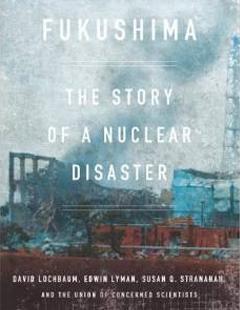
Book Review: “Fukushima: The Story of a Nuclear Disaster”

First the ground shook violently, and then a succession of towering waves smashed the island of Honshu. As people sought shelter and braced themselves during a magnitude 9.0 earthquake and tsunami—the worst and deadliest experienced by Japan in a century—they had no idea what was yet in store for them. The rest of the world was transfixed as well by the unfolding events when on 11th March 2011, four years ago this week, multiple reactor cores at the Fukushima Daiichi nuclear power plant had meltdowns and threatened millions with radiation exposure. Today, scientists continue to assess the effects on public health and ecological damage, while the nuclear industry still reels from the worst disaster since Chernobyl.

fukushima-book

Fukushima: The Story of a Nuclear Disaster, published last year by Dave Lochbaum, Edwin Lyman, Susan Q. Stranahan, and the Union of Concerned Scientists (UCS) analyzes these events and their implications and consequences in detail. Japanese are still recovering from the disaster, and the rest of us are still coming to terms with it as well, making necessary a thorough accounting of it, Tokyo Electric Power Company’s (TEPCO) handling of it, and the nuclear industry’s response. This investigative and well-researched book manages to accomplish that. [Disclosure: I am a member of the UCS Science Network.]

Credit: International Nuclear Safety Center

Credit: International Nuclear Safety Center

Lochbaum and Lyman are both senior scientists and nuclear energy analysts for UCS, while Stranahan was the lead reporter of the Philadelphia Inquirer‘s Pulitzer Prize-winning coverage of the Three Mile Island nuclear accident. They appear to have written the book for a US audience, as they include investigations of the Nuclear Regulatory Commission (NRC) and the vulnerabilities of nuclear reactors in the US similar to Fukushima’s.

The authors describe the tumultuous week of 11th March 2011, as TEPCO workers with little information about what is happening inside Units 1-4 of the plant, scramble to contain the meltdown and prevent additional radiation spreading to a larger zone and getting into the air, water and land. (Residents who weren’t evacuated were told to stay indoors but remained in danger.) First flooding occurred throughout the plant, backup power generators available turned out to be inefficient, there was insufficient water to keep the reactors cool, workers couldn’t enter buildings as they had already exceeded their allowable radiation exposure, an explosion delayed recovery efforts and scattered more radioactive material, and spent fuel pools turned out to be as dangerous as the meltdowns themselves.

As they note in the first chapter and elaborate upon later in the book,

If a natural disaster could trigger a crisis like the one unfolding at Fukushima Daiichi, then, one might wonder, why aren’t even more safety features required to prevent such a catastrophic event from occurring? The short answer is that developers of nuclear power historically have regarded such severe events [“beyond design-basis” accidents] as so unlikely that they needn’t be factored into a nuclear plant’s design.

Lochbaum, Lyman, and Stranahan give a blow-by-blow of the worsening disaster, at times perhaps going into too much detail or giving more background than all but the most interested reader would want to follow. The writing style sometimes was a bit dry as well, though there were plenty of dramatic moments as well. For example, a particularly moving scene occurred when Katsunobu Sakurai, the mayor of Minamisoma, a devastated coastal community just outside the twelve-mile (twenty-kilometer) evacuation zone, took a video pleading for assistance from anyone. “With the scarce information we can gather from the government or TEPCO, we are left isolated,” Sakurai said. “I beg you to help us…Helping each other is what makes us human being[s].” He posted the recording on YouTube, which was viewed by more than two hundred thousand people, and then relief finally poured in.

The authors also describe debates and disagreements between TEPCO and NRC officials, such as about which of the four most damaged reactors and spent fuel pools were at risk of releasing more radiation and which presented the most pressing danger, as they could not focus on all four units at once. They also disagreed about an appropriate evacuation zone, as the NRC eventually recommended a larger zone, and about what officials should tell the public and US citizens in the area.

Following the disaster, antinuclear protesters resisted re-opening plants or continuing construction on new ones. As nearly three fourths of the Japanese public supported an energy policy that would eliminate nuclear power, on 6th May, Prime Minister Naoto Kan announced, “Japan should aim for a society that does not depend on nuclear energy.” The Japan Times stated in an editorial, nuclear power “worked for a while, until, of course, it no longer worked. Now is the time to begin the arduous process of moving towards safer, renewable and efficient energy resources.”

The NRC outlines four or five levels of nuclear power reactor “defense-in-depth,” where first an event occurs, then it could be followed by core damage, radiation release, and exposure to the public. Safety measures at each level are intended to prevent the accident from worsening to the next level, but each level has more and more uncertainty. More importantly, beyond design-basis accidents could exceed all levels of safety measures at once.

Credit: International Nuclear Safety Advisory Group (INSAG)

Credit: International Nuclear Safety Advisory Group (INSAG)

It turns out that in the US, there are numerous Mark I boiling water reactors similar to the ones in Japan. They have similar safety measures as well, as the international nuclear industry generally has the same regulations in both countries. Following Fukushima, some analysts argue that many nuclear reactors throughout the US could be vulnerable to floods, fires, and earthquakes, and people are not sufficiently prepared for such events. For example, 34 reactors at 20 sites around the US are located downstream from large dams, and “the threat posed by the failure of those dams was not taken into account when the plants were licensed.” The authors highlight a particular example: the three-unit Oconee Nuclear Station in South Carolina is especially at risk. The Prairie Island nuclear plant southeast of Minneapolis is another. People think that “it can’t happen here” in the US, but apparently it can, so that leads to the critical question, “how safe is safe enough?” This is a complicated question, and it remains unanswered.

The Japanese continue to recover from the real and figurative fallout at Fukushima. Four years after the disaster, while scientists assess the damage and recovery, sailors sue TEPCO after radiation exposure, the NRC can’t decide how to proceed, and scientists study possible contamination to food supplies and the ecological toll. The thorough analysis in Fukushima remains extremely relevant today, and those interested in the risks and challenges of the nuclear industry will do well to read it.

My Views

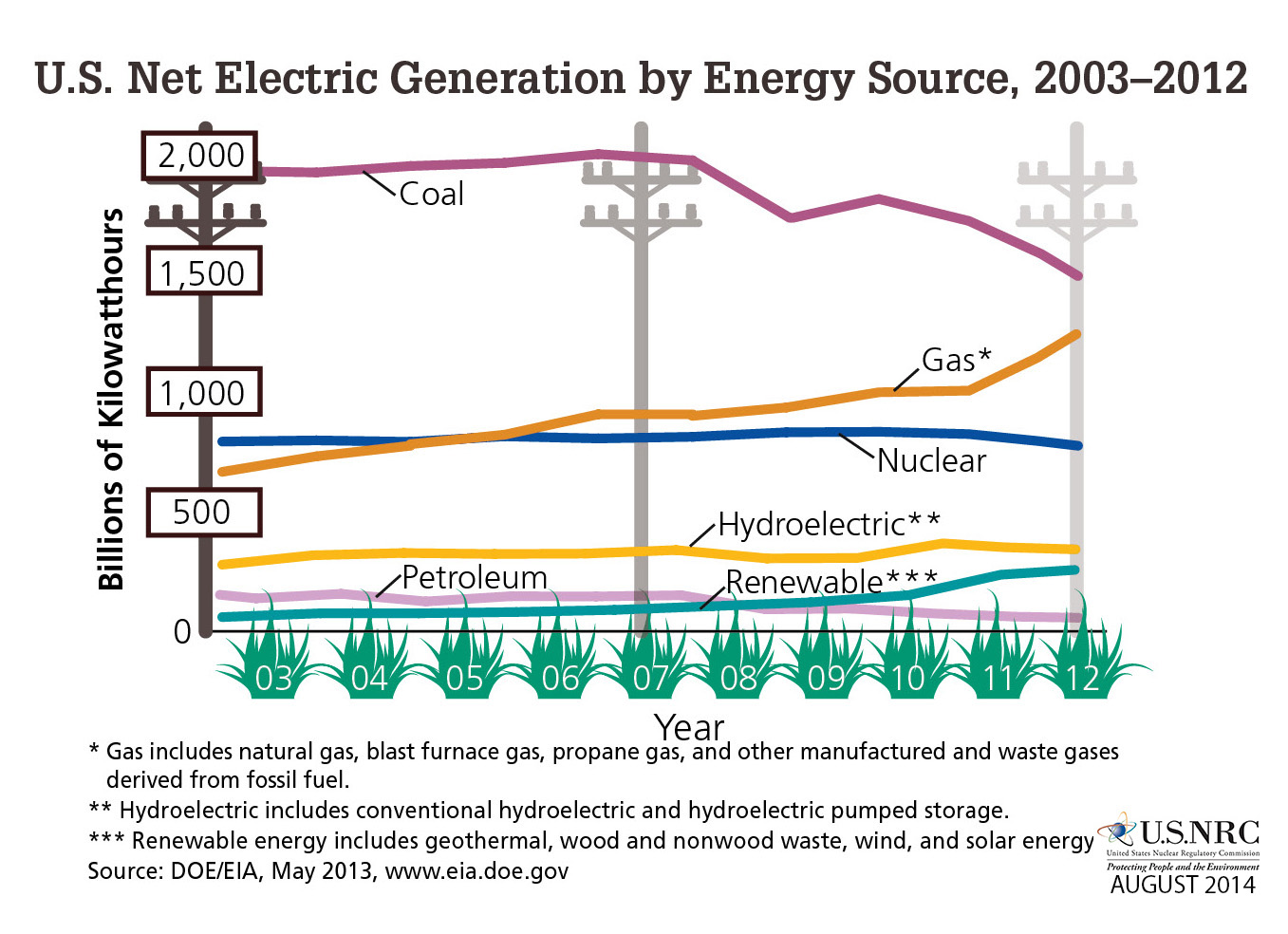
In my opinion, the authors could have included a little more discussion about nuclear energy in the context of energy policy and implications for it as we move to a carbon-limited economy. But this was beyond the scope of the analysis in their book. In the US, in spite of Three Mile Island, Browns Ferry, and other accidents or near-accidents, nuclear energy remains a primary energy source. Many countries oppose nuclear energy, while others such as France, Russia, China, and South Korea, have many plants and have more in construction.
Source: NRC, DOE/EIA

Source: NRC, DOE/EIA

At this point, it might not be possible to transition to a low-carbon economy in the US without including nuclear energy as part of the transition. In the long term, I believe that solar and wind power have the most potential with the least risk, and countries such as Germany have shown that it is possible to ramp up investment in wind and solar in a short period of time. Who knows–maybe fusion energy may be a possibility in the very long-term future, but as I’ve noted before, the ITER experiment is behind schedule, over budget, and has management problems. Finally, we must focus on energy demand, not just supply. We should work on making our cities, industries, transportation, and communities less energy intensive, and it will be worth the effort.

NASA Missions Exploring Dwarf Planets Ceres and Pluto

Now I’m not a planetary astronomer, but like you, I’m excited by any kind of space exploration, and this year the NASA missions, Dawn and New Horizons, will give us the closest and most detailed views of dwarf planets yet.

What is a “dwarf planet,” you ask? Excellent question. Until about ten years ago, astronomers usually referred to small planet-like objects that were not satellites (moons) as “planetoids.” In some ways, they resembled the eight more massive planets in our solar system as well as Pluto, which had a borderline status. Astronomers discovered Charon, Eris (previously called 2003 UB313), and Ceres, and they expected to discover many more, likely rapidly expanding the ranks of our esteemed class of planets. Either they all had to be included, or a clear classification system would have to be determined and Pluto would be reclassified.

Courtesy: IAU

Courtesy: IAU

At the International Astronomical Union (IAU) meeting in Prague in 2006, astronomers opted for the latter in Resolution 5. They demoted poor Pluto, but I think they did the right thing. (I was working in Heidelberg, Germany at the time, and if I’d known how historic this IAU meeting would be, maybe I would’ve tried to attend!) The IAU’s defines a dwarf planet as “a celestial body that (a) is in orbit around the Sun, (b) has sufficient mass for its self-gravity to overcome rigid body forces so that it assumes a hydrostatic equilibrium (nearly round) shape (c) has not cleared the neighbourhood around its orbit, and (d) is not a satellite.” The criterion (c) is the important one here, because it means that the object has not become gravitationally dominant in its orbital zone, which is the case for Pluto and the other planetoids beyond Neptune and for Ceres, the only dwarf planet in the asteroid belt between Mars and Jupiter. These are contentious issues, and the debate even made it into the New Yorker. But let’s be clear: these things are small, and they’re all less massive than Earth’s moon.

We don’t know as much about dwarf planets as we do about the planets in our system, so let’s go exploring! What do these new space missions have in store for us?

Ceres

In 2007, NASA launched the Dawn spacecraft to study Ceres up close. A couple days ago, two centuries after Sicilian astronomer Father Giuseppe Piazzi discovered Ceres, Dawn became the first spacecraft to orbit a dwarf planet. As the deputy Principal Investigator Carol Raymond put it on Friday, this is an “historic day for planetary exploration.” Jim Green, NASA’s Planetary Science Division Director, says that with Dawn, we are “learning about building blocks of terrestrial planets in our solar system.”

Dawn has obtained excellent detailed images already, as you can see in the (sped up) animation below.

Credit:  NASA/JPL-Caltech/UCLA/MPS/DLR/IDA

Credit:
NASA/JPL-Caltech/UCLA/MPS/DLR/IDA

The pair of bright spots in a crater stand out, and astronomers are trying to figure out what they are. They might be an indication of geological activity on it’s changing surface. Ceres has a rocky core and an ice layer, and it’s also possible that these are reflective patches of ice that have been exposed by space rocks falling in and striking the surface. For more information, check out this blog post by Emily Lakdawalla and these articles in the LA Times and Wired.

As Dawn uses its propulsion systems to reshape its orbit and get closer views, astronomers expect to learn more about those spots, look for plumes, and examine the surface for strange craters or other distinguishing features. The spacecraft will later turn on its spectrometers and determine which minerals are present and how abundant they are.

Pluto

NASA launched New Horizons in 2006, and it had much farther to travel to reach Pluto. In January, NASA announced that New Horizons is making its approach to the erstwhile planet, though it’s still about 200 million kilometers away. Mark your calendars: it will fly by Pluto (as it will be traveling too fast to orbit) on 14th July, and at a distance of only 13,000 km, New Horizons’ instruments will obtain the best images yet of it. For more information, check out this article by Jason Major in Universe Today and Phil Plait in Slate.

Distant image of Pluto by New Horizons. Credit: NASA/Johns Hopkins APL/Southwest Research Institute.

Distant image of Pluto by New Horizons. Credit: NASA/Johns Hopkins APL/Southwest Research Institute.

A couple ago, leaders in planetary astronomy highlighted the importance of Dawn and New Horizons in their Decadal Survey. I think both space missions will turn out to be worthwhile, and let’s stay tuned to see what they discover over the next few months.

Geoengineering and Climate Interventions: Too Risky or Needs More Research?

At the American Association for the Advancement of Science (AAAS) meeting in San Jose in February, scientists from the US National Research Council released two high-profile reports on climate interventions and geoengineering techniques. The most thorough evaluation of its kind, this pair of studies assesses proposed climate intervention approaches including their cost, technological capacities, uncertainties, impacts, challenges, and risks. As the Earth and its inhabitants experience a changing climate nothing like any in recorded human history, and as concentrations of greenhouse gases in the atmosphere continue to rise, scientists are interested in considering all possible responses.

The research committee consists of an impressive array of experts from a variety of institutions and universities, including Ken Caldeira (Carnegie Inst. for Science), Lynn Russell (Scripps Inst. of Oceanography) and David Titley (Penn State), and it is chaired by Marcia McNutt, editor-in-chief of Science and former director of the US Geological Survey, and they are informed by numerous analysts and staff. The National Academy of Sciences (NAS), the US intelligence community, NASA, NOAA, and the Dept. of Energy sponsored the studies. One can access both full reports and a 4-page summary at the NAS website.

Photograph: Frank Gunn/The Canadian Press/Associated Press

Photograph: Frank Gunn/The Canadian Press/Associated Press

The authors avoid the more commonly-used term “geoengineering,” which they also used in previous reports, because they consider the atmosphere and not just the Earth and because engineering “implies a greater degree of precision and control than might be possible.” Instead, they propose the term “intervention,” with its connotation of “an action intended to improve a situation.”

Through these reports, the committee makes three main recommendations and conclusions. First, the authors argue that there is no substitute for climate change mitigation and adaptation. Second, they recommend research and development investment to improve methods of carbon dioxide removal and disposal at scales that would have a significant global climate impact. Third, they oppose deployment of albedo-modification techniques but recommend further research.

Carbon dioxide removal and sequestration

NAS report: "Climate Intervention: Carbon Dioxide Removal and Reliable Sequestration"

NAS report: “Climate Intervention: Carbon Dioxide Removal and Reliable Sequestration”

Carbon dioxide removal (CDR) strategies involve capturing carbon in the terrestrial biosphere or the ocean after it’s been emitted. These approaches are intended to mimic or accelerate processes that are already occurring as part of the natural carbon cycle. The authors consider five types of CDR techniques: land-management approaches such as forest restoration; accelerated weathering techniques (allowing the oceans to absorb more CO2 than normal); ocean iron fertilization (so that more microorganisms such as plankton consume CO2, like a “biological pump”); bioenergy (using biomass) followed by CO2 capture and sequestration; and direct air capture of carbon.

The authors describe ocean fertilization and direct air capture as “immature technologies,” while land management and weathering processes have only been carried out on a limited scale, and bioenergy is limited by the availability of land for biomass and by the need to transport it to processing facilities. The barriers to CDR deployment involve slow implementation, limited capacity, policy considerations, and high costs of currently available technologies. The committee concludes the report with the following recommendation:

Recommendation 2: The Committee recommends research and development investment to improve methods of carbon dioxide removal and disposal at scales that would have a global impact on reducing greenhouse warming, in particular to minimize energy and materials consumption, identify and quantify risks, lower costs, and develop reliable sequestration and monitoring.

Albedo-modification research

NAS report: "Climate Intervention: Reflecting Sunlight to Cool Earth"

NAS report: “Climate Intervention: Reflecting Sunlight to Cool Earth”

Albedo-modification techniques ignore the greenhouse gases and instead seek to avoid global warming by blocking the sun to prevent light from reaching the Earth’s surface. Such methods could lower average global temperatures in a couple years, like the effects of volcano eruptions, such as Mount Pinatubo in the Philippines in 1991. The authors mainly consider two methods for scattering sunlight: injecting millions of tons of aerosol-forming gases into the stratosphere; or marine cloud brightening, increasing the efficiency with which the ocean clouds reflect sunlight. They also briefly consider other techniques including: space-based methods, placing scatterers or reflectors in the atmosphere; and cirrus cloud modification, such that more long-wave radiation can flow up into space.

The authors acknowledge that albedo-modification techniques only temporarily mask the warming effect of greenhouse gases and would be needed to be sustained indefinitely. In addition, there could be unanticipated and unmanageable risks and consequences, “including political, social, legal, economic, and ethical dimensions.” Therefore, the committee comes to the following simple conclusion:

Recommendation 3: Albedo modification at scales sufficient to alter climate should not be deployed at this time.

Media Response

It’s interesting that with the same pair of reports, journalists at different media outlets present the study’s results in a variety of ways, demonstrating the many perspectives with which people approach these issues. For example, journalists and editors at the New York Times, Los Angeles Times, Science, and National Geographic point to the need for more research, primarily on carbon dioxide removal techniques. On the other hand, Suzanne Goldenberg at The Guardian writes that the consideration of planetary-scale interventions shows how concerned scientists have become about advancing climate change, while Alexandra Witze at Nature writes about how these reports legitimize geoengineering, though many of the climate intervention approaches are deemed too risky.

I would argue that most of these journalists describe the study correctly, but since the study has multiple recommendations that are somewhat at odds with each other and since the committee includes people with different views and backgrounds, it’s inevitable that some people would be more responsive to some aspects of the report over others. You may also be interested in critical responses by people blogging with the Union of Concerned Scientists and the National Association of Science Writers.

Moving Ahead

Finally, I’ll end with my view of this study and of climate interventions. I’m not sure that the term “climate interventions” itself is an improvement over “geoengineering”: I think that the former amounts to re-branding the issue and that it sounds less serious. Make no mistake, what scientists consider in these reports are serious stuff indeed. And as some have mentioned before, such a scheme has been imagined before—by “The Simpsons” villain Mr. Burns.

The study’s authors state that there is no substitute for climate mitigation and that we should focus on the root cause of climate change, which is the carbon dioxide in the Earth’s atmosphere. However, the carbon emissions are themselves caused by human society’s growing energy demand and the widespread use of fossil fuels: coal, oil, and gas.

The authors point out that most geoengineering schemes are too risky, involve immature technologies, have high costs, and could have unknown consequences on a planet-wide scale. Is it really worthwhile to invest in more research of them? The only exception is forest restoration and other land management methods, which would help when combined with reduced carbon emissions, and I wouldn’t group them with these other carbon-capture climate interventions.

I worry that this report would pave the way for wasting large investments of funding and effort researching these schemes, rather than focusing on the goal of slowing and eventually stopping climate change by transitioning to a low-carbon economy. Moreover, if people believe that a technological solution is possible in the distant future, they will not strive so hard to reduce carbon emissions today and will continue with business-as-usual. Above all, we should be focusing on expanding climate mitigation efforts. We should also work on climate adaptation, since the carbon already in the atmosphere will cause some warming in the coming decades no matter what.

How Scientists Engage with the Public, Media, and Policy

Scientists frequently use social media and engage with journalists, policy-makers, and the public. At the same time, many people have a thirst for reliable cutting-edge results on the latest scientific findings and on pressing questions such as responses to the Ebola crisis, climate change, and the drought in California. However, scientists themselves do not sufficiently value public outreach and policy advocacy among their peers. And the pressures of competition and the fast-paced news cycle can distort the scientific messages that reach people.

Courtesy: Pew Research Center

Courtesy: Pew Research Center

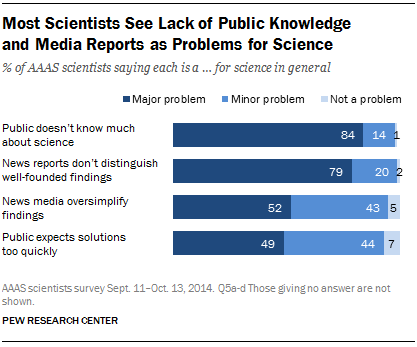
Lee Rainie, director of internet, science and technology research at the Pew Research Center, just released the results of a survey of 3,748 scientists in the American Association for the Advancement of Science (AAAS) this week at the annual meeting in San Jose. He and his colleagues find that 87% believe that scientists should take an active role in public policy debates about science and technology, 51% of scientists talk to journalists, 24% of them blog, and 47% of scientists use social media—a higher fraction than five years ago. Social scientists, earth scientists, and physicists and astronomers engage in these activities more than those in other fields. (You can read the full report here.)

Courtesy: Pew Research Center

Courtesy: Pew Research Center

That’s the good news; now for the bad news. The majority of scientists believe that the limited public knowledge about science and the fact that the public expects solutions too quickly are major problems. Furthermore, although scientists interact with reporters, many criticize news media: they believe that news reports oversimplify findings and don’t distinguish well-founded findings, and they believe that this too is a problem for science. In addition, many scientists surveyed do not think that the best scientific information is used for crafting policies, such as those involving clean air and water, food safety, and medical treatments.

Courtesy: Pew Research Center

Courtesy: Pew Research Center

Here’s where we transition from the survey results to my opinions about their implications..

Many people love science and they can’t get enough of it. In my field of astrophysics, I see people inspired by stories about the comet landing, theories about black holes, and observations of galaxies colliding with each other. People consume science news on newspapers like the LA Times, magazines, websites, blogs, television, podcasts, videos, and elsewhere. People want to know the latest science on important subjects, especially those that could directly affect them, including health and environmental issues. If, say, a psychologist at UCLA, an astrophysicist at Jet Propulsion Laboratory, or a climate scientist at the Scripps Institution of Oceanography has an exciting new result, they would like to advertise it and people would be interested in hearing about it.

Politicians also want to hear about the most up-to-date science when they develop new policies and regulations and when they determine budgets for relevant agencies and initiatives. Science journalists and advocates attempt to fulfill these demands by communicating research on fields from astronomy and biology to psychology and sociology, but it’s often not easy.

Some aspects of the scientific process itself complicate the situation. When presenting scientific research, it can be difficult to communicate the context of a contentious question, the assumptions of an analysis, and the statistical and systematic uncertainties that might be involved. One may describe competing scientists’ interpretations, but then one must be careful about creating a false equivalency between them if an interpretation is more well-founded than another.

Moreover, excitement over the announcement of a potentially groundbreaking result, such as neutrinos supposedly traveling faster than the speed of light, is often not sustained for long, which is problematic if the result is later retracted. In addition, debates between scientists, such as the recent one about the expansion of the early universe based on results from BICEP2 and the Planck telescope, may take years or even decades to resolve. Scientists compete to get their new results out first, and media outlets compete to get the story out first. In this situation, it can be difficult to communicate nuance and subtlety.

In short, we have plenty of blame to spread around. Scientists should continue to engage but could work on improving the ways in which they communicate. They should encourage each other to get of the lab and office and participate in public outreach, communicate with policy-makers, and interact more with local media. Scientists currently consider these kinds of work as much less important than working on research, and everyone would benefit if they valued them more highly. Scientists should also be as clear as possible about their uncertainties and about when they are presenting not just facts but also expressing opinions about their interpretation

Scientific research isn’t of much use to anyone if no one effectively communicates it and its implications. We should encourage science journalists to take the time necessary to investigate and clearly communicate relevant information in plain language, and when we read or watch those stories, we should try to pay attention to the important caveats. It’s great to get excited about each new science story and discovery, but we would all benefit from a bit of caution and patience.