Rosetta and the Comet

The title sounds like I’ll tell you a fable or short story or something. This is neither of those things, but it is quite a story! I’m not personally involved in the Rosetta mission, though I’ll do my best to tell you about it and what’s unique and exciting about this. (For you fellow astrophysicists reading this, if I’ve missed or misstated anything, please let me know.) And if you’d like more information and updates, I recommend looking at Emily Lakdawalla‘s blog posts on ESA and Phil Plait‘s blog on Slate. If you’re interested in the history and importance of comets (and about how “we’re made of starstuff”), check out Carl Sagan and Ann Druyan’s book, Comet.

Rosetta, the €1.3 billion flagship space probe (see below) of the European Space Agency (NASA’s European counterpart) has chosen to accept an ambitious mission: to chase down, intercept, and orbit a distant comet, and then send the lander Philae to “harpoon” itself to the surface and engage in a detailed analysis. Rosetta is obviously named after the Rosetta Stone in Egyptian history, and Philae is named after an island in the Nile. Rosetta and Philae are hip spacecraft: they even have their own Twitter accounts—@ESA_Rosetta and @Philae2014, respectively. They should be careful when examining the comet below its surface, because if it’s anything like Star Trek, they could find an ancient alien archive in the center! (Fans of the “Masks” episode will know what I’m talking about.)

Science Magazine

Comets are literally pretty cool. They’re clumps of ice, dust, and organic materials with tails that are hurtling through space. What is this comet Rosetta’s pursuing? It’s known as Comet 67P/Churyumov-Gerasimenko, named after a pair of Ukrainian astronomers who discovered it in 1969. 67P/C-G looks like a mere blob from a distance, but it’s 4km in diameter and lopsided with two barely-attached lobes that make it look like a rubber duck from certain angles. “It may be an object we call a contact binary which was created when two smaller comets merged after a low-velocity collision,” said mission scientist Matt Taylor, or it may have once been a spherical object that lost much of its volatile material after encounters with the sun. It also has plumes of dust and gas (from sublimated ices) erupting from the surface, which has a temperature of about -70 C. (The montage of images below are courtesy of ESA/Rosetta/NAVCAM/Emily Lakdawalla.)

20140806_NavCam_animation_6_August_selection_stack

rosetta_osiris_aug72014.jpg.CROP.original-original

Comets tell us about our past, since they’re thought to have formed in the cold of the outer solar system 4.6 billion years ago. They also yield information about the formation of the solar system and about the role of comets in delivering water and organic material to Earth in its history—possibly influencing the origin of life here. Cometary impacts are known to have been much more common in the early solar system than today. There may be billions of these dirty snowballs (or icy dustballs) orbiting the sun, and thousands of them have been observed. Prior to Rosetta, three comets have been analyzed by space probes: Halley’s comet by ESA’s Giotto in 1986, Comet Wild 2 by NASA’s Stardust in 2004, and Comet Tempel 1 by NASA’s Deep Impact, which slammed into it in 2005. The diagram below (courtesy of ESA/Science journal) shows the orbits of Rosetta and 67P/C-G. The comet has been traveling at speeds up to 135,000 km/hr, and Rosetta had to use flybys of the Earth and Mars to maneuver onto the same orbital path. Rosetta will be the first mission ever to orbit and land on a comet, so this is really an historic moment in space exploration.

F4.large

On 11 November, Rosetta will be in a position to eject the Philae lander from only a couple kilometers away. Philae is 100 kg, box shaped with three legs and numerous instruments for experiments (see below), and was provided by the German Aerospace Research Institute (DLR). NASA scientists talk of the “7 minutes of terror” as the Curiosity rover descended to Mars, but Philae’s descent will take hours. Note that 67P is so small and gravity is so weak that the lander would likely bounce off, which is why it needs the harpoons as well as screws on the legs to bolt it to the surface. If the landing is successful—let’s cross our fingers that it is—it will perform many interesting experiments with its instruments. For example, CONSERT will use radio waves to construct a 3D model of the nucleus, Ptolemy will measure the abundance of water and heavy water, and COSAC will look for long-chain organic molecules and amino acids. COSAC will also detect the chirality of the molecules and maybe determine whether amino acids are always left-handed like the ones on Earth. (“Chirality” means “handedness”. I think the only other time I heard the term was for the spin statistics of spiral galaxies.)

Philae_s_instruments_black_background_node_full_image_2

Let’s hope for Rosetta’s and Philae’s success! I’ll update you on this blog when I hear more information.

Extreme Space Weather Event #23072012

You may have seen some dramatic headlines in the news last week: “‘Extreme solar storm’ could have pulled the plug on Earth” (Guardian); “Solar ‘superstorm’ just missed Earth in 2012” (CBS); “How a solar storm two years ago nearly caused a catastrophe on Earth” (Washington Post blog). Also see this Physics Today article, which was published online today and reviewed the press attention to the event.

Though journalists and editors often write hyperbolic headlines, the danger from solar storms is very real, though extreme ones are as rare as massive earthquakes. When you think of solar flares and eruptions threatening humans, it may evoke Stanislaw Lem’s Solaris or the Doctor Who episode 42, but at least our sun isn’t sentient (as far as we know)!

A less threatening solar storm on the Sun

The solar storm in question occurred two years ago on 23 July 2012, and the media reported on it following a NASA public-information release and accompanying four-minute YouTube video (see below). It seems that those of us who live on Earth and use electronic technology were lucky that this was a near miss. The threat of solar storms is also relevant to “space security”, which I wrote about in a previous post.

The paper itself was published last fall in the Space Weather journal by Daniel Baker, of the Laboratory for Atmospheric and Space Physics at the University of Colorado, and six colleagues from NASA, Catholic University, and the University of New Hampshire. Its full title is “A major solar eruptive event in July 2012: Defining extreme space weather scenarios,” and here is their abstract (abridged):

A key goal for space weather studies is to define severe and extreme conditions that might plausibly afflict human technology. On 23 July 2012, solar active region 1520 (141°W heliographic longitude) gave rise to a powerful coronal mass ejection (CME) with an initial speed that was determined to be 2500 ± 500 km/s [5.6 million miles/hr!]… In this paper, we address the question of what would have happened if this powerful interplanetary event had been Earthward directed. Using a well-proven geomagnetic storm forecast model, we find that the 23–24 July event would certainly have produced a geomagnetic storm that was comparable to the largest events of the twentieth century…This finding has far reaching implications because it demonstrates that extreme space weather conditions such as those during March of 1989 or September of 1859 can happen even during a modest solar activity cycle such as the one presently underway. We argue that this extreme event should immediately be employed by the space weather community to model severe space weather effects on technological systems such as the electric power grid.

The solar storm missed the Earth but hit NASA’s STEREO-A spacecraft, which was safely outside the Earth’s magnetosphere and was able to measure and observe the approaching CME, a billion-ton cloud of magnetized plasma. “I have come away from our recent studies more convinced than ever that Earth and its inhabitants were incredibly fortunate that the 2012 eruption happened when it did,” says Baker. “If the eruption had occurred only one week earlier, Earth would have been in the line of fire.” According to the simulations in their follow-up paper by Chigomezyo Ngwira et al., had the 2012 CME hit the Earth, it could have produced comparable or larger geomagnetically induced electric fields to those produced by previously observed Earth-directed events and would have put electrical power grids, global navigation systems, orbiting satellites, etc. at risk.

Pete Riley, a physicist at Predictive Science Inc., published a paper in 2012 in the same journal entitled “On the probability of occurrence of extreme space weather events.” He analyzed historical records of solar storms, and by extrapolating the frequency of ordinary storms, he calculated the odds that a Carrington-class storm (which occurred in 1859) would hit Earth in the next ten years is between 8.5 and 12%!

NASA has calculated that the cost of the 2012 CME hitting the Earth would have been twenty times the devastation caused by hurricane Katrina—on the order of $2tn. The storm would have begun with a solar flare, which itself can cause radio blackouts and GPS navigation failures, and then it would have been followed by the CME a few minutes later, potentially causing widespread havoc with global technological infrastructure. Anything that uses electricity, including water supplies, hospital equipment, and radio and television broadcasts could be shut down. How do we prepare as a society for an event like that?

Comparing Models of Dark Matter and Galaxy Formation

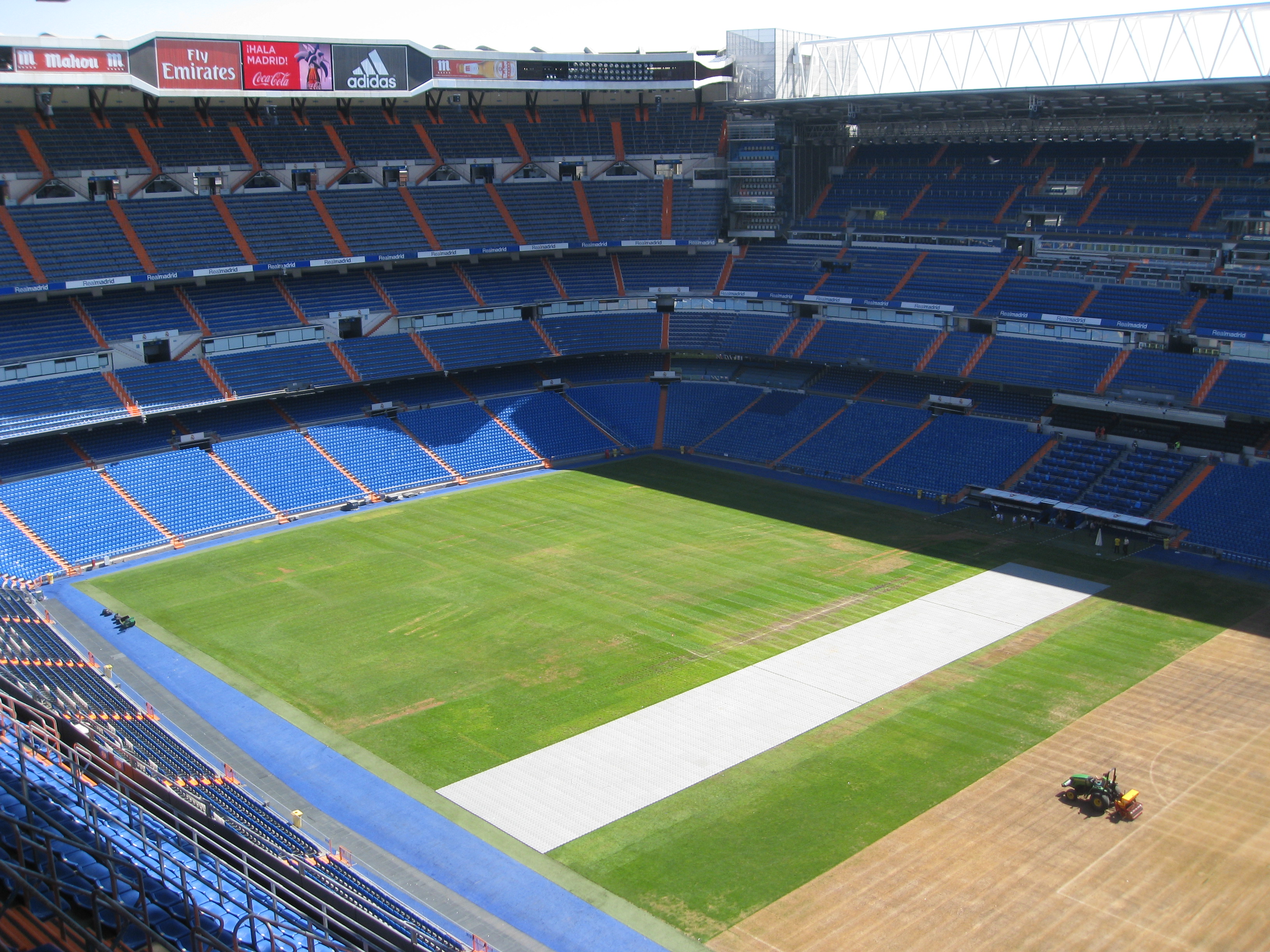
I just got back from the “nIFTy” Cosmology workshop, which took place at the IFT (Instituto de Física Teórica) of the Universidad Autonoma de Madrid. It was organized primarily by Alexander Knebe, Frazer Pearce, Gustavo Yepes, and Francisco Prada. As usual, it was a very international workshop, which could’ve been interesting in the context of the World Cup, except that most of the participants’ teams had already been eliminated before the workshop began! In spite of Spain’s early exit, the stadium of Real Madrid (which I visited on a day of sightseeing) was nonetheless a popular tourist spot. I also visited the Prado museum, which had an interesting painting by Rubens involving the Milky Way.

IMG_1760

This was one of a series of workshops and comparison projects, and I was involved in some of the previous ones as well. For example, following a conference in 2009, some colleagues and I compared measures of galaxy environment—which are supposed to quantify to what extent galaxy properties are affected by whether they’re in clustered or less dense regions—using a galaxy catalog produced by my model. (The overview paper is here.) I also participated in a project comparing the clustering properties of dark matter substructures identified with different methods (here is the paper). Then last year, colleagues and I participated in a workshop in Nottingham, in which we modeled galaxy cluster catalogs that were then analyzed by different methods for estimating masses, richnesses and membership in these clusters. (See this paper for details.)

This time, we had an ambitious three week workshop in which each week’s program is sort of related to the other weeks. During the first week, we compared codes of different hydrodynamical simulations, including the code used by the popular Illustris simulation, while focusing on simulated galaxy clusters. In week #2, we compared a variety of models of galaxy formation as well as models of the spatial distributions and dynamics of dark matter haloes. Then in week #3, we’re continuing the work from that Nottingham workshop I mentioned above. (All of these topics are also related to those of the conference in Xi’an that I attended a couple months ago, and a couple other attendees were here as well.)

The motivation of these workshops and comparison workshops is to compare popular models, simulations, and observational methods in order to better understand our points of agreement and disagreement and to investigate our systematic uncertainties and assumptions that are often ignored or not taken sufficiently seriously. (This is also relevant to my posts on scientific consensus and so-called paradigm shifts.)

Last week, I would say that we had surprisingly strong disagreement and interesting debates about dark matter halo masses, which are the primary drivers of environmental effects on galaxies; about the treatment of tidally stripped substructures and ‘orphan’ satellite galaxies in models; and various assumptions about ‘merger trees’ (see also this previous workshop.) These debates highlight the importance of such comparisons: they’re very useful for the scientific community and for science in general. I’ve found that the scatter among different models and methods often turns out to be far larger than assumed, with important implications. For example, before we can learn about how a galaxy’s environment affects its evolution, we need to figure out how to properly characterize its environment, but it turns out that this is difficult to do precisely. Before we can learn about the physical mechanisms involved in galaxy formation, we need to better understand how accurate our models’ assumptions might be, especially assumptions about how galaxy formation processes are associated with evolving dark matter haloes. Considering the many systematic uncertainties involved, it seems that these models can’t be used reliably for “precision cosmology” either.

From Dark Matter to Galaxies

Since I just got back from the From Dark Matter to Galaxies conference in Xi’an, China, I figured I’d tell you about it. I took this photo in front of our conference venue:
photo 2

Xi’an is an important historical place, since it was one of the ancient capitals of the country (not just the Shaanxi province) and dates back to the 11th century BCE, during the Zhou dynasty. Xi’an is also the home of the terra cotta warriors, horses, and chariots, which (along with a mausoleum) were constructed during the reign of the first emperor, Qin Shi Huang. The terra cotta warriers were first discovered in 1974 by local farmers when they were digging a well, and they are still being painstakingly excavated today.

IMG_1731

Back to the conference. This was the 10th Sino-German Workshop in Galaxy Formation and Cosmology, organized by the Chinese Academy of Sciences and the Max Planck Gesellschaft and especially by my friends and colleagues Kang Xi and Andrea Macciò. This one was a very international conference, with people coming from Japan, Korea, Iran, Mexico, US, UK, Italy, Austria, Australia, and other places.

Now scientific conferences aren’t really political exactly, unlike other things I’ve written about on this blog, though this conference did include debates about the nature of dark matter particles and perspectives on dark energy (which is relevant to this post). I should be clear that dark matter is much better understood and determined by observations though, such as by measurements of galaxy rotation curves, masses of galaxy clusters, gravitational lensing, anisotropies in the cosmic microwave background radiation, etc. (On a historical note, one conference speaker mentioned that the CMB was first discovered fifty years ago, on 20 May 1964, by Penzias and Wilson, who later won the Nobel Prize.) In contrast, the constraints on dark energy (and therefore our understanding of it) are currently rather limited.

the main points

I’ll start with the main points and results people presented at the conference. First, I thought there were some interesting and controversial talks about proposed dark matter (DM) particles and alternate dark energy cosmologies. (The currently favored view or standard “paradigm” is ΛCDM, or cold dark matter with a cosmological constant.) People are considering various cold dark matter particles (WIMPS, axions), warm dark matter (sterile neutrino), and self-interacting dark matter. (Warm dark matter refers to particles with a longer free-streaming length than CDM, which results in the same large-scale structure but in different small-scale behavior such as cored density profiles of dark matter haloes.) The jury is still out, as they say, about which kind of particle makes up the bulk of the dark matter in the universe. There were interesting talks on these subjects by Fabio Fontanot, Veronica Lora, Liang Gao, and others.

Second, people showed impressive results on simulations and observations of our Milky Way (MW) galaxy the “Local Group”, which includes the dwarf galaxy satellites of the MW and the Andromeda (M31) galaxy’s system. Astrophysicists are studying the abundance, mass, alignment of satellite galaxies as well as the structure and stellar populations of the MW. Some of these analyses can even be used to tell us something about dark matter and cosmology, because once we know the MW dark matter halo’s mass, we can predict the number and masses of the satellites based on a CDM or WDM. (Current constraints put the MW halo’s mass at about one to two trillion solar masses.) There were some interesting debates between Carlos Frenk, Aldo Rodriguez-Puebla, and others about this.

The third subject many people discussed involves models, and observations of the large-scale structure of the universe and the formation and evolution of galaxies. There are many statistical methods to probe large-scale structure (LSS), but there is still a relatively wide range of model predictions and observational measurements at high redshift, allowing for different interpretations of galaxy evolution. In addition, simulations are making progress in producing realistic disk and elliptical galaxies, though different types of simulations disagree about the detailed physical processes (such as the treatment of star formation and stellar winds) that are implemented in them.

There were many interesting talks, including reviews by Rashid Sunyaev (famous for the Sunyaev-Zel’dovich effect), Houjun Mo, Joachim Wambsganss, Eva Grebel, Volker Springel, Darren Croton, and others. Mo spoke about impressive work on reconstructing the density field of the local universe, Springel spoke about the Illustris simulation, and Wambsganss gave a nice historical review of studies of gravitational lensing. I won’t give more details about the talks here unless people express interest in learning more about them.

my own work

In my unbiased opinion, one of the best talks was my own, which was titled “Testing Galaxy Formation with Clustering Statistics and ΛCDM Halo Models at 0<z<1.” (My slides are available here, if you’re interested.) I spoke about work-in-progress as well as results in this paper and this one. The former included a model of the observed LSS of galaxies, and you can see a slice from the modeled catalog in this figure:
figure

I also talked about galaxy clustering statistics, which are among the best methods for analyzing LSS and for bridging between the observational surveys of galaxies and numerical simulations of dark matter particles, whose behavior can be predicted based on knowledge of cosmology and gravity. I’m currently applying a particular set of models to measurements of galaxy clustering out to redshift z=1 and beyond, which includes about the last eight billion years of cosmic time. I hope that these new results (which aren’t published yet) will tell us more about how galaxies evolve within the “cosmic web” and about how galaxy growth is related to the assembly of dark matter haloes.