The Return of Persian Science

Like many multiethnic multicultural people, I’ve had difficulty coming to terms with my multifaceted yet fragmented identity. As a half-Iranian in the midst of Americans, I’ve lacked key cultural influences and a US-centric worldview, while in Iran I feel like an outsider at times.

I’ve had the wonderful opportunity to visit twice so far—once as a teenager and once more recently as a physicist. Each time, I’ve been very observant in the hopes of better understanding an important side of myself. I’ve explored its fascinatingly unique cities, including the massive capital, Tehran, and its huge bazaars; Esfahan, with its spectacular architecture and Jahan Square, a national landmark; and Shiraz, with its tombs of poet giants, Hafez and Saadi. I’ve also looked for signs of how the country appears to be changing as it becomes more open to the international community.

Me and Sohrab Rahvar outside the physics department of University of Sharif, May 13, 2008. (Photo: Forood Daneshbad.)

Me and Sohrab Rahvar outside the physics department of University of Sharif, May 13, 2008. (Photo: Forood Daneshbad.)

At the invitation of Sohrab Rahvar, physics professor at the University of Sharif, I gave two seminars, one there and another at the University of Tehran. I presented postdoctoral research I was doing at the Max Planck Institute for Astronomy in Heidelberg, Germany, investigating connections between observations of galaxies and theories of dark matter.

I introduced myself in Farsi and gave the talks in English—the usual second language there. I had learned Farsi from my mother in the US, and I had a pretty good accent too, but I lacked the vocabulary to communicate astrophysics in the language. I found out though that, for example, like in English, Iranians use the same word for a “cluster of galaxies” and a “cluster of grapes”.

After my presentations, the students asked challenging questions about my work—both in English and Farsi. One student asked me for advice, as she was preparing a job application for the Max Planck Institute for the Science of Light, near Nuremberg.

For all their talent and promise, students and scientists like her face many difficulties under the tough nuclear-related sanctions imposed on Iran. Many have a hard time traveling to conferences, obtaining student visas, or meeting with international colleagues. Even the Iranian physicists who played an integral role in the CERN Large Hadron Collider collaboration ran into restrictions. Obtaining professional journals and lab equipment can be prohibitively expensive for Iranian scientists too. Perhaps for these reasons, many scientists shifted to theoretical rather than experimental work; for example, I met surprisingly many string theory researchers there.

Science, medicine and mathematics have a long and glorious history in Iran and Persia. Six centuries before Galileo, the physicist Biruni was the first scientist to propose that the speed of light is finite. Ibn al-Haytham developed the field of optics, Ibn Sina (known in the West as Avicenna) made important contributions to medicine and philosophy, and the 11th-century poet Omar Khayyam—author of The Rubaiyat—also happened to figure out the principles of algebra and devised an accurate solar calendar. Observatories proliferated throughout Persia then, and precise planetary records collected at Maragheh observatory, in what is now northwestern Iran, likely influenced Copernicus’s hypothesis that the Earth revolves around the sun.

A thousand years later, Iran is a nation of 78 million people, almost as populous as Germany. More than half the population is under the age of 35—many of them politically active—and male and female young adults have a literacy rate of 97 percent. According to the Institute of International Education, 10,200 Iranian students and nearly 1,400 scholars studied at US colleges and universities, making it the 12th leading country to send students to the US. In 1979, however, more than 51,000 students enrolled in U.S. universities—the biggest source of overseas students. The large Iranian diaspora have been known for their accomplished work in science and other fields, but according to the International Monetary Fund, this has fueled the highest “brain drain” among developing and developed countries, with 150,000 to 180,000 educated people emigrating every year. But now that may change.

As the international sanctions will be gradually lifted, students and scientists in Iran and their colleagues abroad have much to look forward to. As part of the historic nuclear deal, the uranium enrichment facility in Fordo, between Tehran and Esfahan, will be converted into an international nuclear physics and technology center.

Iranians have other plans in the works too. Within the next 4 or 5 years, astronomers are working on building a new observatory, a 3.4-meter optical telescope, on a 12,000-foot peak in central Iran at a site comparable to Hawaii’s Mauna Kea. Once it’s completed, the international community will be invited to use up to 70 percent of the observing time to study planets outside the solar system, gamma-ray bursts, distant galaxies and elusive dark matter. I hope to see the telescope the next time I travel there.

In addition, Iranian physicists plan to construct an ambitious $300 million “synchrotron” particle accelerator. Like the telescope, it would be difficult to complete on schedule, if at all, were the sanctions not removed. Iranian scientists and their international partners excitedly anticipate new experiments on a wide range of subjects, from research on biological molecules to advanced materials. “Big Science” is not limited to the West.

Other sciences also look forward to a changing environment, as described in a Science special issue on science in Iran.

Rahvar seems optimistic about the post-sanctions situation. “We hope to reestablish our previous scientific relations and make new collaborations,” he says. It will take time, but the prospect of an improving research climate in Iran could herald a new era of scientific achievements in the country, especially in the physical sciences.

I think that a more open political environment in Iran won’t just invigorate science in the country and in the international community; with time, it will stimulate a more open exchange of ideas and cultural understanding. I’m proud of my Iranian blood, and I excitedly await Iran’s renewal and resurgence.

[I’m cross-posting this from the Last Word on Nothing blog, where this was originally published. Thanks to Jessa Gamble and other LWON members for their editing assistance and helpful advice.]

Finding Earth 2.0

In honor of Carl Sagan’s birthday, I figured I’d write a few thoughts I had about a fascinatingly unique conference I attended in the Bay Area last week. It was called “Finding Earth 2.0,” and it was organized by 100 Year Starship, a group partially funded by NASA and the Defense Advanced Research Projects Agency (DARPA) to plan for interstellar travel within the next century.

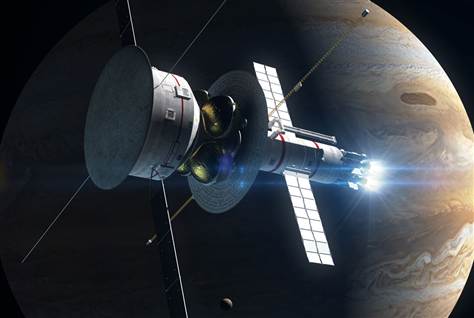
A potential spacecraft called Icarus Pathfinder would be powered by electric propulsion engines called VASIMR, taking it out to 1,000 times the distance between the Earth and Sun. (Credit: NBC News)

A potential spacecraft called Icarus Pathfinder would be powered by electric propulsion engines called VASIMR, taking it out to 1,000 times the distance between the Earth and Sun. (Credit: NBC News)

Like you might imagine such an organization, the conference speakers and attendees appeared rather eclectic, including astronomers and planetary physicists and science journalists—whom I’m usually hanging out with—as well as aerospace engineers, science fiction writers, business people, teachers, space enthusiasts, and many others. But everyone displayed an active interest in exploring the distant universe and imagining what our future might be like.

Dr. Mae Jemison, the first woman of color in space, heads the 100 Year Starship, and she gave a plenary talk. She pointed to many motivations people have for finding another Earth, including conundrums and challenges our planet and species face, such as limited resources, overpopulation, and our own behavior—perhaps a reference to climate change or nuclear weapons. I think we have many other compelling reasons for interstellar space exploration, but I’ve written about that here before.

I also saw many interesting perspectives and presentations about hunting for planets beyond the solar system, called exoplanets, including habitable ones or even inhabited ones. Dr. Jill Tarter, SETI (Search for Extraterrestrial Intelligence) Institute co-founder and inspiration for Sagan’s protagonist in Contact (Dr. Arroway), gave a provocative presentation on attempts to detect “technosignatures” from distant planets. (She clarified that possessing technology doesn’t imply an intelligent civilization; however, technologies serve as a proxy for intelligence.) Advanced species on these planets could be giving off radio and optical signals that could reach the Earth, but we’d have to listen really really hard to hear them. But if they had a Dyson sphere or an “alien superstructure,” that would be easier.

Other astronomers and astrobiologists talked about their work on related subjects. Margaret Turnbull, also of the SETI Institute, spoke about the “massive harvest” of planets reaped by NASA’s Kepler probe, which confirmed more than 1,000 planets in our Milky Way neighborhood and which showed that about 1 in 5 stars has a planet in the “habitable zone.” Stephen Kane (San Francisco State University) made a convincing case that we should view the habitable zone boundaries as uncertain, and that many planets in the zone would actually be not very hospitable to life. Natalie Batalha (NASA Ames) argued that we should be open-minded about planets in other systems. In one of a few relationship-like quotes, she said, “In our search for a [Earth-like] soul-mate, we may be a bit myopic.” But she was talking about the fact that we have no planets between Earth and Neptune sizes here, while according to Kepler observations, such planets seem rather common throughout the galaxy. She and others also made the point that we need detailed imaging or spectra of planetary systems to learn more about their habitability.

Niki Parenteau (SETI) talked about her efforts to study exoplanets and spot signs of life, which would likely be microorganisms and would have to cover the world to be detectable. “There’s no one smoking gun for biosignatures,” she said. “We need multiple lines of evidence.” She looks for things like biogenic gases and certain planetary surface features. But for her, water is the #1 requirement…and then Morgan Cable, a nerdy joke-telling astrochemist from Jet Propulsion Laboratory, considered a range of other liquids life might be able to develop in, including ammonia, carbon dioxide, petroleum, and liquid hydrocarbons. She ended with her main argument: “NASA shouldn’t just be looking for places with liquid water.”

Artist's illustration of NASA's NEA Scout CubeSat, which is scheduled to launch aboard the maiden flight of the agency’s Space Launch System rocket in 2018. (Credit: NASA)

Artist’s illustration of NASA’s NEA Scout CubeSat, which is scheduled to launch aboard the maiden flight of the agency’s Space Launch System rocket in 2018. (Credit: NASA)

A bunch of people gave presentations about propulsion systems, trying to push the boundaries of space travel. I thought the most interesting one was by Les Johnson, Deputy Manager for NASA’s Advanced Concepts Office at Marshall Space Flight Center. In back-to-back talks, he described current efforts to design and construct giant solar and electric sails. The sails involve ultra-thin reflective materials that are unfurled in space and use solar energy to propel a spacecraft to the distant reaches of the solar system and beyond. In an important step toward that goal, Johnson and NASA engineers are currently building a solar sail for the Near-Earth Asteroid Scout mission to transport a CubeSat “nanosatellite” to study asteroids past Mars in two years. He and his colleagues are also currently testing electric sails for fast solar wind-powered spacecraft, which—if as powerful as hoped—could even send a probe to another star.

Finally, I saw a few strange talks at the conference, and I wasn’t sure what to make of them. For example, one person spoke about the new field of “astrosociology.” He avoided giving any specifics though, even though he had been discussing “deviant” behavior, and admitted after the talk that he had envisioned studying multi-year trips transporting tens of thousands of colonists beyond the solar system. Maybe for the 200 Year Starship! Unfortunately, the speaker had not considered small missions, such as handfuls of astronauts traveling to Mars or private ventures conducting asteroid mining. I’d imagine that such small groups of people stuck together for long periods could benefit from sociological study.

Frontiers of Computer Engineering: Graphene and Cognitive Networking

Check out these new articles I’ve written about exciting computer engineering research going on at Stanford University and the University of California, San Diego:


Graphene key to high-density, energy-efficient memory chips, Stanford engineers say

Only an atom thick, graphene is a key ingredient in three Stanford projects to create data storage technologies that use nanomaterials other than standard silicon.

The memory chips in phones, laptops and other electronic devices need to be small, fast and draw as little power as possible. For years, silicon chips have delivered on that promise.

But to dramatically extend the battery life of mobile gadgets, and to create data centers that use far less energy, engineers are developing memory chips based on new nanomaterials with capabilities that silicon can’t match.

Stanford electrical engineering professor H.-S. Philip Wong, left, graduate student Joon Sohn and postdoctoral fellow Seunghyun Lee (seated) are developing high-capacity, energy-efficient memory chips that are not based on silicon. (Photo: Norbert von der Groeben)

Stanford electrical engineering professor H.-S. Philip Wong, left, graduate student Joon Sohn and postdoctoral fellow Seunghyun Lee (seated) are developing high-capacity, energy-efficient memory chips that are not based on silicon. (Photo: Norbert von der Groeben)

In three recent experiments, Stanford engineers demonstrate post-silicon materials and technologies that store more data per square inch and use a fraction of the energy of today’s memory chips.

The unifying thread in all three experiments is graphene, an extraordinary material isolated a decade ago but which had, until now, relatively few practical applications in electronics…

[For more, check out the entire article in Stanford News, published on 23 Oct. 2015. Thanks to Tom Abate for help with editing.]


New Frontiers of Cognitive Networking

Most of us use many devices — perhaps too many — throughout the day: A smartphone at home and then at the cafe around the corner, a laptop computer at work and maybe a tablet or e-reader in the evening. That’s not counting all of the other possible “smart” devices at our fingertips, such as health monitors, fitness trackers and smart watches.

Few people think about how all these devices could be efficiently networked via software and wireless technology; however, if you were trying to download a video and coworkers on the same network were attempting to communicate via Google Talk, you would want to be sure those limited wireless resources were allocated optimally.

UC San Diego Postdoctoral Researcher Giorgio Quer.

UC San Diego Postdoctoral Researcher Giorgio Quer.

Giorgio Quer, a postdoctoral researcher in electrical and computer engineering at the University of California, San Diego is on a quest to solve these and other networking problems. Quer has been working on “cognitive networking” and exploring related projects at the UC San Diego division of Qualcomm Institute for the past five years as a visiting scholar from the University of Padua in northern Italy. He works with Ramesh Rao, director of the Qualcomm Institute and principal investigator of the research, as well as Matteo Danieletto, another postdoc in the department.

The concept of cognitive networking, according to Quer, refers to “a way to apply cognition to wireless, where a network learns from past history.” Such a process enables a network to “perceive” and learn about its current conditions and then plan, decide and act on those conditions, resembling (in a limited sense) cognition in the human brain…

[For more, check out the entire article at the California Institute for Telecommunications and Information Technology (Calit2), published on 21 Sep. 2015. Thanks to Tiffany Fox for help with editing.]

Nuclear Risk Reduction After the Iran Deal: Take Nukes Off Hair-Trigger Alert

By Ramin Skibba and Stephen Young

Following weeks of intense debate in the United States, the international agreement to prevent Iran from developing nuclear weapons, supported by all California Senators and Bay Area Representatives, will go forward. It is an historic arrangement that demonstrates the world’s resolve to prevent the spread of nuclear weapons. However, it will not solve all the nuclear threats that face the world.

With the Iran agreement now entering its implementation phase, it’s important to ask what other steps can be made to reduce the still considerable risks posed by nuclear weapons. The place to start is with countries already possessing nuclear weapons, pressing them to reduce the threat that their massive stockpiles still represent. Removing nuclear weapons from “hair-trigger alert” would be an important first step.

A decommissioned Titan II missile in an Arizona silo. (Credit: Sam Howzit, Union of Concerned Scientists)

A decommissioned Titan II missile in an Arizona silo. (Credit: Sam Howzit, Union of Concerned Scientists)

Continue reading

What happens if you fall into a black hole?

Q: What happens if you fall into a black hole?
– Jane Doe, Calif.

Ramin Skibba, a science communicator and astrophysicist at UC Santa Cruz, illuminates:

When a dying star much bigger than our sun burns the last of its fuel, it finally collapses under its own weight, explodes, and leaves behind a black hole. If you fell into the black hole, even in a sturdy spacecraft, powerful tides from its gravity would rip you into a ribbon of atoms.

Artist's drawing of the black hole Cygnus X-1, pulling matter from the blue star beside it. (Credits: NASA/CXC/M.Weiss)

Artist’s drawing of the black hole Cygnus X-1, pulling matter from the blue star beside it. (Credits: NASA/CXC/M.Weiss)

According to Albert Einstein’s relativity theory, the laws of physics break down near extremely massive objects. Black holes have such densely compressed mass that they warp the very fabric of space around them. If you got too close, it would inevitably suck you in. Along the way, you would perceive distorted colors and shapes as if through carnival mirrors. Your clocks would run differently, too; black holes bend not only space, but time itself.

Suppose you fell in feet first. Your legs would feel a much stronger gravitational force than your head. In a fraction of a second, this tide would stretch you and tear you apart like taffy. The resulting shrapnel and debris would spiral into the hole, vanishing forever.

Astronomers see evidence of this at the centers of galaxies, where the largest black holes grow. It happens to entire stars that venture too close, then get shredded in blazes of energy.

[Thanks to Rob Irion for editing help with this piece, which is written to resemble the short Q&A-style articles previously published in Scientific American.]

Book Review: Five Billion Years of Solitude

As long as humans have roamed the Earth, they have looked up to the skies, speculating and pondering about the celestial wonders populating the distant cosmos. From the early astronomers and natural philosophers until today’s (including me), people have observed and studied the billions of twinkling dots, all the while wondering whether there are other worlds out there and whether they might host lifeforms like us.

FiveBillionYearsofSolitude

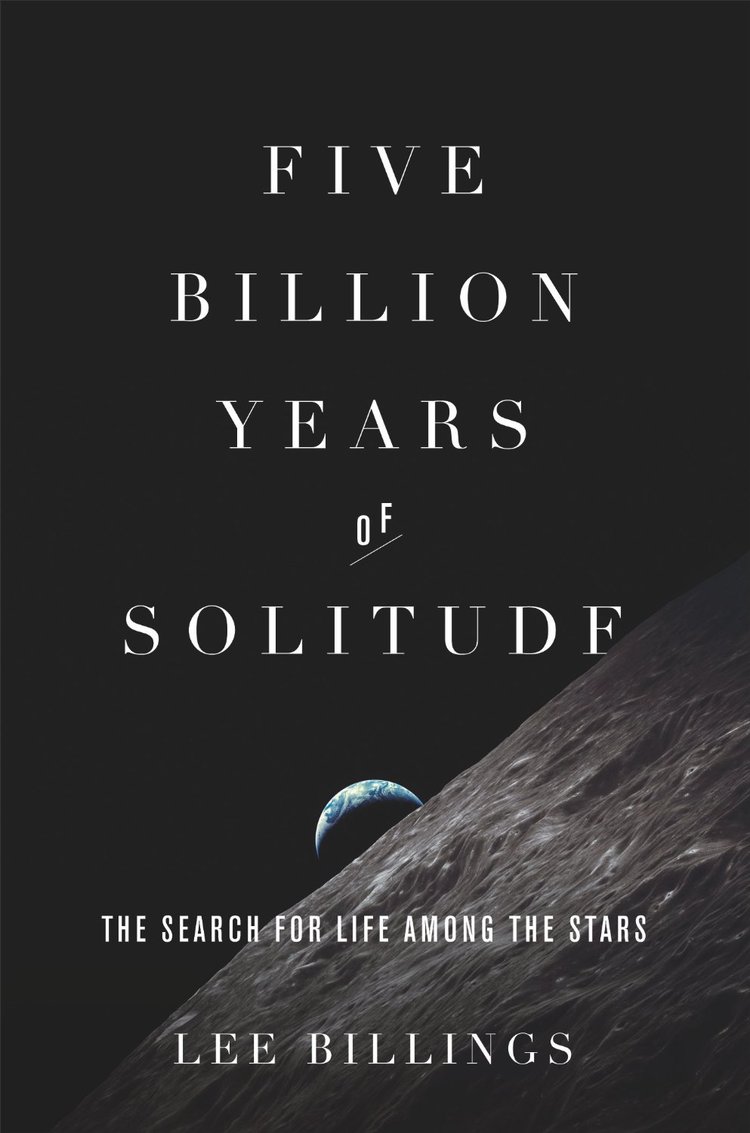
In his first book, “Five Billion Years of Solitude: The Search for Life Among the Stars,” Lee Billings explores these and related questions. He chronicles the story of space exploration, planet-hunting and the growing field of astrobiology, while meeting fascinating characters and discussing their research, telescopes, discoveries and challenges. He offers clear and compelling explanations, such as of planetary physics and habitability, and he takes important asides into debates on space exploration budgets and the fate of our own planet, including the ongoing climate change crisis.

Billings is a talented science journalist. Like his work for Scientific American and other publications, the book is excellently written and researched. It won the 2014 American Institute of Physics science communication award in the book category, announced at the American Astronomical Society meeting in January.

Over the course of the book, Billings tracks down and speaks with important figures in planetary astronomy. He begins with Frank Drake, who along with nine other scientists in 1961 attempt to quantify the abundance of life-supporting planets in the galaxy in a calculation now known as the Drake Equation. He also meets with other astrophysicists, including University of California, Santa Cruz professor Greg Laughlin, Space Telescope Science Institute director Matt Mountain and MIT professor Sara Seager.

Since the time-scale or life-time of civilizations plays a role in the Drake Equation, his investigations lead to an examination of our own history and the longevity of humanity on Earth. Billings discusses the planet’s changing climate and other looming threats, for which our society appears unprepared. His reporting takes him to southern California too, where he quotes from my former colleague, UC San Diego physicist Tom Murphy, who considered the question of growing global energy consumption.

Other important questions come up as well. How far away are planets beyond our solar system and how long would it take to get there? What kind of atmospheric, geological and climatic conditions must a habitable planet have? How do astronomers detect planets, when they are so small, so faint and so close to their brightly glowing suns? What are our prospects for finding more Earth-like planets?

And what will happen to the Earth and humankind—if we’re still around—over the next few billion years, as our sun brightens, expands and transforms into a red giant star? As Billings starkly puts it in his interview for The Atlantic, “We may have—we may be—the only chance available for life on Earth to somehow escape a final, ultimate planetary and stellar death.”

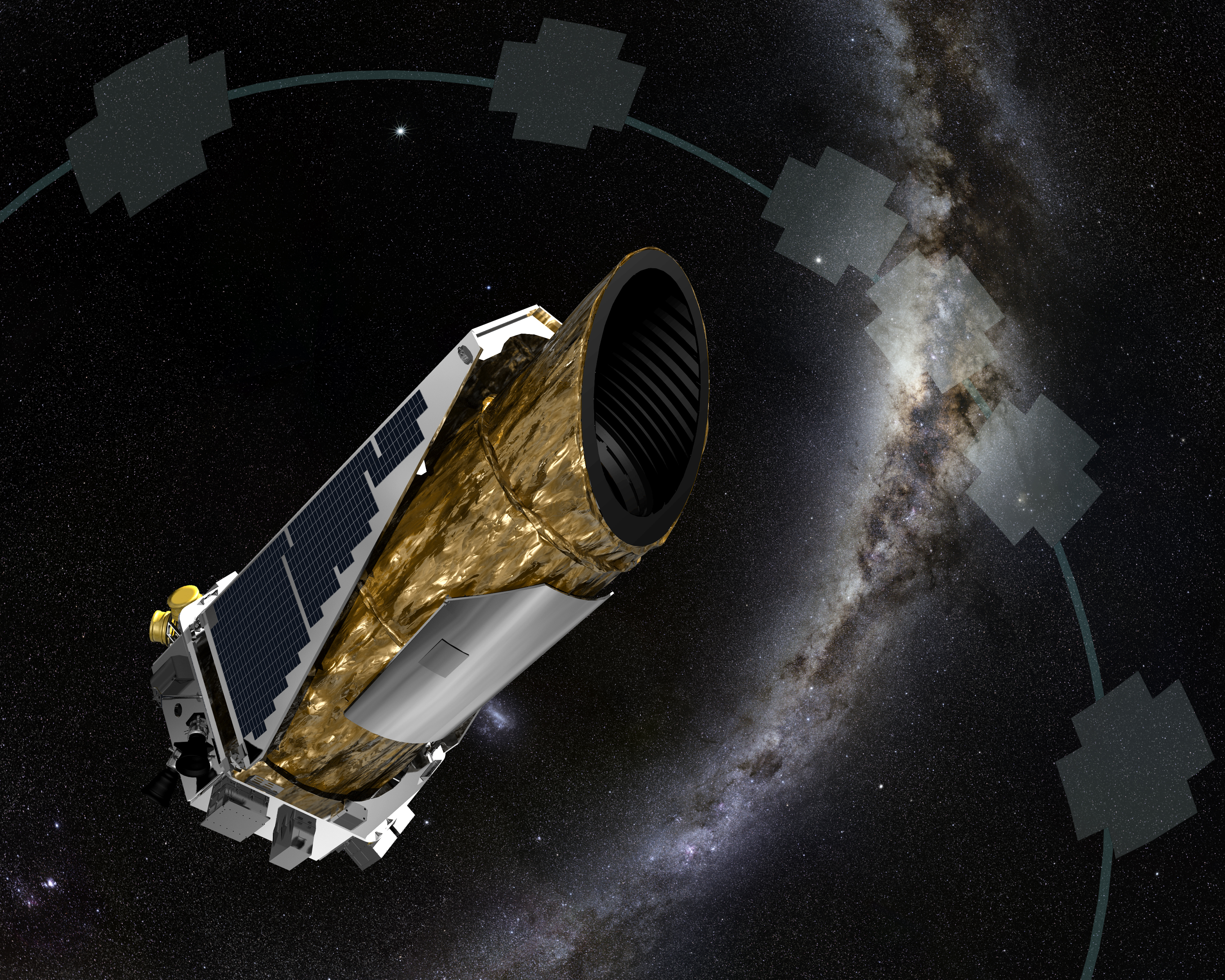
Artist's conception of NASA's Kepler spacecraft. (Image credit: NASA/Ames/JPL-Caltech)

Artist’s conception of NASA’s Kepler spacecraft. (Image credit: NASA/Ames/JPL-Caltech)

With the Kepler telescope, we have the good fortune to be living at a time when actually Earth-like worlds, not just super-Earths and gas dwarfs, can be identified. Astronomers have already used the telescope to find a few potential Earth cousins, which have the right size and the right “Goldilocks” distance from their stars, and many many more candidates are on the horizon. Under certain conditions, follow-up observations can measure the planets’ atmospheres and climates to further assess their habitability.

It’s an exciting time! With even more advanced planet-finding telescopes coming up, such as the Hubble successors, the James Webb Space Telescope and High-Definition Space Telescope, we can look forward to more detailed images and observations of exoplanets in the near future. Maybe Earth has twins and maybe we are not alone.

I have a few criticisms of Five Billion Years, but they’re very minor ones. I liked the analysis of federal budget debates at multiple points in the book, but Billings could have written a little more about why as a society we should prioritize space exploration and astronomical research. If, say, a member of the House Science Committee (or more likely, their staffer) were to read this, it would be helpful to spell that out. Early in the book, he provides an engaging historical survey of astronomy, but he neglected Eastern contributions, such as from Persians, Arabs and Chinese. A few chapters meandered quite a bit too, but I enjoyed his writing style.

In any case, this is a beautifully written and thoroughly researched book, and I recommend it. Billings puts the search for extraterrestrial life in a broader context and pushes us to think about our place in the vast universe. The story continues.

[P.S. I’m extremely busy these days with the UC Santa Cruz science communication program and writing internships, so I may write posts here less often. But I will link to pieces I’ve written elsewhere, which have the benefit of rigorous editing, so if you like my blog, you’ll like them even more.]

My Surprising and Exciting Journey from Scientist to Science Writer

I’ve been drawn to science since I was a kid. I had many excellent and creative teachers along the way, including one who taught us students to be more observant and to think critically and another who smashed bowling balls into desks and who ran into a wall (while wearing pads and a helmet, of course) to demonstrate momentum conservation. I grew up in Colorado, and I enjoyed gaping at the Milky Way and the beautiful night sky while in the Rockies, even if I couldn’t name many constellations. Carl Sagan’s Cosmos program and the Star Trek TV shows also inspired me to explore astrophysics later in life.

Milky Way over Great Sand Dunes National Park, Colorado. (Photo by Carl Fredrickson)

Milky Way over Great Sand Dunes National Park, Colorado. (Photo by Carl Fredrickson)

But my head isn’t always in the stars. I have many other interests too, including sociology, political science and philosophy of science, and I’ve always enjoyed literature and poetry too. I’m not just interested in doing science and analyzing datasets and phenomena; that, by itself, is not enough. I also desire to use science and critical thinking to help people and connect with them. Since science plays such an important role in human society, I’d like to communicate scientists’ research and debates and the scientific process as well as I can. While the behavior of neutrinos, ice sheets and red pandas might sound interesting, for example, we always have to ask, why are they important? What do scientists claim to have learned about them and how did they learn it? What are the broader implications and context for the research?

Ever the lifetime student, a couple years ago I thought I might become an absent-minded, nerdy, activist professor, maybe widening my scope beyond astronomy and physics into interdisciplinary research and public outreach. But then I realized that I wanted to do more. I examined many interconnections between science and policy—often posting about them on this blog—and I investigated ways I could utilize and develop my science writing skills. I earned fellowship opportunities in both science writing and science policy, and I considered going on both directions. As the head of our astrophysics and space sciences department told me while I mulled over the options, “Those aren’t actually that different. They both involve communicating science to people who might not understand it well.”

In the end, after fifteen years working as a Ph.D. student, teaching and research assistant, postdoctoral researcher, research scientist and lecturer, I decided that I would make the shift and become a science writer! It’s a big step, and I felt a bit nervous about it. Now that I’ve made the decision, I am happy and excited to be trying something new, and I look forward to improving my skills and working on it full-time.

For those of you considering working in science writing or science policy, or for those of you just interested in learning more, I am happy to help. In any case, here are a few suggestions and pieces of advice, which will be particularly relevant for you if you’re coming from a science background as I did.

First, I recommend becoming involved in public outreach and education programs. You may even decide to organize your own events. Just connect to people in whatever ways work well for you, such as speaking in local school classrooms, making demonstrations for students at your university, mentoring prospective students, interacting with members of the public at museums and planetaria, talking to people at cafes and pubs (such as Two Scientists Walk into a Bar, Astronomy on Tap, and other programs), etc.

Second, become more involved in and volunteer for the relevant professional scientific societies, such as the American Astronomical Society, American Physical Society, American Geophysical Union, etc. Be more than just a card-carrying member. All of these societies, and especially the American Association for the Advancement of Science (AAAS), have many useful resources, scholarships and internships at your disposal.

Third, it is crucially important to talk to a variety of people who work in science writing or science policy (or whatever you might be interested in), get involved and try it yourself. Make sure that you don’t merely like the concept of it but that you actually enjoy and excel at doing it. You will need to make the time to do this. You may find new people in your own college, university or community working in these professions who have much to teach you. Try a variety of media and styles too, possibly including social media, blogs, podcasts, news articles, feature stories, videos, etc. If you’re curious about what I’ve done over the past year or so, look here.

Fourth, check out professional science writing organizations. In particular, I recommend looking up the National Association of Science Writers, the Society of Environmental Journalists and the Association of Healthcare Journalists. Furthermore, you might find useful local organizations too. (We have the San Diego Press Club here, for example). Science writing workshops, such as those in Santa Fe, New Mexico and in Banff, Alberta, could be beneficial for you and could introduce you to others like yourself who are also just starting to venture into the profession. Finally, if you are interested, the AAAS has mass media and science policy fellowships, and the University of California, Santa Cruz, MIT, NYU, and other universities have graduate programs you may consider, though these involve an investment of time and money.

Before diving in, consider the job prospects. Although we have our ideals, we also want to work for a livable salary with sufficient job security. Staff writers, editors, freelancers and public information officers (PIOs) all have pros and cons to their jobs, and it’s important to understand them well.

I’ll make it official: I decided to head to the UC Santa Cruz science communication program, and I’m looking forward to it! In a few days I will be on my way north to Santa Cruz. I plan to try my hand working with a local newspaper, magazine, and an online news outlet, and this fall I will be working with PIOs at Stanford Engineering. Stay tuned for my new articles!

Coming from a science background, I have many challenging things to learn, but I think I’m up to it. I’m trying to learn to write more creatively and evocatively, while identifying compelling characters. I’m learning to assess which scientific discoveries and developments make for the most intriguing stories. Moreover, scientists and science writers have different ways of thinking, and bridging the gap between them involves more steps than you might think it does. Perhaps most importantly, after thinking of myself as a scientist for so many years, it’s hard to craft a new identity. It turns out that while I am an astronomer and a physicist, I am many other things too. I’m continuing to explore the universe, just in a myriad different ways than before. I’m boldly going where I haven’t gone before, and the sky’s the limit!

8 Ways to Improve the Academic System for Science and Scientists

I’ve enjoyed most of my time working in academic science in the U.S. and Germany as a graduate student, a postdoctoral researcher, a research scientist and a lecturer. I’ve benefited from supportive mentors, talented colleagues and wonderful friends. I think I’ve accomplished a lot in terms of research, teaching, political advocacy and public outreach. Based on my experience and on anecdotal evidence, the system works well in some ways but is flawed in many others, especially involve the job market and career advancement.

Reflecting on the past fifteen years, here are my current thoughts on problems with the system and ways it could be improved, with a focus on the U.S. and on the physical sciences, though the social sciences and life sciences face similar problems.

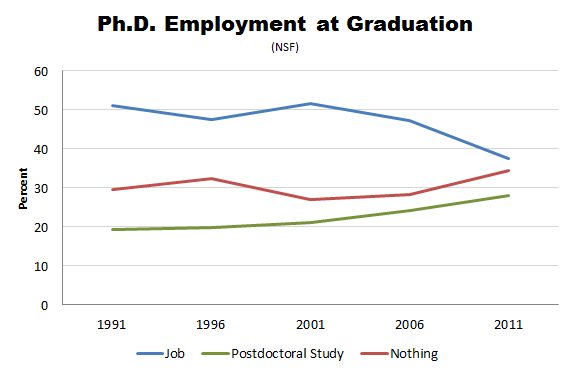
1. Let’s be honest: the academic job market is horrible. It was already pretty bad before the recession, and it is worse now. Many scientists move from institution to institution, working on many postdocs, fellowships, and other short-term jobs while seeking permanent positions or more secure funding, but these turn out to be increasingly elusive and competitive. (I worked at three positions over nine years since earning my Ph.D.) I’ve seen some tenure-track faculty positions receive well over 400 applications—I don’t envy the hiring committees there—and I’ve seen some grant proposal success rates drop well below 10%.

Note the trends: more and more people with Ph.D's are going into postdocs or are unemployed. (Credit: NSF, The Atlantic)

Note the trends: more and more people with Ph.D’s are going into postdocs or are unemployed. (Credit: NSF, The Atlantic)

This system causes people a lot of stress; from a societal perspective, in this situation, how well can people work under such pressure and job insecurity, and how much can they accomplish when they must perennially focus on job applications and grant proposals rather than on the things that drew them to their profession? If the scientific community wants to attract the best scientists, then shouldn’t we strive to make their jobs more desirable than they are now, with better pay and security? As Beryl Lieff Benderly wrote in the Pacific Standard, “unless the nation stops…’burning its intellectual capital’ by heedlessly using talented young people as cheap labor, the possibility of drawing the best of them back into careers as scientists will become increasingly remote.” In much the same way, the inadequate job prospects of adjunct faculty renders the possibility of drawing the best teachers and retaining them similarly small.

For doctorate recipients who care primarily about salary, their choice is obvious. (Credit: National Science Foundation)

For doctorate recipients who care primarily about salary, their choice is obvious. (Credit: National Science Foundation)

People have been diagnosing these problems for years, but no clear solutions have emerged. In my opinion, the job market situation could be gradually ameliorated if many institutions simultaneously sought to improve it. In particular, I think scientists should have longer-term postdoctoral positions, such as five years rather than one, two or three. I also think faculty should hire fewer graduate students, such as one or two at a time rather than, say, five of them, regardless of how much funding they happen to have at the time.

I also think that colleges, universities, and national labs should allocate funding for more staff positions, though of course that funding has to come from somewhere, and tuition and student debt are already too high. On the other hand, some people argue that university administrations have ballooned too much over the past few decades; others argue that some universities spend too much money on their sports programs. In addition, federal funding for “basic research” (as opposed to applied research) in science should be increased, as such grants often supplement university funding.

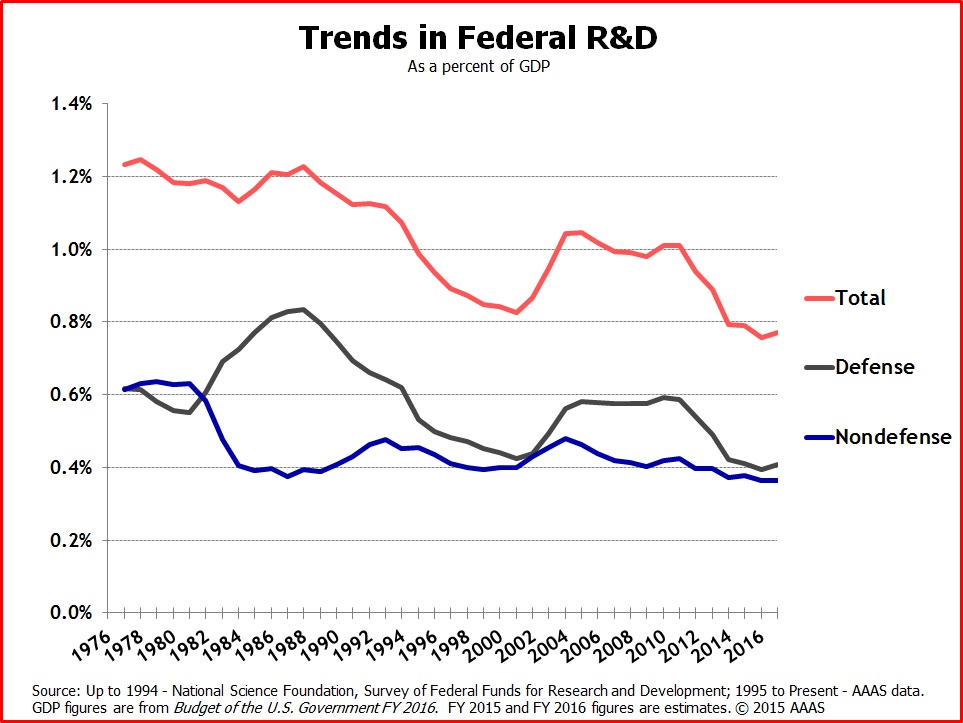
Federal funding for non-defense research & development has been pretty flat since the 1980s, except for "sequestration." (Credit: AAAS, NSF)

Federal funding for non-defense research & development has been pretty flat since the 1980s, except for “sequestration.” (Credit: AAAS, NSF)

2. We can considerably improve the graduate student experience as well. Many university departments and professional societies now give more information about academic career prospects to students than before, and it should be their official policy to do so. Furthermore, students should be encouraged to explore as many of their interests as possible, not just those focused on their narrow field of research. If they want to learn to teach well, or learn about computer programming, software, statistics, policy-making, or the history or philosophy or sociology of their science, or if they want to investigate interdisciplinary connections, or if they want to develop other skills, they should have the time and space to do that. Universities have many excellent resources, and students should have the opportunity to utilize them.

We know that only a fraction of graduate students will continue in academia, and the best scientists will be well-rounded and have a wide range of experience; if they move on to something else, they should be prepared and have the tools and expertise they need.

3. The scientific community can take this an important step further by acknowledging the many roles and variety of activities scientists engage in in addition to research: teaching courses, participating in outreach programs, advancing efforts to improve diversity, becoming involved in political advocacy, developing software and instrumentation that don’t necessarily result in publications, etc. Many scientists agree that we do not sufficiently value these kinds of activities even though they are necessary for the vitality and sustainability of the scientific enterprise itself. For example, in a new paper submitted to the Communicating Astronomy with the Public journal, the authors find that many astronomers think a larger fraction of their grant-funded work (up to 10%) should be allocated to education and public outreach (EPO). EPO are included among the “broader impacts” of National Science Foundation grants, but much more can be done in this regard. All of these activities should be explicitly recognized by the relevant federal agencies during the evaluation of grant proposals and by departmental hiring committees when assessing candidates for jobs and promotions.

Distribution of percentage of research grant astronomers currently invest (blue) and suggest (yellow) to allocate into public outreach engagement. (Credit: Lisa Dang, Pedro Russo)

Distribution of percentage of research grant astronomers currently invest (blue) and suggest (yellow) to allocate into public outreach engagement. (Credit: Lisa Dang, Pedro Russo)

Therefore, a corollary follows: if the community appreciates a wider scope of activities as important components of a scientist’s job, then it is not necessary to relentlessly pursue published research papers all of the time. Perhaps this could alleviate the “publish or perish” problem, in which some scientists rush the publication of insufficiently vetted results or make provocative claims that go far beyond what their analysis actually shows. That is, endeavoring for a more open-minded view of scientists’ work could improve the quality and reliability of scientific research.

In practice, how would this be done? Scientists could organize more conferences and meetings specifically devoted to education research, outreach programs, policy developments, etc., and the proceedings should be published online. Another way a scientist’s peers could be aware of the wider scope of her non-research work would be to have different levels of publication involving them, from informal social media and blog posts to possibly peer-reviewed statements and articles that could be posted on online archives or wiki pages. For example, if she participated in an outreach project with local high school students or in Congressional visit days, she could speak or write about the experience and about what worked well with the program and then publish that presentation or statement.

Furthermore, since research projects can take years and many grueling steps to complete, often by graduate students toiling away in their offices and labs, why not reduce the pressure and recognize the interim work at intermediate stages? Some people are considering publishing a wider scope of research-related work, even including the initial idea phase. A new open-access journal, Research Ideas and Outcomes, aims to do just that. I’m not sure whether it will work, but it’s worth trying, and I hope that scientists will be honorable and cooperative and avoid scooping each other’s ideas.

On that note, as some of you know, I will make it official that I am leaving academic science. (In my next post, I will write about what I am shifting my career toward.) As a result, I will be unable to complete many of my scientific project ideas and papers, and for the few astrophysicist readers of this blog, I will not be annoyed if you run with them (but please give me proper credit). My next four projects probably would have been the following: modeling galaxy catalogs including realistic dynamics within galaxy groups and clusters within dark matter clumps of the “cosmic web”; assessing observational and theoretical problems in the relation between galaxy stellar mass and dark matter halo mass; modeling the mass-morphology relation of galaxies using constraints I previously obtained with the Galaxy Zoo citizen science project; and modeling and analyzing the star formation rate dependence of the spatial distribution of galaxies in the distant cosmic past. I am happy to give more details about any of these ideas.

4. We should also address the problem of academic status inequality. If a person makes it to an elite university or has the opportunity to work with a big-name faculty member or manages to win a prestigious award, grant or fellowship, that is an excellent achievement of which they should be proud. Nevertheless, such a person is essentially endorsed by the establishment and is much more likely to be considered part of an in-crowd, with everyone else struggling in the periphery. In-crowd scientists then often have an easier time obtaining future opportunities, and like an academic capitalism, wealth and capital flow toward this in-crowd at the expense of the periphery scientists. On the one hand, the in-crowd scientists have accomplished something and the community should encourage them to continue their work. On the other hand, scientists are busy people, but they can also be lazy; it’s too easy to give an award to someone who as already received one or to hire someone from another elite institution rather than to assess the merits of the many people with whom they may be less familiar.

According to a recent study in Science Advances, the top ten elite universities produce three times as many future professors as the next ten in the rankings. However, the authors find plenty of evidence that this system does not resemble a meritocracy; in addition, female graduates slip 15% further down the academic hierarchy than men from the same institutions. According to a Slate piece by Joel Warner and Aaron Clauset, a co-author of the paper, the findings suggest that upward career mobility in the world of professors is mostly a myth. Many scientists coming from academic outsiders—not from the elite universities—have made important discoveries in the past, but their peers only slowly noticed them. “Thanks to the restrictive nature of the academic system there may be many more innovations that are languishing in obscurity, and they will continue to do so until our universities find a way to apply the principles of diversity they espouse in building student bodies to their hiring practices as well.”

5. As I’ve written before, much more work can be done to improve gender, race, class and other forms of diversity when hiring students, postdocs and faculty and promoting them at universities. Furthermore, when organizing conferences, workshops, meetings and speaker series, diverse committees should explicitly take these principles into consideration. Even the most thorough and attentive committees must also beware of “unconscious bias,” which affects everyone but can be reduced.

6. In a related point, colleges and universities can implement many family-friendly (or more generally, life-friendly) policies to improve and promote work-life balance of academic workers. These include flexible schedules, parental leave, tenure-clock extensions and many others. However, this is not sufficient: scientists who happen to lack the benefits and privileges of white, male, straight people from elite universities seem to have to work that much harder to have a chance of drawing the attention of hiring committees. One should not need to work 100 hours a week to be a successful scientist. Shouldn’t we want more balanced scientists with lives and interests beyond their narrow research field? This means that committees should recognize that sometimes excellent scientists may have fewer yet very high-quality accomplishments and may be under the radar waiting to be “discovered.”

7. The scientific community would also benefit from more opportunities for videoconferencing, in which people remotely present talks and field questions about them. As I’ve written for the American Astronomical Society Sustainability Committee, our biggest source of carbon emissions comes from frequent travel, and we should try to reduce our carbon “footprint.” Moreover, people at small colleges with small travel budgets and people with families who have a harder time traveling would appreciate this, as it would level the playing field a bit. Of course, there is no substitute for face-to-face interactions, but people continue to improve video tools with Skype, Google and many others, which could be utilized much more extensively.

8. Finally, I argue that everyone would benefit from more and better interactions between scientists, public affairs representatives and government affairs officials at universities. Such interactions would help scientists to present their accomplishments to a wider community, help universities to publicize their scientists’ work, and help political officials to understand the important science being done in their districts, often benefiting from federal and state investment.

These are my current thoughts, and I hope they spark discussions and debates.

Reproducibility in Science: Study Finds Psychology Experiments Fail Replication Test

Scientists toiling away in their laboratories, observatories and offices don’t just fabricate data, plagiarize other research, or make up questionable conclusions when publishing their work. Participating in any of these dishonest activities would be like violating a scientific Hippocratic oath. So why do many scientific studies and papers turn out to be unreliable or flawed?

(Credit: Shutterstock/Lightspring)

(Credit: Shutterstock/Lightspring)

In a massive analysis of 100 recently published psychology papers with different research designs and authors, University of Virginia psychologist Brian Nosek and his colleagues find that more than half of them fail replication tests. Only 39% of the psychology experiments could be replicated unambiguously, while those claiming surprising effects or effects that were challenging to replicate were less reproducible. They published their results in the new issue of Science.

Nosek began crowdsourcing the Reproducibility Project in 2012, when he reached out to nearly 300 members of the psychology community. Scientists lead and work on many projects simultaneously for which they receive credit when publishing their own papers, so it takes some sacrifice to take part: the replication paper lists the authors of the Open Science Collaboration alphabetically, rather than in order of their contributions to it, and working with so many people presents logistical difficulties. Nevertheless, considering the importance of scientific integrity and investigations of the reliability of analyses and results, such an undertaking is worthwhile to the community. (In the past, I have participated in similarly large collaboration projects such as this, which I too believe have benefited the astrophysical community.)

The researchers evaluated five complementary indicators of reproducibility using significance and p-values, effect sizes, subjective assessments of replication teams and meta-analyses of effect sizes. Although a failure to reproduce does not necessarily mean that the original report was incorrect, they state that such “replications suggest that more investigation is needed to establish the validity of the original findings.” This is diplomatic scientist-speak for: “people have reason to doubt the results.” In the end, the scientists in this study find that in the majority of cases, the p-values are higher (making the results less significant or statistically insignificant) and the effect size is smaller or even goes in the opposite direction of the claimed trend!

Effects claimed in the majority of studies cannot be reproduced. Figure shows density plots of original and replication p-values and effect sizes (correlation coefficients).

Effects claimed in the majority of studies cannot be reproduced. Figure shows density plots of original and replication p-values and effect sizes (correlation coefficients).

Note that this meta-analysis has a few limitations and shortcomings. Some studies or analysis methods that are difficult to replicate involve research that may be pushing the limits or testing very new or little studied questions, and if scientists only asked easy questions or questions to which they already knew the answer, then the research would not be particularly useful to the advancement of science. In addition, I could find no comment in the paper about situations in which the scientists face the prospect of replicating their own or competitors’ previous papers; presumably they avoided potential conflicts of interest.

These contentious conclusions could shake up the social sciences and subject more papers and experiments to scrutiny. This isn’t necessarily a bad thing; according to Oxford psychologist Dorothy Bishop in the Guardian, it could be “the starting point for the revitalization and improvement of science.”

In any case, scientists must acknowledge the publication of so many questionable results. Since scientists generally strive for honesty, integrity and transparency, and cases of outright fraud are extremely rare, we must investigate the causes of these problems. As pointed out by Ed Yong in the Atlantic, like many sciences, “psychology suffers from publication bias, where journals tend to only publish positive results (that is, those that confirm the researchers’ hypothesis), and negative results are left to linger in file drawers.” In addition, some social scientists have published what first appear to be startling discoveries but turn out to be cases of “p-hacking…attempts to torture positive results out of ambiguous data.”

Unfortunately, this could also provide more fuel for critics of science, who already seem to have enough ammunition judging by overblown headlines pointing to increasing numbers of scientists retracting papers, often due to misconduct, such as plagiarism and image manipulation. In spite of this trend, as Christie Aschwanden argues in a FiveThirtyEight piece, science isn’t broken! Scientists should be cautious about unreliable statistical tools though, and p-values fall into that category. The psychology paper meta-analysis shows that p<0.05 tests are too easy to pass, but scientists knew that already, as the Basic and Applied Social Psychology journal banned p-values earlier this year.

Furthermore, larger trends may be driving the publication of such problematic science papers. Increasing competition between scientists for high-status jobs, federal grants, and speaking opportunities at high-profile conferences pressure scientists to publish more and to publish provocative results in major journals. To quote the Open Science Collaboration’s paper, “the incentives for individual scientists prioritize novelty over replication.” Furthermore, overextended peer reviewers and editors often lack the time to properly vet and examine submitted manuscripts, making it more likely that problematic papers might slip through and carry much more weight upon publication. At that point, it can take a while to refute an influential published paper or reduce its impact on the field.

Source: American Society for Microbiology, Nature

Source: American Society for Microbiology, Nature

When I worked as an astrophysics researcher, I carefully reviewed numerous papers for many different journals and considered that work an important part of my job. Perhaps utilizing multiple reviewers per manuscript and paying reviewers for their time may improve that situation. In any case, most scientists recognize that though peer review plays an important role in the process, it is no panacea.

I know that I am proud of all of my research papers, but at times I wished to have more time for additional or more comprehensive analysis in order to be more thorough and certain about some results. This can be prohibitively time-consuming for any scientist—theorists, observers and experimentalists alike—but scientists draw a line at different places when deciding whether or when to publish research. I also feel that sometimes I have been too conservative in the presentation of my conclusions, while some scientists make claims that go far beyond the limited implications of uncertain results.

Some scientists jump on opportunities to publish the most provocative results they can find, and science journalists and editors love a great headline, but we should express skepticism when people announce unconvincing or improbable findings, as many of them turn out to be wrong. (Remember when Opera physicists thought that neutrinos could travel faster than light?)

When conducting research and writing and reviewing papers, scientists should aim for as much transparency and openness as possible. The Open Science Framework demonstrates how such research could be done, where the data are accessible to everyone and individual scientist’s contributions can be tracked. With such a “GitHub-like version control system, it’s clear exactly who takes responsibility for what part of a research project, and when—helping resolve problems of ownership and first publication,” writes Katie Palmer in Wired. As Marcia McNutt, editor in chief of Science, says, “authors and journal editors should be wary of publishing marginally significant results, as those are the ones that are less likely to reproduce.”

If some newly published paper is going to attract the attention of the scientific community and news media, then it must be sufficiently interesting, novel or even contentious, so scientists and journalists must work harder to strike that balance. We should also remember that, for better or worse, science rarely yields clear answers; it usually leads to more questions.

Why do we engage in space exploration?

A review of diverse perspectives on space exploration and extraterrestrial life reveal fundamentally human hopes, fears and flaws

Since the dawn of civilization thousands of years ago, humans have looked to the skies. Archaeologists have found evidence of people from China, India, and Persia to Europe and Mesoamerica observing and contemplating the many stars and planets that fascinated them. We humans have also wondered about—and often hoped for—the existence of other intelligent life out there. Considering the large number of planets in the Milky Way and in billions of other galaxies, perhaps we are not alone, and maybe even while you are reading this, extraterrestrials could be looking in our direction through their telescopes or sending us interstellar telegrams. But if our galaxy teems with aliens, following Italian physicist Enrico Fermi’s persistent question, we must ask, “Where are they?”

Artist's depiction of a travel poster for a "Tatooine-like" planet orbiting two suns, recently discovered by NASA's Kepler spacecraft. (Courtesy: NASA)

Artist’s depiction of a travel poster for a “Tatooine-like” planet orbiting two suns, recently discovered by NASA’s Kepler spacecraft. (Courtesy: NASA)

Two recent pieces in the New Yorker and New York Times, as well as numerous books over the past couple years, motivate me to consider this and related questions too. Astronomers and astrophysicists around the world, including scientists working with NASA, the European Space Agency (ESA), the Japanese Space Agency (JAXA) and many others, have many varieties of telescopes and observatories on Earth and in space, just because we want to investigate and learn about our galactic neighborhood and beyond. We also attempt to communicate, like sending a message in a bottle, with the Golden Records aboard the Voyager spacecrafts, and we listen for alien attempts to contact us. In our lifetime, we have dreams of sending humans to Mars and to more distant planets. Why do we do this? We do it for many reasons, but especially because humans are explorers: we’re driven to see what’s out there and to “boldly go where no one has gone before.” As Carl Sagan put it in Cosmos, “Exploration is in our nature. We began as wanderers, and we are wanderers still.”

Views of human space exploration

Elizabeth Kolbert reviews three recently published and forthcoming books by Chris Impey, an astronomer at the University of Arizona (where I used to work three years ago), Stephen Petranek, a journalist at Discover, and Erik Conway, a historian of science at Jet Propulsion Laboratory. (She did not mention an award-winning book by Lee Billings, Five Billion Years of Solitude, which I will review in a later post.) She fault finds with the overoptimistic and possibly naïve “boosterism” of Impey and Petranek. “The notion that we could…hurl [humans]…into space, and that this would, to use Petranek’s formulation, constitute ‘our best hope,’ is either fantastically far-fetched or deeply depressing.” She asks, “Why is it that the same people who believe we can live off-Earth tend to believe we can’t live on it?”

Kolbert’s assessment has some merit. Astrophiles and space enthusiasts, of which I am one, sometimes seem to neglect Earth (and Earthlings) in all its wonder, marvels, complexity, brutality and messiness. But is the primary reason for exploring the universe that we can’t take care of ourselves on Earth? Mars should not be viewed as a backup plan but rather as one of many important steps toward better understanding our little corner of the galaxy. Furthermore, we should be clear that sending humans to Mars and more distant worlds is an incredibly complicated and dangerous prospect, with no guarantee of success. Even if the long distances could be traversed—at its closest, Mars comes by at least a staggering 50 million miles (80 million km) away, and then the nearest star, Alpha Centauri, is about 25 trillion miles from us—future human outposts would face many obstacles. The popular novel by Andy Weir, The Martian, demonstrates only some of the extraordinary challenges of living beyond our home planet.

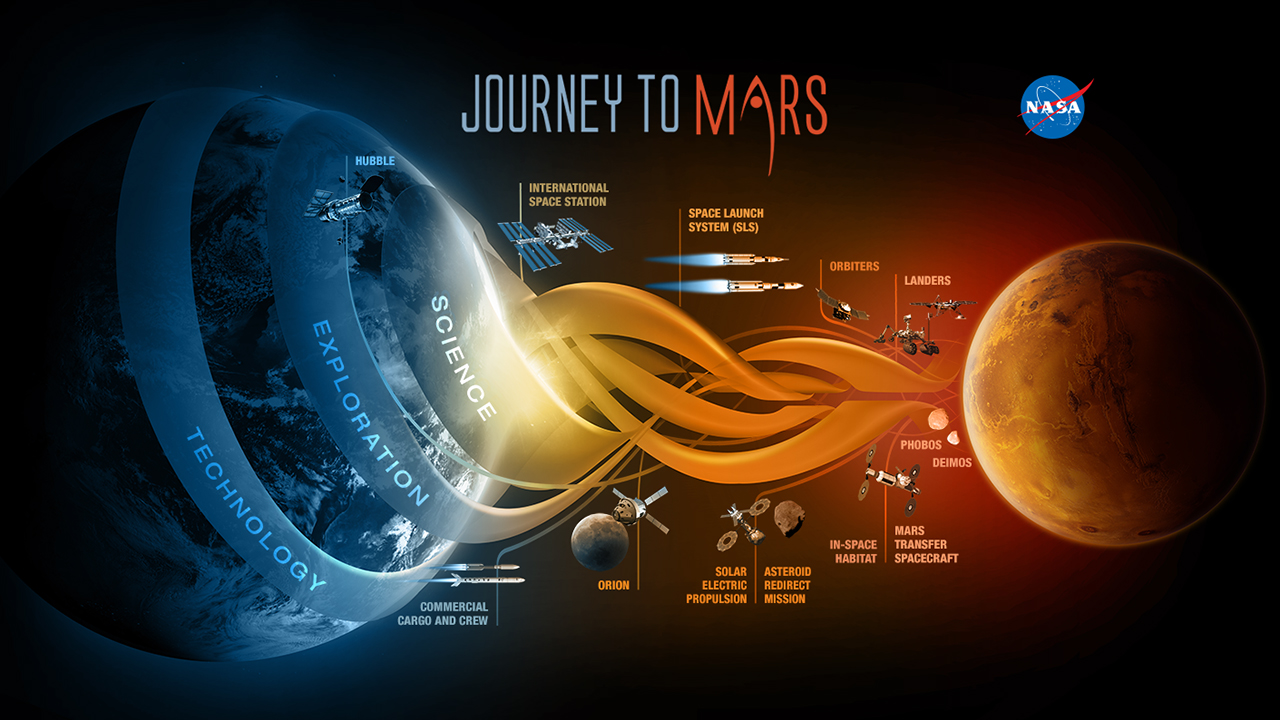
Overview of components of NASA's Journey to Mars program, which seeks to send humans to the red planet in the 2030s. (Credit: NASA)

Overview of components of NASA’s Journey to Mars program, which seeks to send humans to the red planet in the 2030s. (Credit: NASA)

Though Kolbert criticizes Conway’s dry writing style, she clearly sympathizes with his views. “If people ever do get to the red planet—an event that Conway…considers ‘unlikely’ in his lifetime—they’ll immediately wreck the place just by showing up…If people start rejiggering the atmosphere and thawing the [planet’s soil], so much the worse.” This line of criticism refers to flaws of geoengineering and of the human species itself. Many times in history, humans ventured out acting like explorers, and then became colonists and then colonialists, exploiting every region’s environment and inhabitants.

Note that Kolbert is a journalist with considerable experience writing about climate, ecology and biology, while astrophysics and space sciences require a stretch of her expertise. In her excellent Pulitzer Prize-winning book, The Sixth Extinction, Kolbert argues provocatively that humans could be viewed as invasive species transforming the planet faster than other species can adapt, thereby constituting a danger to them. “As soon as humans started using [language], they pushed beyond the limits of [the] world.” I agree that humans must radically improve their relationship with nature and Earth itself, but this does not preclude space travel; on the contrary, the goal of exploring other worlds should be one aspect of our longer-term and larger-scale perspective of humanity’s place in the universe.

Views of extraterrestrial intelligence

Dennis Overbye, a science writer specializing in physics and astronomy, covers similar ground, but focuses more on the search for extraterrestrial intelligence (SETI). He mentions the Drake Equation, named after the American astronomer Frank Drake, which quantifies our understanding of the likelihood of intelligent life on other planets with whom we might communicate. Both Drake and Sagan “stressed that a key unknown element in their equations was the average lifetime of technological civilizations.” If advanced species don’t survive very long, then the possibility of contact between overlapping civilizations becomes highly improbable. It would be unfortunate if similarly advanced civilizations, like Earthlings and Klingons, could never meet.

Overbye introduces the controversial University of Oxford philosopher, Nick Bostrom, who is rooting for us to fail in our search for ETs! “It would be good news if we find Mars to be sterile. Dead rocks and lifeless sands would lift my spirit.”

Bostrom bases his argument on a concept he refers to as the Great Filter. Considering the likelihood of advanced civilizations, many conditions and criteria must be satisfied and steps must be taken before a planet in the “habitable zone” has a chance of harboring intelligent life. The planet probably must have the right kind of atmosphere and a significant amount of liquid water and some kind of possibly carbon-based building blocks of life, and after that, the alien species’ evolutionary developments could go in any direction, not necessarily in a direction that facilitates intelligence. In addition, asteroids, pandemics, or volcanic eruptions could wipe out this alien life before it got anywhere. In other words, myriad perils and difficulties filter out the planets, such that only a few might have species that survive and reach a level of social and technological advancement comparable to those of humans.

On the other hand, if we do find life on other planets and if intelligent extraterrestrial life is relatively ubiquitous, our lack of contact with them could mean that advanced civilizations have a short lifetime. Perhaps the Great Filter is ahead of us, “since there is no reason to think that we will be any luckier than other species.” Maybe nuclear war, climate change, or killer robots might wipe us out before we have the chance to explore the galaxy.

I am not convinced by Bostrom’s pessimism. Even if the Great Filter is ahead of us, implying that humans face more existential threats in the future than have been overcome in the past, this doesn’t mean that we are doomed. Humanity does have major problems with acknowledging large-scale impacts and long-term outlooks, but I hope we could learn to change before it is too late.

A more positive outlook

We have learned a lot about planets, stars, galaxies, black holes and the distant universe from our tiny vantage point. But we would be immodest and mistaken to brazenly presume that we’ve already figured out the rest of the universe. We really don’t know how many other “intelligent” species might be out there, and if so, how far they are, what level of evolution they’re at (if evolution is a linear process), or whether or how they might communicate with us. We should continue to discuss and examine these questions though.

While traveling to other planets will take a long time, in the meantime astronomers continue to make exciting discoveries of possibly “Earth-like” planets, such as Kepler-452b, an older bigger cousin to our world. It seems likely that the Earth has a very big family, with many cousins in the Milky Way alone.

So why do we engage in space exploration and why do we seek out extraterrestrial life? This question seems to transform into questions about who we are and how we view our role in the universe. I believe that humans are fundamentally explorers, not only in a scientific sense, and we have boundless curiosity and wonder about our planet and the universe we live in. Humans also explore the depths of the oceans and dense rainforests and they scour remote regions in arid deserts and frigid glaciers (while they still remain), just to see what they’re like and to look for and observe different lifeforms.

More importantly, even after tens of thousands of years of human existence, we are still exploring who we are, not just with scientific work by psychologists and sociologists but also with novelists, poets and philosophers. We still have much to learn. To quote from Q, a capricious yet occasionally wise Star Trek character, “That is the exploration that awaits you: not mapping stars and studying nebulae, but charting the unknown possibilities of existence!”