A pretty good first year!

I can’t believe it’s already been a whole year! After many friends and colleagues encouraged me, I started this blog at the beginning of December in 2013. I didn’t know what to expect, but I think it’s been worthwhile, and I look forward to continuing with it.

For those of you who are interested, especially you regular readers of this blog, I’ll use this post to review and assess the blog so far. Most of all, I’d like to thank all of you readers and those of you who have shared my posts, gave me advice and feedback, helped me to improve posts, and had interesting discussions with me about the issues and events in them.

I wrote about one post per week, and I hope I’m continually getting better. My most popular blog posts included those about: gender and racial diversity issues in science; Rosetta and the comet; the solar flare that could have been much worse; fracking; climate change resilience; the academic job market; citizen science and Galaxy Zoo; an event about the multiverse; and debates and budgets for scientific research and STEM education. (See my list of blog posts.)

Considering that many of my posts, especially the science policy ones, are US-based, it’s not surprising that the majority of visitors to this site are from the US. Many people from the UK, Canada, Germany, Brazil, and other places visit it as well. People reach the site from Facebook, Twitter, search engines, my work website, and from other websites where I’ve published or posted articles.

For the next year, I’m not sure how regularly I’ll keep writing on the blog, but I’ll do my best. I’ll definitely keep writing about both science policy and astronomy/astrophysics news and events. Some will be more like science news stories and some will review the various issues and players involved. In the next couple months, I’ll write about the annual American Astronomical Society meeting in January and about the Citizen Science Association and American Association for the Advancement of Science meetings in February, all of which I’ll be attending (but traveling by train!). I’ll try writing a book review or two too, as I’m looking forward to reading books about Fukushima and environmental justice. I might review Interstellar as well, but I haven’t seen it yet, so don’t give me spoilers!

Please keep giving me your comments, questions, criticism, corrections, and feedback (either on the blog itself, on Twitter or Facebook, subspace communication, or in person). And please keep sharing the posts that you like or that interest you, and whenever you have more information or news relevant to something I’ve written, please let me know. Also, contact me if you have any interest in writing a guest post here some time.

Finally, as you may know or have guessed, I’m continuing to pursue work in scientific research and education as well as science writing/communication and science policy. As I learn more and improve in these fields, I may occasionally write about my challenges, tribulations, and successes as well.

Rosetta and the Time-scale of Science

Over the past couple weeks, you have surely seen Rosetta and its dusty comet all over the internet, in the news, or on Twitter and other social media sites. It has definitely captured the public imagination. But where did Rosetta come from? How did scientists at the European Space Agency (ESA) manage to accomplish the feat of putting a lander on the surface of a comet hurtling through space? The answer: through a lot of hard work by many people and investment of many resources for many years.

#CometLanding may have been the meme of the week, but it was decades in the making. After Halley’s Comet (1P/Halley) flew by the Earth and was studied by ESA’s Giotto probe, scientists there and at NASA realized that more ambitious missions would be necessary to obtain more detailed information about comets, which contain water and organic materials and could have influenced the origin of life on Earth. ESA’s Science Programme Committee approved the Rosetta mission in November 1993, about 21 years ago. Design and construction took teams of scientists a decade to complete, and then they launched the €1.3 billion flagship spacecraft in 2005 (which was a few months before NASA’s Deep Impact mission sent a probe to collide with a different comet). Following four gravity assists, slingshotting once by Mars and three times by Earth, Rosetta rendezvoused with the comet 67P/Churyumov-Gerasimenko earlier this year. After orbiting for two months, Rosetta was in a position and trajectory to eject Philae, which successfully landed on the comet and made history on 12th November. (See my recent post for more.)

To give another example, for my astrophysics research, I have frequently used data from the Sloan Digital Sky Survey (SDSS), an optical telescope at Apache Point Observatory in New Mexico. The SDSS was first planned in the 1980s, and data collection finally began in 2000. Some have
described the SDSS as one of the most ambitious and influential surveys in the history of astronomy, as it has observed millions of galaxies and quasars, transforming many fields of research, including work on cosmology and the large-scale structure of the universe. It also witnessed the rise of Galaxy Zoo, which with more than 250,000 active “citizen scientists,” has become perhaps the greatest mass participation project ever conceived. Now we prepare for the successors to the SDSS, including ESA’s Euclid mission and the Large Synoptic Survey Telescope, funded by the National Science Foundation (NSF), which are expected to have “first light” in the 2020s.

Scientific research operates on a long time-scale, sometimes longer than the careers of scientists themselves. Scientists make mistakes sometimes, and some projects, large and small, may fail or produce inaccurate results. At times, it may take awhile for scientists to abandon a theory or interpretation insufficiently supported by evidence, and it can be difficult to determine which investigations to pursue that could yield new and fruitful research. Nevertheless, over many years the “self-correcting” nature of the scientific enterprise tends to prevail.

In addition, while the US Congress makes decisions about federal budgets every fiscal year, American scientists depend on predictable stable funding over longer periods in order to successfully complete their research programs. Moreover, school and university students depend on funding and resources for their education. Quality scientific education helps people to become scientifically literate and critical thinkers; as Neil deGrasse Tyson put it, “center line of science literacy…is how you think.” Plus, some students will be inspired by Rosetta and other achievements to pursue careers in science, and we should give them every opportunity to do so.

Events can change rapidly in the 24-hour news cycle, but science and scientists work over years to produce big results like the comet landing. Future missions and ambitious projects for the next few decades are being planned now and need continued support. And to ensure more scientific advancements after that, we need to keep investing in the education of our students—the next generation of scientists.

[Note that this op-ed-like piece is adapted from an assignment I wrote for a science writing class with Lynne Friedmann at UC San Diego.]

Rep. Rush Holt, Physicist, to Lead American Association for the Advancement of Science

Can you imagine what would happen if we had a PhD physicist in the US Congress? We actually already have one there, Representative Rush Holt (NJ-12), who has done a lot of excellent work in that role over the past sixteen years. Bumper stickers saying “My Congressman IS a Rocket Scientist” are popular in his central New Jersey district. In Congress since 1999, Holt has been a consistently strong advocate for science and science communication and for increasing funding for scientific research and education in federal budgets. Earlier this year, he unsuccessfully attempted to revive the Office of Technology Assessment, an agency that provided Congress with comprehensive and authoritative analysis of scientific and technical issues, and was terminated in 1995. He’s also an inspiring speaker; I saw him give a great speech when I participated in a Congressional Visit Day with the American Astronomical Society.

Rep_Holt_Official_Headshot

Now Rep. Holt is retiring from the House of Representatives. Considering the frequent attacks on science, such as on National Science Foundation research grants, the Environmental Protection Agency’s Clean Power Plan, and on the EPA’s scientific advisers—to give just a few examples—we’ll need more people like him. In an interview with Scientific American, he said that if there is one issue that nags from his terms in Congress, it’s

…science and international affairs. That means bringing good scientific thinking to matters of arms control and intelligence and war and peace. I think we would all benefit from thinking like scientists, and those are important areas. Also, in areas of environmental protection and public health we need more scientific thinking. Most recently, I think we would benefit if more people thought like scientists in confronting Ebola. We would benefit if more people thought like scientists in facing climate change.

Fortunately, I have good news! Holt will continue his service by succeeding Alan Leshner as the head of the American Association for the Advancement of Science (AAAS, of which I’m a member). According to the AAAS, “Efforts to advance science, promote public engagement with science and technology, and ensure that accurate scientific information informs policy decisions—core AAAS activities—have also been central to Holt’s long record of public service.”

In an interview with the Washington Post, Holt said that he didn’t have an agenda, but he offered a general thought about the AAAS’s mission, saying that it needs to “look after the health of science in America—the entire science enterprise.”

Holt’s first responsibilities as the new CEO of AAAS will include oversight of a transformation initiative to enhance AAAS’s engagement with its members and to better utilize the Science journals for science communication, which also involves transitioning from a print-centric to a digital-first publishing environment. He will also oversee next year’s launch of a new open-access journal, Science Advances. I’m sure there will be more plans for the future at the AAAS’s annual meeting in February, and I’ll be there and will report on any new developments.

Comet Update! Rosetta’s Philae landed, but not as planned

Now here’s what you’ve been waiting for! You really need more comet, like Christopher Walken/Bruce Dickinson needs more cowbell, so here you go…

In a blog post few months ago, I told you about the European Space Agency’s (ESA’s) Rosetta mission. Nine years after its launch and after four gravity assists, Rosetta reached the comet 67P/Churyumov-Gerasimenko and began to orbit it. On 11th November, Rosetta maneuvered its position and trajectory to eject its washing machine-sized lander, Philae, which sallied forth and landed on the comet the next day, and MADE HISTORY! (Wired‘s apt headline, “Holy Shit We Landed a Spacecraft on a Comet,” beat The Onion, which is known for that sort of thing.) Its landing was confirmed at ESA’s Space Operations Centre in Darmstadt, Germany at 17:03 CET that day.

Lander_departure

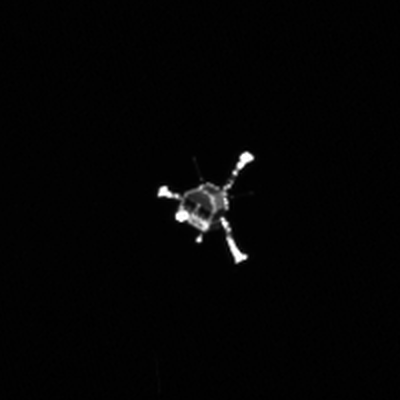
Above you can see Philae on its fateful journey, and below you can see its first image of the comet, both courtesy of ESA. The landing happened to take place while friends of mine were at a Division of Planetary Sciences meeting in Tucson, Arizona, and we and others discussed the Philae landing at Friday’s Weekly Space Hangout with Universe Today. And if you’re interested in more information than what I’ve written here, then check out the ESA Rosetta blog and posts by Emily Lakdawalla, Matthew Francis, and Phil Plait.

First_comet_panoramic_node_full_image_2

From what we can tell, Philae did initially touch down in its predicted landing ellipse (its planned landing zone) but its harpoons—which were supposed to latch onto the surface—failed to fire, and it bounced! Considering how small the comet is and how weak its gravitational force (about 100,000 weaker than on the Earth), this could have been the end as the lander could then have floated away, never to be seen again. However, after nearly two hours, it landed again…and bounced again, and a few minutes later finally settled on the surface and dug in its ice screws, about 1 km from its intended landing spot on a comet 4 km in diameter. (This would be like trying to land a plane in Honolulu and ending up on another island—it’s unfortunate but at least you didn’t drown.)

ESA_Rosetta_OSIRIS_FirstTouchdown-1024x702

At first, it wasn’t clear exactly where Philae actually was; it could have dropped into a crater where it would be nearly impossible to find. But then based on images from the OSIRIS camera and NavCam (navigational camera) on Rosetta, ESA scientists were finally able to locate it a couple days ago. The mosaicked images above came from the OSIRIS Team, and the NavCam image below as annotated by Emily Lakdawalla, to give the larger-scale context. After its last bounce, Philae rotated and headed “east”, finally becoming settled among dust-covered ice at the bottom of a shadowed cliff. It’s not an ideal position but at least it’s not totally precarious. (They considered securing the position with the harpoons, but the momentum from firing them could push the lander back up into space, which would be “highly embarrassing” according to Stephan Ulamec, head of the lander team.)

20141117_Comet_on_14_September_2014_-_NavCam_annotated_postlanding_f840

But the cliff situation is a problem. Philae’s battery had a little more than two days of juice in it, and once that ran out, it would be dependent on its solar panels. However, Philae’s current position only receives about 1.5 hours of light per 12-hour rotation of the comet, much less than hoped. Philae did attempt to run some of its experiments and activities during the time allotted, the battery ran late on Friday. This was @Philae2014’s last tweet: “My #lifeonacomet has just begun @ESA_Rosetta. I’ll tell you more about my new home, comet #67P soon… zzzzz #CometLanding”

Before Philae dreamt of electric sheep, it managed to collect some data using instruments on board. (See this Nature news article.) For example, Philae deployed its drilling system (SD2) as planned, in order to deliver samples to the COSAC and Ptolemy instruments, which probe organic molecules and water (and which I described in my previous Rosetta post). But ESA scientists don’t know how much material SD2 actually delivered to the lander; if the ground is very dense, it’s possible that since Philae isn’t totally anchored, it could have moved the lander rather than drilling into the surface. We do know for sure that some instruments operated successfully, such as the downward-looking ROLIS camera and ROMAP, the magnetic field mapping system.

In any case, scientists have obtained some data already while other data stuck on the snoozing lander will be retrieved later. In the meantime, Rosetta is keeping busy and continues to take observations. Philae has already been a success, and who knowsmaybe it will “wake up” when its solar panels absorb enough sunlight to recharge the batteries.

[Note that the NavCam images we’ve seen so far are pretty good, but I have heard that Rosetta scientists have much better resolution color images that are embargoed and won’t be released for six months. I haven’t confirmed this fact yet, so if you have more up-to-date info, please let me know.]

Finally, I’ll end with some comments about what some people are referring to as #shirtstorm or #shirtgate. (For more info, see this Guardian article and this blog post and this one.) On the day of the worldwide live-stream broadcast last week, Matt Taylor, the Rosetta Project Scientist, wore a shirt covered with scantily clad women. I get the impression that Taylor is a cool guy and wants to get away from the scientist stereotypes people have, but this is completely inappropriate. (And he’s worn this shirt to work before. Apparently none of his colleagues told him to leave it at home.) But it’s not just the shirt; during the middle of his broadcast, Taylor referred to Rosetta as the “sexiest” mission. “She’s sexy, but I never said she was easy.”

b288d9a2-6fc6-4f6c-b143-09bc706bfaa0-620x372

We debated many aspects of this on astronomers’ official and unofficial social media, and for the most part, our community is very unhappy about this. You may say that we should focus on the science, and who cares about what this scientist wears or says when he’s excited about his mission’s success. But we have been working really hard to increase diversity in STEM fields and to achieve gender equality in science. Many aspects to working in the current scientific establishment are not particularly welcoming to women, and Matt Taylor’s shirt and poor choice of words are part of the problem. A few days later, Taylor made a heartfelt apology. As far as I know, ESA itself has not issued an official apology yet. The American Astronomical Society made a statement today (Wednesday) that “We wish to express our support for members of the community who rightly brought this issue to the fore, and we condemn the unreasonable attacks they experienced as a result, which caused deep distress in our community. We do appreciate the scientist’s sincere and unqualified apology.”

In any case, our focus is on the science and on this amazing scientific achievement. But Science is for everyone.

Innovating Regulatory and Business Models in the Electric Industry (because climate change)

At a Climate and Energy Law Symposium at the University of San Diego on Friday (7th November), scientists, policy experts, lawyers, and business leaders gathered to discuss trends driving changes in the electric industry and regulatory and business responses to them. It was a rather sunny and hot day for southern California in November, perhaps highlighting ongoing climate change and the need to adapt the regulatory framework, market rules, and interactions between electric utilities and customers. The symposium was titled, “Innovative Regulatory and Business Models in a Changing Electric Industry.”

The symposium seemed to lean more on the business and legal side of things rather than the policy and science side, so I was out of my element, but I’ll try to write about some of the interesting things I learned there. USD also publishes the San Diego Journal of Climate & Energy Law, if you’d like to read more about related topics.

Solar-on-roof

In one of the morning sessions, Jamie van Nostrand from West Virginia University spoke about drivers of electric industry innovations including climate change mitigation and adaptation—for example following the experience of Superstorm Sandy. The electric industry is adapting to the rapid expansion of photovoltaics and solar panels in recent years and is preparing for the growth of “distributed energy” stored in small, decentralized grid-connected devices. (These images of rooftop solar and smart-grid technology are courtesy of NREL and DOE.)

OE-SmartGrid_Hero2

These were common themes throughout the day, especially the growth of solar and the proliferation of distributed energy resources. Although Sky Stanfield (at Keyes, Fox, & Wiedman LLP) stated that the increasing number of grid-connected solar installations has been mostly in the residential sector, as you can see from this recent report by the Union of Concerned Scientists, solar PV is growing exponentially in residential as well as commercial and large-scale sectors in the US.

UCSreport_Fig5

Of course, some countries, such as Germany, have surpassed these levels. Germany now generates as much as ~30% of its electricity from renewables, mostly from solar and wind power. The government’s goal is to double that amount by 2035, and they’re on track to successfully do so. However, in the meantime, they need to address issues of adapting the electrical grid and constructing new grid-storage capacity—issues also faced by the US electric industry.

Distributed energy, such as with rooftop solar panels, has the potential to allow individuals and communities to have more power (no pun intended) and influence with respect to utilities. Distributed generation could not just decentralize but also even democratize electricity systems, although that seems a little overoptimistic to me (see this article in Grist). Some states have witnessed opposition to distributed generation and to “net metering,” in which an electricity consumer who generates on-site electric energy (such as with solar panels) can offset part of their electricity bill. Some people have portrayed that as “free riding,” and Troy Rule (Arizona State Law School) showed this anti-net metering advert, which is ridiculous and funny as propaganda.

So what’s next? Kevin Jones (Vermont Law School) talked about five environmental pathways for an improved electric grid in his book, “A Smarter, Greener Grid,” including things like distributed energy technologies and optimization, electric vehicles, and areas to improve energy efficiency. Dian Grueneich, a former Public Utilities Commissioner, outlined proposals for “California’s Electricity Policy Future: Beyond 2020.” This included updated net-metering policies so that individuals and communities could more easily share a solar project’s electricity output. More importantly, she argued for a inter-agency policymaking structure that integrates electricity with climate, water, air quality, and transportation goals.

For all their talk of “innovation” (or even “disruptive innovation”!), I can’t say I left feeling like these people are transforming the electric industry in a fundamental way; they’re just gradually adapting to worsening climate change, which means more people with solar panels and making grids less vulnerable to Sandy-like storms. They’ll have to adapt to much more than that, judging from the conclusions of the newest IPCC report.

But what do Californians, industries, and policy-makers really need to do to mitigate, and not just adapt to, climate change? The symposium, which included speakers from and was sponsored by San Diego Gas & Electric, made inroads but only touched the surface of this question. The final person to ask a question during the final Q&A period referred to this issue, but her question remained unanswered and was postponed to the reception, where alcohol would be served.

A Bad Week for Commercial Spaceflight

The US commercial space industry did not fare well last week. Two accidents on 28th and 31st October highlight the risks, costs, and difficulties of spaceflight—as well as pointing to potential setbacks for commercial spaceflight. (If you’re interested, other news outlets have commented on these issues as well, such as here and here and here.) Pardon the self-promotion, but you can check out our discussion with Ken Kremer on a Weekly Space Hangout with Universe Today on the 31st for more information.

Orbital Sciences’ Antares rocket

First, on Tuesday (the 28th), an unmanned 13-story rocket designed by Orbital Sciences Corp. exploded a few seconds after liftoff off the coast of Virginia at NASA’s Wallops Flight Facility. It carried a Cygnus capsule with more than 5,000 pounds (2,300 kg) of hundreds of millions of dollars of supplies and equipment, as well as school students’ science experiments. It was bound for the International Space Station (ISS) and was the first time a resupply mission contracted by NASA to a private company failed. Fortunately, no one was hurt. Though the flight facility is designed to handle explosion and fire, there was significant damage to the launch infrastructure.

Journalists were pretty close to the launch zone, and this video (tweeted by Pamela Gay) shows the launch, explosion, and fleeing from the potentially dangerous area (see also videos at LA Times):

It will take time to recover from this. And we will have to see how much this damages Orbital Science Corp.’s reputation and NASA’s efforts to outsource orbital flights. Four previous Antares flights, including three to the station, had launched successfully, and five resupply flights remain in the company’s multi-billion dollar contract, the next one being scheduled for April. This likely will be delayed though, and according to Orbital’s press release, they will implement a propulsion system upgrade previously planned for 2016. The loss of this supply vessel doesn’t pose an immediate problem for the ISS’s crew, which includes two from NASA, one from the European Space Agency (ESA), and three Russians. The second US supply line to the ISS is with Space Exploration Technologies (SpaceX), which has its next launch planned for 9th December. Although the ISS crew and their missions are not in any danger, this loss significantly affects Orbital Sciences, and more work and investment will be needed to proceed.

NASA held a press conference the same day as the accident, and their investigation into the cause(s) of the explosion and failed launch continues. These space-bound rockets have many components—many things that could go wrong—and there is considerable debris to examine, so it could take awhile. It’s not clear whether extra weight and length were factors in the accident, for example. A turbopump-related failure in one of the two Aerojet Rocketdyne AJ26 stage-one engines might have been the culprit. These liquid oxygen and kerosene fueled engines, produced during the Soviet era in Russia (with modifications), likely will be discontinued in future Antares rockets.

Virgin Galactic’s SpaceShipTwo

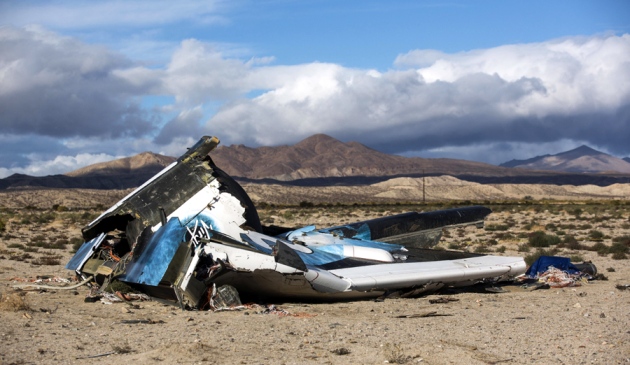
And now for Act Two. Virgin Galactic’s SpaceShipTwo, part of a commercial space program founded by Richard Branson, suffered an “in-flight anomaly” on Halloween. It crashed midflight during testing and broke into several pieces over the Mojave Desert (north of Los Angeles, for you non-Californians). One pilot (Michael Alsbury) was killed and was unfortunately still strapped to his seat in the wreckage. The other pilot (Peter Siebold) successfully ejected at an altitude of around 50,000 feet and deployed his parachute. He was airlifted to a hospital and treated for injuries.

HIRES for web AP673441118926

After successful programs like Mercury, Gemini, and Apollo, NASA has been attempting to privatize spaceflight and redefine its missions partly because of tighter budgets over the past couple decades. According to the NY Times and Lori Garver (former deputy administrator at NASA), public funds should be focused on activities that advance technology and provide public benefits to all, like planetary science. At the same time, Garver said, the government should encourage private companies to move ahead and find innovative ways of reducing costs.

The National Transportation Safety Board (NTSB) held a press conference last Sunday with more details. A new fuel was being tested on this flight, which may or may not have been an issue, and a “feathering mechanism” might have been deployed prematurely on the spacecraft, when it was traveling beyond the speed of sound. But the investigation is still in progress, and I’ll give you more details in the near future. In any case, our thoughts are with the pilots and their families.

So what does the future hold? I’m not sure, but it looks like Orbital Sciences (and SpaceX) and Virgin Galactic will continue their spaceflight programs, as they should. Both of these accidents are unfortunate and costly—to say the least—but they should not deter us from space exploration. We have much to gain from continuing these programs. At the same time, I think we should be careful about outsourcing too much; I believe that our best prospects lie with continuing to invest funding, resources, and personnel in NASA, ESA, and other space agencies, where our scientific expertise and oversight are the greatest, and where short-term setbacks are less likely to affect our long-term objectives or derail whole exploration programs.

Implications of the Midterm Election for Science

Just to be clear, I should distinguish between my statements as a scientist and my views on “science policy” and politics. This post is more about the latter, and I’m interested to hear your thoughts and views about these issues too.

The US midterm elections never receive as much media attention and as high turnouts as presidential ones. For family reasons or work reasons (because Election Day is not a holiday in the US) or because of disillusionment or apathy or other reasons, typically more than 60% of eligible voters do not vote during midterm elections.

The midterms on Tuesday (November 4th) are nonetheless important. In particular, science-related issues—especially climate change and Ebola—are playing significant roles in political campaigns and referenda on ballots around the country. In addition, the next (114th) Congress will shape federal budgets for basic and applied research in science, STEM (science, technology, engineering, and math) education, and public outreach, as well as setting budget priorities that could remain in place for years to come.

The Budget Situation

Developing and implementing federal budgets take considerable time and effort. The President and Office of Management and Budget first propose a budget for the next fiscal year (FY), then Congressional appropriations committees negotiate to develop their own budget bills, and then the final bill is executed by the federal agencies. Annual budgets for agencies such as the National Science Foundation (NSF), National Aeronautics and Space Agency (NASA), National Institutes of Health (NIH), and Environmental Protection Agency (EPA) can fluctuate throughout the budget-making process. For example, the House gave the NSF a 2.1% higher budget than the Senate Appropriations Committee, while both chambers rejected the President’s proposal to cut the Stratospheric Observatory for Infrared Astronomy (SOFIA) through NASA. The House and Senate appropriators also have different funding levels for the National Oceanic and Atmospheric Administration (NOAA), which include possible cuts to climate research. Note that federal science budgets also include the social and political sciences, which are funded through the NSF. It took forty years since the establishment of the NSF to include them under its aegis, and this is still contentious; an attempt in the House Science Committee to reduce their funding levels with an amendment earlier this year failed to pass.

Budget negotiations for FY 2015 were not completed when the House and Senate could not come to an agreement on the appropriations bills this summer. With the election approaching, Congress passed a three-month stopgap measure starting in September known as a continuing resolution (CR) to avert another government shutdown. The shutdown in 2013 had a disruptive impact on scientific researchers, students, and agency employees. For example, 99% of NSF’s workforce was furloughed, NASA sent 98% of its employees home without pay or access to their work, and NIH put 73% of its employees on enforced leave and suspended new clinical trials. Fortunately, this experience was not repeated.

Nevertheless, FY 2015 has just begun, and the CR means that the budgets continue on autopilot until December, and scientists hope that by then the new Congress will successfully finalize a budget bill for the rest of the fiscal year. Until a budget is passed, agencies continue to fund their programs at FY 2014 levels, which has the result that “sequestration” spending reductions from the Budget Control Act of 2011 will remain in place. If Congress does not make an agreement to reduce or remove these budget constraints, discretionary spending will return to sequester levels in FY 2016 and will remain there for the rest of the decade, meaning continued challenges for investment in science and technology. Considering that mandatory spending, which includes Social Security and Medicare, will continue to grow relative to the discretionary budget (see this CBO report), future budget negotiations will become even more difficult to resolve.

Education

STEM education and public outreach will be affected by the post-election Congress’s priorities as well. A couple months ago, Sen. J. Rockefeller (D-WV), introduced the America COMPETES Reauthorization Act. According to the Association of American Universities, the bill calls for “robust but sustainable funding increases for the [NSF] and National Institute for Standards and Technology” (NIST), and it supports each agency’s effort to improve education of future STEM professionals. However, support for the bill has not been sufficiently bipartisan to reauthorize it yet. Depending on the post-election environment, the Higher Education Act (HEA) reauthorization, introduced by Sen. T. Harkin (IA) might be more likely to pass. The HEA governs federal student aid, and considering that at least 70% of US university graduates are burdened with debt, this is clearly important. The bill would provide some relief for students by increasing state contributions to public universities and thereby reducing tuition fees, supporting community colleges, and expanding programs that allow high school students to earn college credits.

Election Campaigns and Ballot Measures

In addition to these science research and education issues, science policy is also relevant in many midterm election campaigns and ballot measures. Climate change, energy policies, and the environment are the most prominent science policy issues and are playing a big role in campaign ads. With increased flooding in the eastern US and the ongoing drought and wildfire conditions in the southwest—motivating a $7.5 billion water bond in California (see this PPIC post for info)—global warming concerns many voters. However, a partisan divide persists, depending how poll questions are framed. Hydraulic fracturing (fracking) and the Keystone XL remain controversial as well, and anti-fracking measures were nearly included on Colorado and Michigan’s ballots. In addition, in another science policy issue, voters in Colorado and Oregon will decide on the labeling of foods containing genetically modified crops (GMOs).

Moreover, climate change is a major campaign issue in the race between Rep. Scott Peters (CA-52), and Carl DeMaio in San Diego County. This tossup race has gained national attention, and though both candidates acknowledge the science behind climate change, DeMaio has stated that more research is needed. (Both candidates recently visited us at UC San Diego.) Importantly, Peters serves on the House Science Committee, and committee members Alan Grayson (FL-9) and Ami Bera (CA-7) are in close races as well. The post-election House Science Committee could change shape. Climate change also plays a role in the election between Sen. Mark Udall (CO) and Rep. Cory Gardner and in the one between Gov. Rick Scott (FL) and Charlie Crist.

In any case, science policy issues are clearly important in this election, which will have important implications for investment in science research and education.

[Note that part of this post was adapted from an op-ed that I submitted last month to the Journal of Science Policy & Governance.]

Reporting from the National Science Writers Meeting in Columbus, Ohio

As someone who’s still learning the ropes, I was excited to attend my first science writers meeting in Columbus this weekend. The National Association of Science Writers (NASW) and Council for the Advancement of Science Writing (CASW) organized the meeting, which included a nice variety of professional development workshops, briefings on the latest scientific research, and some field trips. It included a couple parties at a nearby brewery too, so I knew I was in good company, and I was happy to make some new friends and contacts. Here’s my name tag, which was a convenient little book of the program (and you can guess who I wrote down as my science hero):

photo 1

I’ll give you some highlights of a couple sessions that interested me. People “live-tweeted” most of the sessions too at #sciwri14.

NASW Meeting

One of the most useful sessions for me was the “pitch slam,” where writers had a single minute to pitch a story idea to editors, who gave feedback in real time. (The editors came from Slate, NPR, Popular Science, Discover, NOVA, Scientific American, and New York Times.) Speaking in front of the microphone understandably made people nervous, but I think I heard some pretty good pitches. Since I’m trained as a scientist, my approach to a science story or issue is to keep asking questions, but it sounds like editors want answers too! It’s important to be concise and clearly state at the beginning what the narrative thrust is and why the story is interesting. One should also describe the implications of the scientific result are why they’re surprising or new. Science stories need characters too, but that can come afterward. And one should keep in mind the audience of readers who would most likely read it, since some stories are more appropriate in particular news outlets rather than others. For example, Popular Science usually publishes “forward-looking” stories, so they’d be less interested in pieces focused on historical scientific advances.

The session on “diving into controversy and politics” was popular too, and it included Coral Davenport (New York Times), David Malakoff (Science Insider), and Nancy Shute (NPR). They spoke about hot-button topics in the news today—mainly climate change and Ebola. Davenport argued that climate change (along with energy and environment policy) is now a top-tier election issue and that this is mainly due to President Obama’s Environmental Protection Agency (EPA) regulations for coal-fired power plants, Tom Steyer’s money, and current weather events. She made a fairly convincing argument, but I think she overstated how new this development is, as fracking and the Keystone XL pipeline have been polarizing issues well before this midterm election campaign. Malakoff spoke about related topics and suggested that one should never pitch a “science policy” story (that is, one should frame the story differently). He pointed out that some stories are about a disagreement while others are about setting priorities. It’s important to state as clearly as possible who believes what and what their agenda is. We should ask whether the data and scientific results lead us to a particular policy prescription, and we should distinguish between scientists’ research and their opinions about which policy to advocate. We should write about the effects and impacts of particular policies, and then the reader can make his/her own decision.

The awards night took place on Saturday, and I was inspired to see so many excellent award-winning science writers. The winners included Azeen Ghorayshi for the Clark/Payne Award, Elisabeth Rosenthal for the Cohn Prize in medical science reporting, and the following Science in Society Journalism Award winners: Sheri Fink, Amy Harmon, Phil McKenna, Cally Carswell, and Charles Seife.

CASW Meeting

Getting back to climate change, on Sunday we toured the impressive Byrd Polar Research Center of Ohio State University. Lonnie Thompson and Ellen Mosley-Thompson, who have published numerous influential papers in Science and Nature, showed us the center and explained their research to us, which involves many fields but especially ice core climatology. Since the 1970s, they have conducted research at the poles as well as on mountains near the equator (in Peru and Tibet), where they drill down and pull up the ice cores, then bring them down the mountain on yaks and trucks and eventually store them in a huge freezer, which you can see below. (Our brief tour of the freezer was the only time I wore my hat on this trip.) Drs. Thompson and Mosley-Thompson use the ice cores to infer details about the climate and history of a particular regionTEXTsort of like using tree rings. For example, from ice cores taken from Kilimanjaro, they found evidence of a 300-year drought 4000 years ago (evidenced by less snow and ice accumulation), which would have had a dramatic effect on societies at the time. With rapid climate change, unfortunately the glaciers are rapidly retreating, but a silver lining is that they’ve uncovered 5000 to 6000-year-old plants!

photo 7

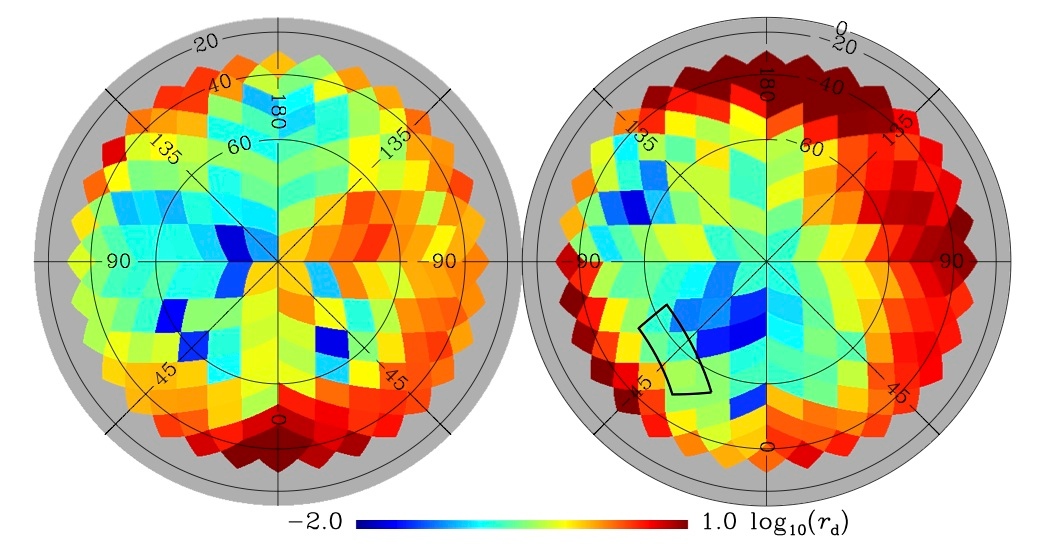
Finally, I had looked forward to the discussions of the ongoing BICEP2 controversy, and I was not disappointed. Marc Kamionkowski (Johns Hopkins University) gave an excellent overview of the basics of cosmology, the expanding universe, cosmic microwave background radiation (CMB), which is sort of an “afterglow of the Big Bang.” Many collaborations using different telescopes (including researchers at UC San Diego) seek to detect CMB “B-mode” polarization of the CMB due to primordial gravitational waves, which would constitute evidence supporting the rapid “inflation” of the early universe and would be a momentous discovery! At the BICEP2’s press conference in March at Harvard and in the preprint, the scientists did say “if confirmed…”, but of course everyone was excited about the implications of the result. However, new measurements from the Planck collaboration (see below) suggest that the polarization might not be due to the CMB’s gravitational waves but to foreground emission from dust grains in our own galaxy, though their calculation of the dust contribution is highly uncertain.

Map

A short discussion with Matthew Francis (freelance) and Betsy Mason (Wired) followed Kamionkowski’s talk, where they tackled questions that scientists and science communicators frequently face. Scientists want press attention and news outlets want headlines, so how should one describe and report caveats and uncertainties, especially when the implications (if confirmed) are so exciting? What is the best way to express skepticism of a particular aspect of a scientific result? And a question that I often ask: how can we communicate the messiness or “self-correcting” nature of science? In any case, we’ll all continue to follow the ongoing CMB debate in the scientific community and the media.

Now I’m looking forward to doing much more writing (and reading) and to participating in next year’s meeting!

Three Astrophysicists (including me) Meet with Congresswoman Davis

Last Tuesday, three weeks before the midterm election, three astrophysicists—graduate students and Ph.D. candidates Darcy Barron and Evan Grohs and I (a research scientist)—met with Representative Susan Davis (CA-53) and her staffer, Gavin Deeb. We had a twenty-minute meeting to talk about science in her district office in North Park, San Diego, which is on Adams Avenue and biking distance from my home. Darcy and I are her constituents, while Evan is a constituent of Rep. Scott Peters (CA-52), who is also a science advocate but is in a tight election race.

photo 1

I enjoyed participating in the Congressional Visit Day in Washington, DC, earlier this year (and Darcy had previously participated in the program too). In March, Josh Shiode (AAS Public Policy Fellow) and I had a short meeting with Rep. Davis and one of her DC staffers. This time in her San Diego district though, we had more time to chat. As before, she was very receptive to our message for federal investment in basic research, education and public outreach in the astronomical sciences and in science in general.

The current science budget situation and constraints from the ongoing “sequestration” leaves Congress and the Executive branch with little wiggle room, but we need to make the best of a bad situation. Otherwise, the US risks dropping behind Europe, Japan, and China in astrophysics research and in educating the next generation of scientists. Most federal funding for astronomy and astrophysics comes from the National Science Foundation (NSF), NASA, and the Department of Energy (DOE) Office of Science. Rather than improving and increasing these agencies’ constrained budgets, unfortunately Congress became mired in gridlock with little time before the election, and to avoid another government shutdown, Congress members had to vote on a “continuing resolution,” which basically keeps the budget on autopilot. Unless budget negotiations become an immediate priority after the election, it seems we’ll have to wait until FY 2016 to try to improve science budgets.

Rep. Davis stressed the importance of science communication, outreach, and improving diversity of the scientific workforce, and we were all in agreement about that. Communicating science to the public well helps to remind people how awesome science is and how important our investment in it is. And in our outreach efforts, the young and diverse students we reach and hope to inspire will be the people who advance science in the future. Rep. Davis was clearly interested in these issues and supportive of our and our colleagues’ work on them.

A couple months ago, Senator J. Rockefeller (D-WV), chair of the Committee on Commerce, Science, and Transportation, introduced the America COMPETES Reauthorization Act of 2014. According to the Association of American Universities, the bill calls for “robust but sustainable funding increases for the [NSF] and National Institute of Standards and Technology” (NIST) and it “recognizes the past success and continuing importance of the NSF’s merit review process.” It also supports each agency’s efforts to improve education of future science, technology, engineering, and math (STEM) professionals. But as Jeffrey Mervis of Science points out, support for COMPETES wasn’t sufficiently bipartisan and hasn’t been reauthorized.

On the other hand, perhaps there’s a better chance of Congress reauthorizing the Higher Education Act. The HEA is the major law that governs federal student aid, and it’s been reauthorized nine times since Pres. Johnson signed it into law in 1965. Considering that at least 70% of US university graduates are burdened with debt, this is clearly important. The HEA bill, introduced by Sen. Harkin (chair of the Health, Education, Labor and Pension Committee), would provide some relief for students by increasing state contributions to public universities (and thereby reduce tuition fees), supporting community colleges, and expanding programs that allow high school students to earn college credits. Disagreements between Democrats and Republicans remain on this bill, and we’ll have to wait and see in what form it will be passed.

We didn’t get into all these details, but I just wanted to give you some context. We also briefly discussed the need for graduate education reform and for preparing graduate students for the difficult job markets they face. These issues aren’t addressed in the HEA, though that bill would benefit some grad students who would have decreased loan burdens.

In any case, we’ve got to continue our work and our scientific advocacy, and after the November election, we hope that Rep. Davis, Rep. Peters (or DeMaio), and other Congressional lawmakers can get back together and negotiate a better budget for basic research, education, and public outreach in the physical and social sciences.

One Man’s Perspective on Diversity and Inequality in Science

[This blog was originally posted at the Women in Astronomy blog. Thanks to Jessica Kirkpatrick for editing assistance.]

It’s obvious, but one thing I’ve noticed over my career so far is that many departments, institutions, conferences, organizations, committees, high-profile publications, big research grants, etc., both nationally and internationally, and especially leadership positions, are filled with straight, white, men. There are notable and impressive exceptions, but the trend is clear. The distributions of people in the scientific workforce clearly don’t reflect their distribution in the overall population. For example, according to the AAS’s Committee on the Status of Women in Astronomy, nearly half of undergraduate students who obtain bachelors of science degrees are women, but only a third of astronomy graduate students and 30% of Ph.D. recipients are. Women compose 25-30% of postdocs and lower-level faculty, and this drops by half (to 15%) of tenured faculty. This is not explained by historical differences in gender: if women were promoted and retained at rates comparable to men, then the fractions advancing to higher career stages should be equal. The demographics in terms of race aren’t good either: according to the American Institute of Physics, African Americans and Hispanics combined account for only 5% of physics faculty.

Of course, this isn’t news to readers of this blog. And the disturbing lack of diversity doesn’t just affect us in astronomy and astrophysics or even just in the physical sciences. For example, as you’ve probably seen, the lack of diversity in Silicon Valley has deservedly been in the news lately. Tech companies like Google, Yahoo, Facebook, LinkedIn, and Twitter have all been criticized for being dominated by white men (and recently, also Asian men). We definitely need to work more at improving diversity in all STEM fields.

I’m a half-white half-Iranian man in astronomy and astrophysics. Everything is competitive these days, but in my opinion, if I’m applying for a job or a grant, for example, and if a black or Latino person or a woman with the same experience and qualifications as me has also applied, I think she should probably get it. While the grant and job markets in STEM fields are very competitive, I think we should look at the big picture, in which we need to strive for more equality in our universities and institutions. It’s also important to keep in mind that both men and women leave academia (though at different rates) and find important and fulfilling careers elsewhere.

I’d also like to point out that, in Iran, STEM fields are not seen as “male” subjects as much as they are in the US and they therefore have almost gender parity in these fields. For example, 70% of Iranian science and engineering students are women and when I last visited Tehran, I met many brilliant female Iranian physics students who could speak about science in both Farsi and English. And in recent news, Maryam Mirzakhani recently became the first woman to win the Fields Medal mathematics prize, and Azeen Ghorayshi won the Clark/Payne award for science journalists. (She recently wrote a story for Newsweek about smog in Tehran, which keeps getting worse.)

In any case, we all benefit—and science benefits—when we have a diverse community. A more diverse workforce, including among leadership positions, helps to produce new ideas and perspectives and to guard against bias. In business, when there is more diversity, everyone profits.

Speaking of bias, how can we deal with “unconscious bias”? In practice, two applicants are never identical, so we have to assess people on a case-by-case basis. It turns out that both men and women surprisingly have similar biases against women in STEM fields, though the biases can be reduced when people are more aware of them and when diverse committees make decisions about hiring and leadership decisions. In addition, diversity and racial equity should be considered at both the initial and shortlist stages of admissions and hiring, and the academic tenure system should be more flexible.

On the issue of leadership and mentorship, I’ve had female and male bosses and mentors and I’ve advised male and female students; in addition, I’ve worked with and for people from many different countries and backgrounds. As far as I can tell, it hasn’t made a difference for me, and I’ve seen a greater variety of management and collaboration styles among men and women than differences between them (though I’ve seen more overconfident men than women). Unfortunately though, some people still do view female leaders differently and hold them to different standards than male leaders.

So what can we do? Many people who are trying to improve this situation are doing excellent work on public outreach and educational programs especially with the purpose of reaching and encouraging girls, minorities, and underprivileged youth. It’s not hard to find such programs everywhere: for example, I recently participated in the Adler Planetarium Astrojournalists program and in a physics outreach program at UCSD with Intertribal Youth organized by Adam Burgasser. The success of such programs, as well as the growing numbers of role models, help to gradually changing cultural stereotypes and reducing biases. For those of us at research institutions, work on outreach and communication should be valued as much as research achievements when hiring and tenure decisions are made. One way to do this would be to explicitly state this in job advertisements and to hiring and tenure committees at our own institutions. It would require more work from such committees, but that’s a small price to pay.

The literature on “confidence gap” issues has been growing rapidly, encouraging women to “lean in” and be more confident and self-assured at work. This is important, but it amounts to encouraging women to behave more like men. We can’t neglect persistent structural and institutionalized barriers and we can’t forget that gender and race inequality is everywhere or that men and white people are benefit from their privileges. (And although class is a separate issue, it’s worth pointing out that there is also a lack of class diversity within higher education and graduate programs. According to the US Census Bureau, the income discrepancy between the working class and the professional class with higher academic degrees is growing, so this problem is getting worse.)

Increasing gender and race diversity is an important goal and an ongoing struggle, but it’s also a means to an end. I believe that we need to set our sights higher than merely having a few more white women and people of color among faculty members. We need *paid* maternity leave, universal or child-care options, better dual-career policies, and paternity leave should be expected. We shouldn’t praise men who continue working full-time rather than spending time with their new children, and we still have a long way to go until men share housework equally with women. Work-life balance issues affect everyone, including single people and those without children. We can advocate for new policies at our own institutions, and city- or state-wide or even national policies would make a huge difference. As a potential step in that direction, even Congress is aware of these issues: in the America COMPETES Act (which funds STEM R&D, education, and innovation) reauthorization it’s now directing the Office of Science & Technology Policy (OSTP) develop and implement guidelines for policies that encourage work-life balance, workplace flexibility, and family-responsiveness. In any case, we’re gradually making progress, but much more work remains to be done.