Three Astrophysicists (including me) Meet with Congresswoman Davis

Last Tuesday, three weeks before the midterm election, three astrophysicists—graduate students and Ph.D. candidates Darcy Barron and Evan Grohs and I (a research scientist)—met with Representative Susan Davis (CA-53) and her staffer, Gavin Deeb. We had a twenty-minute meeting to talk about science in her district office in North Park, San Diego, which is on Adams Avenue and biking distance from my home. Darcy and I are her constituents, while Evan is a constituent of Rep. Scott Peters (CA-52), who is also a science advocate but is in a tight election race.

photo 1

I enjoyed participating in the Congressional Visit Day in Washington, DC, earlier this year (and Darcy had previously participated in the program too). In March, Josh Shiode (AAS Public Policy Fellow) and I had a short meeting with Rep. Davis and one of her DC staffers. This time in her San Diego district though, we had more time to chat. As before, she was very receptive to our message for federal investment in basic research, education and public outreach in the astronomical sciences and in science in general.

The current science budget situation and constraints from the ongoing “sequestration” leaves Congress and the Executive branch with little wiggle room, but we need to make the best of a bad situation. Otherwise, the US risks dropping behind Europe, Japan, and China in astrophysics research and in educating the next generation of scientists. Most federal funding for astronomy and astrophysics comes from the National Science Foundation (NSF), NASA, and the Department of Energy (DOE) Office of Science. Rather than improving and increasing these agencies’ constrained budgets, unfortunately Congress became mired in gridlock with little time before the election, and to avoid another government shutdown, Congress members had to vote on a “continuing resolution,” which basically keeps the budget on autopilot. Unless budget negotiations become an immediate priority after the election, it seems we’ll have to wait until FY 2016 to try to improve science budgets.

Rep. Davis stressed the importance of science communication, outreach, and improving diversity of the scientific workforce, and we were all in agreement about that. Communicating science to the public well helps to remind people how awesome science is and how important our investment in it is. And in our outreach efforts, the young and diverse students we reach and hope to inspire will be the people who advance science in the future. Rep. Davis was clearly interested in these issues and supportive of our and our colleagues’ work on them.

A couple months ago, Senator J. Rockefeller (D-WV), chair of the Committee on Commerce, Science, and Transportation, introduced the America COMPETES Reauthorization Act of 2014. According to the Association of American Universities, the bill calls for “robust but sustainable funding increases for the [NSF] and National Institute of Standards and Technology” (NIST) and it “recognizes the past success and continuing importance of the NSF’s merit review process.” It also supports each agency’s efforts to improve education of future science, technology, engineering, and math (STEM) professionals. But as Jeffrey Mervis of Science points out, support for COMPETES wasn’t sufficiently bipartisan and hasn’t been reauthorized.

On the other hand, perhaps there’s a better chance of Congress reauthorizing the Higher Education Act. The HEA is the major law that governs federal student aid, and it’s been reauthorized nine times since Pres. Johnson signed it into law in 1965. Considering that at least 70% of US university graduates are burdened with debt, this is clearly important. The HEA bill, introduced by Sen. Harkin (chair of the Health, Education, Labor and Pension Committee), would provide some relief for students by increasing state contributions to public universities (and thereby reduce tuition fees), supporting community colleges, and expanding programs that allow high school students to earn college credits. Disagreements between Democrats and Republicans remain on this bill, and we’ll have to wait and see in what form it will be passed.

We didn’t get into all these details, but I just wanted to give you some context. We also briefly discussed the need for graduate education reform and for preparing graduate students for the difficult job markets they face. These issues aren’t addressed in the HEA, though that bill would benefit some grad students who would have decreased loan burdens.

In any case, we’ve got to continue our work and our scientific advocacy, and after the November election, we hope that Rep. Davis, Rep. Peters (or DeMaio), and other Congressional lawmakers can get back together and negotiate a better budget for basic research, education, and public outreach in the physical and social sciences.

Californians and the Environment

The Public Policy Institute of California (PPIC), a nonprofit, nonpartisan thinktank based in San Francisco, recently conducted a survey of Californians’ views of environmental issues. This is particularly important in light of the ongoing drought in the southwest and the upcoming elections in November. According to the report (available in PDF format), the results are based on the responses of 1,705 adult residents throughout California, interviewed in English and Spanish by landline or cell phone, and they’re estimated to have a sampling error of 4% (at the 95% confidence level). I’ll describe what I see as their most interesting results, and if you want more information, I encourage you to read the report.

Global warming: A strong majority say they are very concerned (40%) or somewhat concerned (34%) about global warming. Approximately two thirds of Californians (68%) support the state law, AB 32, which requires California to reduce its carbon emissions to 1990 levels by 2020, but the partisan divide (Democrats at 81% vs Republicans at 39%) has grown on this issue. 80% of Californians say that global warming is a very serious or somewhat serious threat to the economy and quality of life for California’s future. Only 45% of people are aware at all about the state’s cap-and-trade system, which took effect in 2012, but after being read a brief description, Californians are more likely to favor (51%) than oppose (40%) the program. Under a recent agreement between the governor and legislature, 25% of the revenues generated by the cap-and-trade program will be spent on high-speed rail, 35% on other mass transit projects and affordable housing near transit, and the rest for other purposes.

graph

Energy policies: overwhelming majorities of adults favor requiring automakers to significantly improve the fuel efficiency of cars sold in the U.S. (85%) and increasing federal funding to develop wind, solar, and hydrogen technology (78%). Strong majorities support the requirement that oil companies produce cleaner transportation fuels and the goal that a third of California’s electricity come from renewable energy sources. But residents’ support declines significantly if these two efforts lead to higher gas prices or electricity bills. (This is unfortunate, because gas and oil companies are heavily subsidized in the US, and maybe our gas and electricity bills are too low.) Most residents (64%) oppose building more nuclear power plants, as they have since the Fukushima disaster.

The survey includes other contentious issues: 54% of Californians oppose hydraulic fracturing, or fracking, for oil and natural gas extraction. But a majority (53%) support building the Keystone XL pipeline.

Water policies: Asked about some of the possible effects of global warming in California, majorities say they are very concerned about droughts (64%) or wildfires (61%) that are more severe. 35% say that water supply or drought is the most important environmental issue facing the state today (which is 27% higher than the fraction in a 2011 survey), and this is the first environmental survey in which air pollution was not the top issue. In another measure of concern about drought, strong majorities of residents (75%) say they favor their local water districts requiring residents to reduce water use. The CA legislature is discussing a $11.1 billion state bond for water projects that is currently on the November ballot, and a slim majority of likely voters would support it (51% yes, 26% no).

If you’re interested, the PPIC has useful information and publications on water policies and management of resources: see this page and this blog post series. Water policy analysts argue that in the Central Valley, where most agricultural water use occurs, the failure to manage groundwater sustainably limits its availability as a drought reserve. In urban areas, the greatest potential for further water savings lies in reducing landscaping irrigation—a shift requiring behavioral changes, not just the adoption of new technology. Finally, state and federal regulators must make tough decisions about how and when to allocate water during a drought: they must balance short-term economic impacts on urban and agricultural water users against long-term harm—even risk of extinction—of fish and wildlife.

People’s Climate March

This is a different topic and has nothing to do with the survey, but I want to use this opportunity to plug the People’s Climate March, which will be taking place on Sunday. (This website can direct you to events in your area.) One of the biggest marches and rallies will be in New York City, where the UN climate summit will soon be taking place. Even Ban Ki-moon will be participating! For San Diegans, you can find information about Sunday’s downtown events here. Californians also organized a “People’s Climate Train” to take activists and participants by train from the Bay Area through Denver and Chicago to New York, where they’ll be arriving tonight. Finally, I recommend reading this well written piece by Rebecca Solnit on Dr. Seuss’s The Lorax and the need to raise our voices on Sunday.

And the science budget debates continue…

Senator Coburn (R-OK) doesn’t like political science. (Is that why he’s retiring from politics this year? I doubt it.) In fact, he doesn’t seem to like the social sciences in general and would prefer to eliminate their funding from the National Science Foundation (NSF). His recent attempt at an amendment that would restrict political science funding was defeated, but we can’t always count on that happening, especially considering Rep. Lamar Smith (R-TX) and a few others share his views. Science budgets can fluctuate year by year, which has real consequences for scientists who depend on that funding and who have students and long-term projects that require consistent funding.

A couple months ago, I participated in the Congressional Visit Day with colleagues from the American Astronomical Society (AAS). Our goal was to talk to our Congress members about the importance of stable funding and investment in scientific research, telescopes, education, and outreach, and to encourage them to make these a priority. We focused on astronomy and astrophysics funding from the NSF and NASA, though there are other relevant agencies and departments, such as the Department of Energy. Although most Congress members and their staff seemed receptive to our message (including Coburn’s staff, who had nothing against the physical sciences), unfortunately the spending restrictions and numerous budget priorities make this a particularly complicated situation. This year’s story begins with the president’s proposed Fiscal Year 2015 budget, which leaves many agencies with sub-inflation budgets (without the Opportunity, Growth, and Security Initiative), so how will the story end? What’s a scientist to do?

Since we can agree that investing in science is critically important, we should follow the process in which these budgets are put together and negotiated. To do so though, we need to look into how the proverbial sausage is made—and it’s really more of a dubious hot dog than a gourmet bratwurst. The budget negotiation process is seemingly transparent, but to me it seems opaque in some ways and rather precarious—a good idea can get shot down and an unfortunate amendment could get stuck in the draft, for example. It’s kind of scary that the state of science in this country (and the fate of many scientists and their research programs) depends on so many unpredictable and capricious factors, though we can hope that the important issues are ironed out by the time a budget is finalized. We’re also affected by prior budget constraints, especially from the spending caps due to the Budget Control Act (which gave us the universally reviled “sequestration”).

background

I’ll give a brief description of the current state of affairs, but if you want more information, I refer you to the experts, especially Matt Hourihan (director of R&D Budget and Policy Program at AAAS) and Josh Shiode (Public Policy Fellow of AAS). And if you’re interested in seeing how our R&D funding compares to other countries, it shows total R&D (circle size) and as a function of GDP (x-axis) (the figure is taken from this).

Press2013_Fig2

First, we started with the Obama administration’s proposed FY 2015 budget request (PBR). At that point, the budget had to be negotiated by the House Commerce, Justice, Science (CJS) Appropriations Subcommittee, which included a “markup” process. The bill that emerged included increases to NASA and NSF’s budgets relative to the PBR and FY 2015 as well as smaller increases to education and human resources. The NSF budget certainly could have been worse, since there were lower funding levels in the controversial Frontiers in Innovation, Research, Science, and Technology Act (FIRST Act)—previously passed by the same committee—which was strongly opposed by university and science groups. The CJS bill also included small decreases to the budgets of the National Oceanic and Atmospheric Administration (NOAA) and the National Institute of Standards and Technology (NIST) relative to the inflation rate. (More details are here.)

The budget then went to the House floor in May, and a modified budget was passed at the end of the month. House Majority Leader Eric Cantor (R-VA, who was defeated in a primary election) and House Science Committee Chairman Lamar Smith (R-TX) narrowly passed an amendment that reduced funding to the NSF’s Social, Behavioral, and Economics (SBE). In another development, Rep. Rush Holt (D-NJ, one of the only scientists in Congress), tried to restore funding for NOAA climate research that was cut by the Appropriations Committee, but this amendment failed. (For more details about the House budget bill, look here and here.)

The Appropriations bill also included an amendment proposed by Rep. Alan Grayson’s (D-FL) that would provide protection for journalists against compulsory disclosure of their confidential sources. “That right is recognized in 49 states, but it’s not codified at the federal level,” Grayson said. The amendment passed by a vote of 225-183.

current status

The Senate Appropriations Committee produced a modified budget bill last week and a series of reports about individual agencies. This article describes the budget differences for NASA in the Senate bill vs the House bill and vs the previous year (FY 2014). Although the total NASA budget are similar in the Senate and House bills, the Senate allocates funding within the Science Mission Directorate (SMD) differently: the Senate bill includes more for exploration and less for aeronautics, space technology, and space operations. Unfortunately, both bills have decreased funding for education, though the funding levels are not as low as in the Obama Administration’s PBR.

Fortunately, both bills rejected the President’s proposal to cut the Stratospheric Observatory for Infrared Astronomy (SOFIA). The allocated funding would be enough for NASA to continue to cover its share of the operating costs. The Senate committee also provided funding for the Wide-Field Infrared Survey Telescope (WFIRST), which is planned to launch in the mid-2020s.

Nsf1

This article describes the Senate vs House budget differences for the NSF. Unfortunately, the Senate Appropriations Committee gave the NSF a lower funding level by 2.1% than the House, but it’s possible that this may change. I’ll also mention that a couple months ago the Senate confirmed France Córdova as the new director of the NSF. She said that better communicating the importance of the basic research that the NSF supports is one of her priorities. Córdova is an astrophysicist, the former president of Purdue University, and now the second women to head the agency.

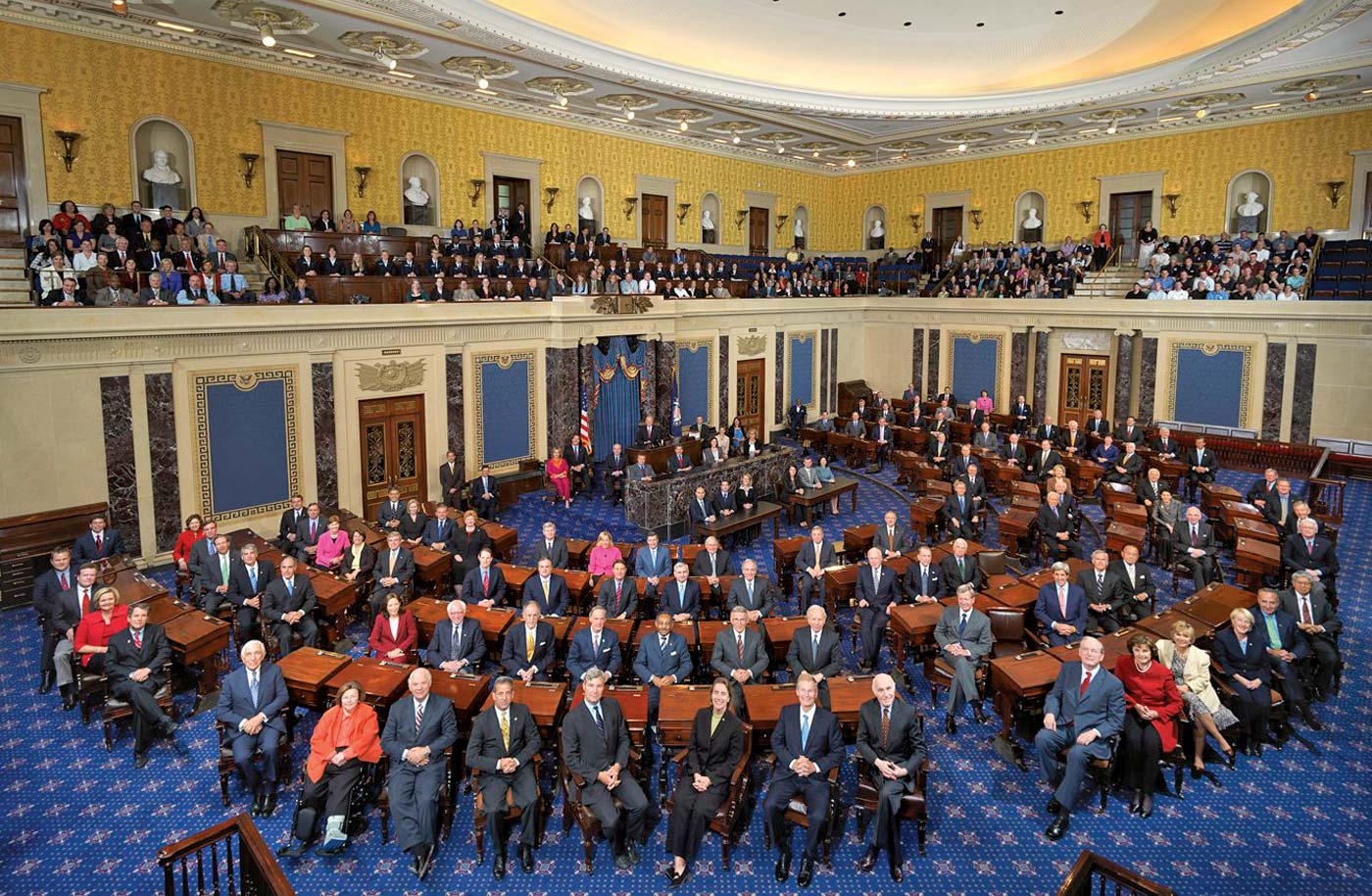
Now the “minibus” (as opposed to “omnibus”) bill heads to the Senate floor this week, so the next steps depend on these 100 people:
111th_US_Senate_class_photo
(Note that the various budget bills are being considered separately; for example, Labor, Health and Human Services bill, which funds the Affordable Care Act, will be more controversial and likely will take more time.) We may see important changes and amendments in the near future, and I will try to keep this page updated. The differences between the House and Senate budget bills will need to be resolved, and that can be a contentious process. We hope that the Senate will be less stingy with NSF funding and that it will continue with the Appropriations Committee’s funding levels for NOAA and NIST. There was some disagreement about the Office of Oceanic and Atmospheric Research’s work on climate research and ocean acidification, and these will have to be resolved as well. To be continued…

Climate Change Resilience and Governance: Preparing for the Effects of Global Warming

I just came back from Washington, DC, where I attended an AAAS meeting on Climate Change Resilience and Governance, which included speakers from local governments and federal government agencies, nongovernmental organizations (NGOs), industry, and academic researchers. The meeting’s program is here. I’ll summarize the presentations and debates that I found interesting, but if there are others you’d like to hear more about, let me know. By the way, I should do this more often when I write about conferences, but the hashtag participants used is #RGR14.

First I’ll tell you what we mean by resilience and governance, then I’ll mention a couple important new developments that people talked about throughout the conference, and then I’ll tell you about some of the major issues and themes we discussed. If you don’t want to read all the details below, the major issues included these: the framing of climate change with different people; water issues, including droughts and floods; responding and recovering from disasters; and economic issues.

Before I continue, I’d also like to point out that, thanks to the efforts of the organizers, the program was very diverse, with speakers and participants with a variety of backgrounds and coming from a variety of places. In addition, women constituted nearly two thirds of the speakers, and more than 10% of the speakers were people of color. There were even back-to-back sessions of all-women speakers. (This is much better than the physics and astrophysics conferences I usually attend; see this post for more on diversity issues in science.)

key terms and definitions

If you’re interested in my previous posts about climate change issues, including an introduction to the concept and implications of climate change, look here. I and others usually focus on climate change mitigation, since we’re working to avoid the worst of climate change and reduce its many potentially harmful effects. Nonetheless, we know that the climate is changing and our planet is warming. Even with radical and politically unlikely changes to our fossil fuel-based economic system, we still have to contend with the greenhouse gases we’ve already emitted, which will warm the planet by an average of at least 1.5 or 2 C this century, according to the recent report by the Intergovernmental Panel on Climate Change (IPCC). Therefore, we need to adapt to the expected consequences. Let’s be clear though: we need to work on both mitigation and adaptation simultaneously (a point explicitly made by Susan Ruffo, of the White House’s Council on Environmental Quality).

“Resilience” is similar to “adaptation,” though it sometimes refers to efforts to restore things back to normal after a weather-event or climate-related disaster, but as some speakers pointed out, in the future we may be adapting to a new normal. “Governance” refers to actions being taken by local, national, and international governments, and it’s of course related to politics and policy. At the meeting last week, it was Laura Petes (an advisor at OSTP) who defined these terms (and see this executive order for official government definitions).

the context

The US Global Change Research Program released its third National Climate Assessment (NCA) in May. The NCA was a major five-year undertaking by hundreds of climate scientists and is both comprehensive and detailed. It’s US focused, unlike the international IPCC reports, though both make for sober reading. It includes studies of the looming climate change effects across the US (such as effects on water resources, agriculture, transportation, urban systems, rural communities, etc.) and within particular regions of the country. (The report also received considerable media attention, such as Phil Plait’s article on Slate.) The NCA’s interactive website is very useful, well organized, and worth checking out. The last of its key findings is the following:

Planning for adaptation (to address and prepare for impacts) and mitigation (to reduce future climate change, for example by cutting emissions) is becoming more widespread, but current implementation efforts are insufficient to avoid increasingly negative social, environmental, and economic consequences.
NCA3_overview_p14

The report includes an entire chapter dedicated to adaptation, which describes examples of actions being taken by federal agencies, states, cities, NGOs, and the private sector, and outlines the next steps, including the identification of critical adaption threshold or “breakpoints” beyond which social or ecological systems are unable to adapt to climate change.

In addition, a week ago the Environmental Protection Agenca (EPA) announced new power plant carbon standards. According to Ken Kimmell of the Union of Concerned Scientists (UCS), this is a potential game changer. As you can see in the following graph, power plants, especially coal-fired ones, dominate our carbon emissions, and these standards could reduce those emissions by half by 2030 (to less than a million metric tons of CO2). The EPA and its administrator, Gina McCarthy, should be applauded for taking this important first step. The new standards must be combined with major efforts to ramp up renewable energy technologies and improved energy efficiency, and they will require strong leadership from the states. As argued by Vivian Thomson (professor at U. of Virginia) at the meeting, California, New York, and Washington are among the “active states” on climate change, and most of the rest of the country can do much much more.
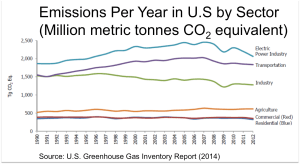
SectorEmissions1990To2012_GHGInventoryReport2014
Power-plant-carbon-dioxide-emissions-chart

framing

A number of speakers argued that we should be careful about how we frame these issues when interacting with different communities and different sectors of the public. For example, some people react different when they hear “global warming” versus “climate change.” Some people can be turned off by hearing either of these, but they will be receptive when they hear about energy efficiency and ways to reduce their family’s gas and electricity bills. In addition, terms like “sustainability,” “smart growth,” and “resilience” may be too vague, but “risk reduction” in a specific context can be clearer, for example.

water

I’ve written before on water policy issues in the southwest , where we’re always talking about drought, but in the east, people are worried about floods and stormwater. Water issues are perhaps the most important of those facing us, and it’s no surprise that the NCA devoted two chapters to water resources and interactions between water, energy, and land use. I should note that climate change affects the food supply as well, through agriculture, fish catch, rising food prices, and so forth.

NCA3_water_Fig11

Many speakers spoke about water issues. Susan Leal (who co-authored a book, Running Out of Water) pointed out that most people take water and wastewater for granted, but maybe the shouldn’t. We should expect water rate payments to increase in the future. Pilar Thomas, who works with the Department of Energy, spoke about the water-energy nexus and the vulnerability of energy systems. She also spoke about water law and water rights, since disputes between states, tribal communities, and the private sector about water will surely increase in the future. I asked a question about preparing for future droughts, and these speakers argued that we can gain much from reduced water usage in agriculture and the food industry; water recycling in urban areas; and maybe we should try again to have “Meatless Mondays,” since producing a pound of animal protein requires, on average, about 100 times more water than producing a pound of vegetable protein (and beef is the worst).

environmental justice

I was happy and impressed that many speakers, especially Jalonne White-Newsome (WE ACT for Environmental Justice), Michael Dorsey (member of EPA’s National Advisory Committee), and Barbara Allen (professor at Virginia Tech) discussed important issues of environmental justice, injustice, and inequality. In my opinion, we don’t talk about these issues enough, and we certainly aren’t adequately addressing them. If you’re interested in learning more about environmental justice (EJ), see my recent post about the issues involved.

Currently EJ communities are not engaged in the process, argues Dr. White-Newsome, and the failure to mobilize the majority of Americans to want action on climate change is partly due to the fact that not everyone is part of the conversation. Many black, Latino, and Native American communities, as well as working class white communities, live closer to power plants, land fills, oil drilling platforms, polluting industries, etc., and are in more vulnerable areas, such as those that will be affected by rising sea levels, droughts, fires, hurricanes, and so on. Dr. Dorsey talked about the injustice of extreme weather events, such as Hurricanes Katrina and Sandy, which should not be seen as “acts of God.” (He also had a way with words; at one point he referred to “persistent corporate sociopathy.”) Dr. Allen argued that we need endogenous ideas for transforming a community, such as when a community is rebuilding following a weather event, but if green technologies and buildings seem like too external to people, then they won’t “take” and will be less popular and successful.

disasters

A couple speakers, such as Sabrina McCormick (professor at George Washington U.) and Dr. Allen, talked about the benefits and perils of “disaster thinking.” It can be dangerous to think of climate change as a series of disasters; we might benefit from seeing the opportunities for improvement, such as by appealing to people’s self-interest. (For example, because of successful incentives, Germans now associate climate change and renewable energy with ways to make money.) Nonetheless, we can expect more weather events, flooding, and temperature extremes in the future. In fact, and this was new to me, heatwaves kill more people than all other weather events combined! Young children and people over 65, especially those on the top floors of poorly cooled buildings in dense urban areas, are among the most vulnerable. Simple solutions like white-painted roofs can save many lives.

“it’s the economy, stupid”

Finally, a few people, especially David Orr (author of seven books and professor at Oberlin), Kate Sheppard (reporter at Huffington Post), and Gar Alperovitz (writer and professor at U. of Maryland), talked about economic issues and policies. Dr. Orr discussed the relation between carbon emissions, climate change adaptation, and economic systems and unequal wealth distributions. He warned that, if the current political culture doesn’t change, “when times get rough, humans get nasty”—fairness goes out the window. Katrina is just an example of what’s to come. What will governments have to do when sea levels rise to get people out of harm’s way? It will help if we begin to think more like a community. We’re all in this together, but as it is now, the 7% richest people are responsible for half of carbon emissions, while the costs of climate change are being outsourced to the third world and future generations. Dr. Orr also asked a couple provocative questions: Is our capitalist system resilient and sustainable? Is democracy sustainable? (He asked this in the context of a point that Exxon-Mobil could legally burn all of their reserve fossil fuels and single handedly take us all past the tipping point.) While specific questions about responding to the next big storm are important, we should also be asking these big questions about systemic challenges, since climate change is likely the biggest crisis of our time.

My Experience with the Congressional Visit Day

[A previous version of this first appeared as a Guest Post on the AAS Policy Blog.]

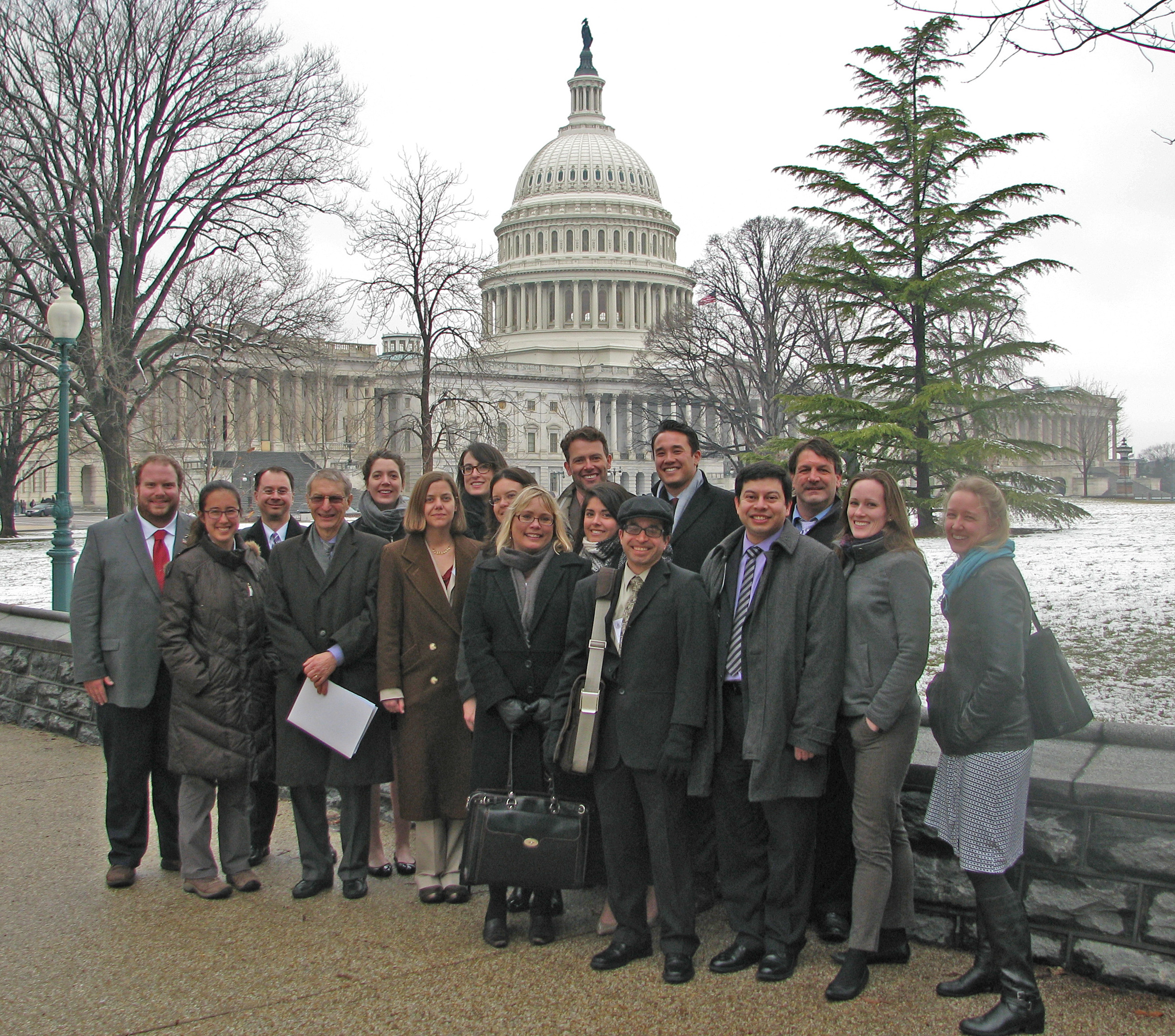
Last week, I participated in the Congressional Visit Day (CVD) with the American Astronomical Society (AAS). I was just one member in a group of eighteen AAS members—a diverse group from around the country involved in many different subspecialties of astronomical research, as well as various teaching and outreach programs. Below, is a nice photo of us is (and I’m the guy wearing a hat). Our AAS delegation was part of a larger group of scientists, engineers, and business leaders involved in a few dozen organizations participating in the CVD, which was sponsored by the Science-Engineering-Technology Work Group. Go here for a further description of our program.

aas_cvd_2014

As scientists and members of the AAS, we had a few primary goals. We argued first and foremost for the importance of investing in scientific research (as well as education and outreach) through funding to the National Science Foundation (NSF), NASA, and science in particular departments (especially the Depts. of Energy and Defense). If you’re interested, you can see our handout here. We also encouraged our Representatives to sign two “Dear Colleague” letters that are currently passing through the House: the first letter is by Rep. G. K. Butterfield (D-NC) and is asking for a 3% increase to NSF’s FY 2015 budget to $7.5 billion, and the second letter is by Rep. Rush Holt (D-NJ), Rep. Randy Hultgren (R-IL), and Rep. Bill Foster (D-IL) and is asking the appropriators to “make strong and sustained funding for the DOE Office of Science one of your highest priorities in fiscal year 2015.”

We also told our Congress members about our personal experiences. In my case, I have been funded by NASA grants in the past and am currently funded by a NSF grant. I am applying for additional research grants, but it’s not easy when there is enough funding available only for a small fraction of submitted grant proposals. In the past, I have also benefited from projects and telescopes that were made possible by NASA and the NSF, and I plan to become involved in new telescopes and missions such as the Large Synoptic Survey Telescope (LSST), the Wide-Field InfraRed Survey Telescope (WFIRST), and possibly the James Webb Space Telescope (JWST, the successor to the Hubble Space Telescope). Also, if a NSF grant I’ve submitted is successful (fingers crossed!), I will be able to participate more actively in public outreach programs especially in the San Diego area in addition to continuing my research.

Not only did we explain the importance of stable funding for basic research, we also talked with our legislators about how astronomy is a “gateway science” that draws people in and inspires them to learn more, become more involved, and even potentially become scientists themselves.

We talked about the importance of improving science and math literacy, which also improves US competitiveness with respect to other countries, and about how investment in science spurs innovation in industry and leads to new and sometimes unexpected developments in computing, robotics, optics, imaging, radar, you name it. Since “all politics is local,” as they say, we also emphasized that these investments in scientific research are important for strong local, as well as national, economies. As we were visiting shortly after the introduction for the President’s Budget Request (PBR) for FY 2015, we also expressed our concern that the proposed budget reduces funding for NASA’s education and outreach activities within the Science Mission Directorate by two-thirds, and would require mothballing the Stratospheric Observatory For Infrared Astronomy (SOFIA) outside of the well-established senior review process.

My Congress members are Senators Barbara Boxer and Dianne Feinstein, whose staff we met, and Representative Susan Davis (CA-53), with whom we met personally (along with a member of her staff). We had a quick photo-op too, right before she had to get back to the House chamber for a vote. I was in a group with two other astronomers who were from Oklahoma and Illinois, and we met with their respective Congress members as well. Our larger group was split into teams of three to four for the days visits, and each met with the representatives and senators of all team members.

photo 4

Senators and Representatives serve on different committees and subcommittees, each with a specific jurisdiction over parts of the federal government. For example, Sen. Boxer is on the Science & Space Subcommittee of Senate’s Commerce Committee and is the chair of the Committee on Environment & Public Works. Sen. Feinstein is chair of the Senate Appropriations Committee’s Subcommittee on Energy & Water, which has jurisdiction over the Department of Energy (among many other things). The appropriations committee is responsible for writing legislation that grants federal agencies the ability to spend money, that is, they appropriate the budgets for the agencies under their jurisdiction. Rep. Davis is a member of the House Education & Workforce Committee and has done a lot of work on educational reform, promoting youth mentoring, and civic education.

I think that we received a largely positive responsive from our congressional representatives. My three Congress members were very supportive and in agreement with our message. Some of the other members we met with, while generally positive about our message, left me with the impression that they approved of our “hard sciences” but didn’t want as much funding going to social sciences, climate science, and other particular fields. It seems to me that we must get ourselves out of this highly constrained budget environment, in which discretionary programs like those funding the sciences are capped each year; we need to either find additional sources of revenue (e.g., reducing tax breaks) or make other changes to current law.

In my previous blog post, I talked about the proposed budget and the negotiations taking place in Congressional committees. We also need to consider the current political situation with the upcoming mid-term elections. Once a budget (which may be significantly different than the PBR) is passed by the House and Senate Appropriations Committees, it will be considered by the House and Senate, which are currently controlled by Republicans and Democrats (who have 53 seats plus 2 independents who caucus with them). However, it appears possible that Republicans may retake the Senate in the 114th Congress, and in that case their leadership may resist even small additions to the current budget request and may attempt to simply pass a “continuing resolution” instead.

On the same day as our CVD (26th March), Office of Science and Technology Policy Director John Holdren appeared before the House Committee on Science, Space, and Technology, where there were considerable disagreements among the committee members about STEM education, SOFIA, and other issues. (Note that the committee is particularly polarized and has been criticized for its excessive partisanship and industry influence.) Fortunately, on the following day, a hearing before House appropriators on the NSF budget request fared better. This is encouraging, but in any case it will be a difficult struggle to produce a good budget (that is, good for science) within a short time-scale.

The Proposed Fiscal Year 2015 Budget: Thoughts on its Implications for Science

I’d like to make a few comments on the proposed US federal budget for Fiscal Year 2015 (FY15, which starts in October), especially on its implications for science research and education in this country. First, I’ll acknowledge articles and blogs by Matt Hourihan (at the American Association for the Advancement for Science) and Josh Shiode (at the American Astronomical Society), which I’ve used for some of the information and figures below. I’m responsible though if I’ve misstated any facts or numbers, and as usual, any opinions I express about the current state of affairs are my own. I look forward to discussing these issues with scientists and other interested people, and as usual, you’re welcome to write or send me comments.

President Obama’s administration officially released its President’s Budget Request (PBR, but not the beer!) on 4th March, and the details are available on the White House’s website. The PBR is formulated by the Office of Management and Budget (OMB), and it soon be evaluated and revised by the Appropriations Committees in Congress. The White House’s Office of Science & Technology Policy (OSTP) plays a role in developing the budget, but naturally there are many other considerations involved as well, such as ensuring national security, strengthening the economy, maintaining healthcare and education programs, etc. Nonetheless, from the perspective of science research and education, the budget certainly could be better.

15p R&D Pie_AAAS

Unfortunately, the Budget Control Act puts spending caps on support for research and development (R&D). Assuming little to no additional revenue, there is not much room in the discretionary budget above FY 2014 levels. With three-quarters of the post-sequester spending reductions still in place (see my previous blog post), many agency R&D budgets are stagnant. The $3.901 trillion budget includes $136.5 billion for R&D, which is a 0.5% increase over FY 2014 but that doesn’t account for the 1.7% inflation rate. The divisions by agency are described by the above pie chart (courtesy: AAAS) and in this article. Funding for the physical sciences largely comes from the National Science Foundation (NSF), NASA, the Department of Energy (DOE) Office of Science, and other agencies and departments. Total research funding (basic+applied research) has dropped 1.9% below FY 2014 levels, which is only slightly above FY 2013 post-sequester levels.

budget_diffs_WP

The President has also proposed additional $56B of funding through the Opportunity, Growth, and Security Initiative (OSGI), which would help the situation for many agencies, but it appears that Congress won’t have the stomach for it. As can be seen in the figure above (courtesy: Washington Post), an additional difficulty comes from differences between the revenue projections of the President and the Congressional Budget Office (CBO); the former assumes revenue increases from some reduced tax breaks for wealthy Americans, to which Congress likely won’t agree. In that case, we may be headed back toward sequestration funding levels in FY 2016.

RandDprojections_AAAS

The Association of American Universities (AAU) and the American Astronomical Society (AAS, of which I’m a member) have expressed some criticism of the proposed budget: while they acknowledge the caps on discretionary spending, they argue that basic research and education could receive higher priority. A surprising cut that was proposed was to the Stratospheric Observatory for Infrared Astronomy (SOFIA), which is an aircraft telescope. The axing of SOFIA in 2015 is particularly vexing for astronomers because it occurred outside the established review process. The FY 2014 budget proposed a controversial government-wide reorganization of science, technology, engineering and mathematics (STEM) education programs, and this year’s budget includes a surprising cut (by 2/3!) to the STEM education budget within NASA’s Science Mission Directorate (SMD). Time will tell how education programs adapt to these changes, but cuts like these potentially hurt US competitiveness relative to Europe and East Asia as well as efforts toward improving science and math literacy.

According to Jack Burns (U. of Colorado, Boulder), “by lowering overall spending on the astronomical sciences, the Administration threatens the health of our technical workforce and the education and training of the next generation of space scientists. This is hard to swallow at a time when other countries are increasing their investments in science and technology.” Similarly, in Science magazine, William Press argues that, “it appears that [nations] who spend close to 3% of their GDP on R&D are the ones that compete most successfully. The United States is in that club now. We don’t want to fall out of it.”

I’m most interested in astronomy/astrophysics, because it’s my field, but other fields are affected as well. For example, the budget of the National Institutes of Health (NIH) only received a sub-inflationary increase (like most agencies), and the proposed budget includes a substantial cut to fusion energy research and to the US contribution to the International Fusion Experiment (ITER), though funding for energy efficiency and renewables would increase. The Environmental Protection Agency (EPA) would also receive a cut in this budget.

fedspending_AAAS

Finally, as this bar graph shows, the budget prospects for nondefense discretionary spending will likely worsen in the coming years. “Mandatory spending” is controlled by different mechanisms than discretionary spending, and it includes Medicare, Medicaid, Social Security, which are large programs, as well as food stamps, unemployment compensation, and other smaller ones. As a fraction of GDP, we can expect mandatory spending to continue increasing. On this point, I’ll first say that in my personal view, I’m wary of those who criticize these programs (or who refer to them pejoratively as “entitlements”), because such criticisms give space for extreme conservatives who would rather gut these programs and let the poor, ill, hungry, and elderly suffer on their own. Nonetheless, it appears that, the way that they are currently funded, the cost of Medicare and Medicaid programs is growing at an unsustainable rate (faster than inflation). The Affordable Care Act is helping, but it’s probably insufficient to resolve this situation, especially as more baby boomers draw on retirement and health care benefits. Long-term fiscal problems remain.

We also need to consider the current political situation in Congress. I participated in a Congressional Visit Day with the AAS this week, and I’ll soon write my next blog post about that.