Struggling Against Gender Bias in STEM Fields

In spite of wishful thinking, sexism and gender bias persist in science, tech, engineering and math. (Image: Getty, New Scientist)

In spite of wishful thinking, sexism and gender bias persist in science, tech, engineering and math. (Image: Getty, New Scientist)

[Originally published in the Summer 2015 issue of American Astronomical Society (AAS) Committee on the Status of Women in Astronomy (CSWA) Status newsletter (p. 15-17). If you quote this article in any way, please cite the version in Status. Many thanks to Nancy Morrison and Joannah Hinz for editing assistance.]

Suppose that two astrophysicists with similar education, experience, and accomplishments—let’s call them Dr. X and Dr. Y—apply for a tenure-track faculty position. If Dr. X is female and Dr. Y is male, and if the selection committee members have conscious or unconscious gender bias, then, unfortunately, one might expect it to be more likely that Dr. Y would be offered the position.

But a controversial and influential new paper argues the opposite. In the title of their April 2015 article in the Proceedings of the National Academy of Sciences (PNAS), Wendy M. Williams and Stephen J. Ceci, both psychologists and full professors at Cornell University, claim, “National hiring experiments reveal 2:1 faculty preference for women on STEM tenure track.” [1]

The authors base their conclusions on five randomized, controlled experiments at 371 U.S. colleges and universities in biology, engineering, economics, and psychology. In these experiments, tenure-track faculty members evaluated the biographical summaries or the curricula vitae of fictitious faculty candidates—including one “foil” candidate—mostly with impressive qualifications but with different genders and different life situations, such as being a single parent or having taken parental leave.

Their analysis reveals an unexpected result: faculty reviewers strongly preferred female candidates to male ones by a highly significant 2:1 advantage. Williams and Ceci conclude, “Efforts to combat formerly wide-spread sexism in hiring appear to have succeeded. After decades of overt and covert discrimination against women in academic hiring, our results indicate a surprisingly welcoming atmosphere today for female job candidates in STEM disciplines, by faculty of both genders.”

The article received considerable media attention from a variety of outlets. In particular, Nature, The Washington Post, The Economist, and Inside Higher Ed reviewed the article without much skepticism. Presumably, the authors’ claim that sexism no longer exists and gender bias is a thing of the past is a message that many people want to hear. On 31 October 2014, Williams and Ceci published an op-ed in The New York Times entitled, “Academic Science Isn’t Sexist,” in which they presented a shorter version of the same argument. [2]

On the other hand, Lisa Grossman in New Scientist [3] and Matthew Francis in Slate [4] analyzed the study in more detail and expressed more criticism. Both authors outlined the flaws in the analysis by Williams and Ceci. The experimental evaluations in their study involved only reviews of candidates’ biographies, without all the other activities that normally enter into faculty hiring and that may be affected by gender bias: personal interviews, presentation of talks, social events with potential colleagues, and determination of a short list by a selection committee. These simplified experiments do not accurately represent a real hiring process.

Many other studies and and a wealth of anecdotal evidence contradict the conclusions of Williams and Ceci. For example, Viviane Callier, Ph. D., contractor at the National Cancer Institute, told us [5] that recent surveys [6,7] found evidence of pervasive sexism in letters of recommendation—a domain in which the assumption of a level playing field does not apply and which is out of the woman applicant’s control. Moreover, faculty hiring is dominated by graduates of a few prestigious institutions and labs that are disproportionately headed by men, who are more likely to hire other men. “To imply, like Williams and Ceci, that ‘we are done,’ or that ‘the problem is solved,’ does a great disservice to the scientific community,” Callier said.

In any case, analysts agree that the underrepresentation of women in STEM fields is an ongoing problem. According to a National Science Foundation study in 2008, 31% of full-time science and engineering faculty are women. This fraction varies among different fields, however. In an American Institute of Physics survey [8], the representation of women among physics faculty members reached 14% in 2010, and for astronomy-only departments, it was 19%. Similarly, a 2013 CSWA survey of gender demographics [10] found that 23% of faculty at universities and national research centers are women. These fractions demonstrate improvement in recent decades, but clearly much more work needs to be done.

Furthermore, although women outnumber men among college and university graduates, men continue to dominate the physical sciences, math, and engineering. At higher levels of academic careers, the gender demographics worsen, in what is often described as a “leaky pipeline.” Women constitute only one third of astronomy graduate students and less than 30% of astronomy postdoctoral researchers. In addition to the underrepresentation of women, gender inequality persists in other areas as well: according to a report by the Institute for Women’s Policy Research [9], although women now pursue graduate degrees at the same levels as men, women with such degrees earn no more than 70% of their male colleagues, a larger divide than the overall pay gap.

“Unconscious bias” against women in science and math is not unique to men. In a 2012 PNAS study [11], Corinne A. Moss-Racusin and her Yale University colleagues found that female faculty are just as biased as men against female scientists. When people assess students, hire postdocs, award fellowships, and hire and promote faculty, biases propagate through the pipeline. Contrary to the conclusions of Williams and Ceci, the problem is on both the supply side and the demand side.

What can be done to address such biases? As difficult as it may be, if scientists simply acknowledge that we all carry some inner biases, those biases may be reduced. Meg Urry argued in the January 2014 issue of Status [12] that people who are aware of bias tend be more careful about how they make hiring decisions. In addition, increasing the fraction of women in hiring pools and in search committees helps to reduce unconscious bias as well.

Some institutions have National Science Foundation-funded ADVANCE Programs to increase the representation and advancement of women in STEM careers. The University of Michigan’s program [13], for example, includes efforts to develop equitable faculty recruitment practices, increase the retention of valued faculty, improve the departmental climate and work environment, and develop encouraging leadership skills of faculty, staff and students. Their program could be emulated at other institutions.

Finally, other important issues relate to gender bias and underrepresentation of women, including improving maternal and paternal leave policies, increasing access to child care, developing dual-career policies, promoting work-life balance, and reducing gender inequality of housework. Furthermore, other forms of underrepresentation are also important, and workers in STEM fields continue to strive to improve diversity in race, class, and sexual orientation, as well as gender.

References Cited
[1] Williams, W. M., & Ceci, S. J. 2015, “National hiring experiments reveal 2:1 faculty preference for women on STEM tenure track,” PNAS, 112, 5360n
[2] Williams, W. M., & Ceci, S. J. 2014 October 31, “Academic Science Isn’t Sexist,” New York Times
[3] Grossman, L. 2015 April 17, “Claiming sexism in science is over is just wishful thinking,”
New Scientist
[4] Francis, M. R. 2015 April 20, “A Surprisingly Welcome Atmosphere,” Slate
[5] Callier, V. 2015, personal communication by email
[6] McNutt, M. 2015, “Give women an even chance,” Science, 348, 611
[7] Madera, J. M., Hebl, M. R., and Martin, R. C. 2009, “Gender and Letters of Recommendation for Academia: Agentic and Communal Differences,” Journal of Applied Psychology, 94, 1591
[8] Ivie, R., White, S., Garrett, A., & Anderson, G. 2013, “Women Among Physics & Astronomy Faculty: Results from the 2010 Survey of Physics Degree-Granting Departments,” American Institute of Physics
[9] Institute for Women’s Policy Research 2015, “The Status of Women in the States: 2015 Employment and Earnings”
[10] Hughes, A. M. 2014 January, “The 2013 CSWA Demographics Survey: Portrait of a Generation of Women in Astronomy,” Status, p. 1
[11] Moss-Racusin, C. A., Dovidio, J. F., Brescoli, V. L., Graham, M. J., & Handelsman, J. 2012, “Science faculty’s subtle gender biases favor male students,” PNAS, 109, 16474
[12] Urry, C. M. 2014 January, “Why We Resist Unconscious Bias,” Status, p. 10
[13] University of Michigan, ADVANCE Program

As Galaxies’ Light Gradually Fades, the Universe is Slowly Dying!

The Universe, long past retirement at an age of 13.8 billion years, appears to be gradually “dying.” New observations strongly indicate that galaxies, vast collections of billions of stars such as our Milky Way and neighbors Andromeda and Triangulum, generate much less energy than they used to across the wavelength spectrum, a clear trend revealing the fading cosmos.

This composite picture shows how a typical galaxy appears at different wavelengths in the GAMA survey. The energy produced by galaxies today is about half what it was two billion years ago, and this fading occurs across all wavelengths. (Credit: ICRAR/GAMA and ESO.)

This composite picture shows how a typical galaxy appears at different wavelengths in the GAMA survey. The energy produced by galaxies today is about half what it was two billion years ago, and this fading occurs across all wavelengths. (Credit: ICRAR/GAMA and ESO.)

Scientists with the Galaxy and Mass Assembly (GAMA) survey, led by Simon Driver of the International Centre for Radio Astronomy Research in Australia, extensively and thoroughly examined more than 200,000 galaxies. Driver and his colleagues presented the results of their analysis at the general assembly of the International Astronomical Union (IAU) in Honolulu, Hawaii, which came to a close last weekend. Their announcement coincided with their data release and the submission of their paper to the journal, Monthly Notices of the Royal Astronomical Society. The paper has not yet been peer-reviewed or published, but the authors’ main conclusions are unlikely to change.

“While most of the energy sloshing around in the Universe arose in the aftermath of the Big Bang, additional energy is constantly being generated by stars as they fuse elements like hydrogen and helium together,” Driver said. “This new energy is either absorbed by dust as it travels through the host galaxy, or escapes into intergalactic space and travels until it hits something, such as another star, a planet, or, very occasionally, a telescope mirror.”

Stars of all ages throughout this multitude of galaxies convert matter into energy (remember E=mc2?) in the form of radiation ranging from ultraviolet to optical to infrared wavelengths, and astronomers have long known that the total energy production of the universe has dropped by more than a factor of 1.5 since its peak about 2.25 billion years ago. But GAMA scientists, utilizing the Anglo-Australian Telescope at Siding Spring Observatory in eastern Australia, were the first to document the declining energy output so comprehensively over 21 wavebands.

Check out this fly-through of the volume mapped out by the GAMA survey, which is expected to be approximately representative of the rest of the “nearby” universe, with the galaxies’ images enlarged (video courtesy of ICRAR/GAMA/Will Parr, Mark Swinbank and Peder Norberg (Durham University) and Luke Davies (ICRAR)):

The GAMA astronomers’ results point toward the universe’s continued “gentle slide into old age,” as Driver put it, but there is no need to panic! The time-scales involve billions of years, and we humans have only been around for about 100,000th of the universe’s lifespan so far. (That’s like the incredibly short lifetime of mayflies relative to ours.) We should be careful to note that the scientists’ conclusions come from a statistical assessment of numerous and diverse galaxies, similar to the way pollsters or census takers evaluate a population by studying a large number of its members. Individual galaxies and their stars may be young or old, but the general population continues to age with no indication of deviations from the demographic trend, much like the gradual aging of people in Japan.

Filled with galaxies and much more dark matter and much much more empty space, the universe rapidly expands and pulls objects away from each other, countering gravitational forces. Old stars within galaxies provide the fuel for new stars to form, but eventually it becomes harder and harder to scrape enough fuel together to make those new stars and galaxies, and on average the aging universe becomes fainter and fainter. It’s as if potential parents become increasingly unlikely to meet with random encounters and many ultimately die alone.

The universe will eventually pass away, but long after our sun has exploded in its red giant phase and destroyed the Earth and long after the Milky Way and Andromeda collide. I think the universe—and humans—has many more good years left though.

How the Worsening Two-Tier Higher Education System Affects Students and Teachers

Two years ago, Margaret Mary Vojtko, an adjunct French professor who had worked for decades at Duquesne University, passed away at the age of 83. According to Daniel Kovalik, a lawyer for her and the United Steelworkers, “unlike a well-paid tenured professor, Margaret Mary worked on a contract basis from semester to semester, with no job security, no benefits, and with a salary of $3,000 to $3,500 [or less] per three-credit course.” But then in a matter of months, her cancer returned, she became nearly homeless as she could not afford the maintenance of her home or even the cost of heating it during the cold Pittsburgh winter, and Duquesne, which did not recognize the adjuncts’ union, let her go. She died as the result of cardiac arrest a couple weeks later.

Vojtko’s struggle and tragic story is a moving reminder about the plight of adjunct professors throughout the United States. Adjuncts strive to get by under immense stress on the lower rung of a widening two-tier academic system while educating the majority of students in colleges and universities. Over the past year, I have worked as a research scientist, a freelance science writer, and recently, a lecturer in physics at the University of California, San Diego. The latter position exposed me to only a fraction of the heavy workload of adjuncts, many of whom teach multiple courses simultaneously at different institutions and with little support, not knowing where or whether they might find work next.

According to a report by the American Association of University Professors, adjuncts now constitute more than 76 percent of U.S. faculty. In a report titled “The Just-in-Time Professor,” the House Education and the Workforce Committee finds that the majority of adjuncts live below the poverty line. Many universities, especially public ones, experience perennial budget pressures over the years and have been reducing their numbers of tenured and tenure-track faculty, resulting in a rapid shift of the teaching load to much lower paid “contingent faculty.” Incoming students expect to be taught by full professors and may be surprised to find adjuncts teaching their classes. In spite of their working conditions, the adjuncts are just as good, but “the problem is not the people who are in the part-time or nontenure positions, it’s the lack of support they get from their institutions,” said John Curtis, the director of research and policy at the AAUP.

Like freelance workers and those in the sharing economy, adjunct professors have become part of a growing “reserve army of labor.” After many years navigating academia, which can be viewed as “path dependence and sunk costs,” many people see teaching and educating the next generation of students as their calling. Adjunct jobs give them the opportunities they seek along with flexible careers that outsiders romanticize. But make no mistake: many adjuncts cannot make a living from their work and have become increasingly unhappy about their working conditions.

The craze about massive open online courses, or MOOCs, further increases pressure on adjunct professors. Many universities, including UC San Diego, have jumped on the bandwagon behind Coursera and other online-education companies. These companies’ MOOCs and technologies may have some utility, but they have not (yet?) delivered on their potential and they are not the wave of the future. MOOCs still have poor completion rates, and nothing beats interacting and engaging with a real teacher in real time.

Adjuncts have been exploited by the “Walmart-ization” of higher education, according to Keith Hoeller, author of Equality for Contingent Faculty: Overcoming the Two-Tier System. This system neither benefits the universities nor the teachers, who have little job security and support, nor the students themselves, who need to develop relationships with teachers with sufficient resources, office space, and career-development tools. Many resist the adjunct crisis by joining unions, such as the American Federation of Teachers (of which I have been a member), Service Employees International Union, and others, and by protesting, such as in the National Adjunct Walkout Day in February. Adjunct unions have advocated for more tenured positions and longer-term salaried contracts with benefits. Some also campaign for an aspirational $15K per course, connecting their struggle to that of workers calling for a $15/hour minimum wage.

Nevertheless, universities need more funding to significantly improve this situation. Increasing student tuition is not the solution, of course, as ballooning student debt levels are already far too high. Tuition costs have rapidly increased over the past few decades because of declining state and federal funding, growing administrations and bureaucracy, and the large costs of sports facilities and coach salaries. If efforts were made along each of these directions, student tuition could be reduced while improving teaching positions. In any case, universities and governments have an important opportunity and responsibility now to improve the conditions in which teachers teach and students learn. In the future, we can hope that other teachers will not have to experience what Margaret Mary Vojtko went through.

High-Definition Space Telescope: Our Giant Glimpse of the Future?

Where do you see yourself in a decade? What is your vision for two decades from now? What could you accomplish if you had billions of dollars and infrastructure at your disposal? A consortium of astrophysicists attempt to answer these questions as they put forward their bold proposal for a giant high-resolution telescope for the next generation, which would observe numerous exoplanets, stars, galaxies and the distant universe in stunning detail.

Artist’s conception of proposed proposed High-Definition Space Telescope, which would have a giant segmented mirror and unprecedented resolution at optical and UV wavelengths. (NASA/GSFC)

Artist’s conception of proposed proposed High-Definition Space Telescope, which would have a giant segmented mirror and unprecedented resolution at optical and UV wavelengths. (NASA/GSFC)

The Association of Universities for Research in Astronomy (AURA), an influential organization of astronomers from 39 mostly US-based institutions, which operates telescopes and observatories for NASA and the National Science Foundation, lays out its vision of High-Definition Space Telescope (HDST) in a new report this month. Julianne Dalcanton of the University of Washington and Sara Seager of the Massachusetts Institute of Technology—veteran astronomers with impressive knowledge and experience with galactic and planetary science—led the committee who researched and wrote the 172-page report.

As the HDST’s name suggests, its wide segmented mirror would give it much much higher resolution than any current or upcoming telescopes, allowing astronomers to focus on exoplanets up to 100 light-years away, resolve stars even in the Andromeda Galaxy, and image faraway galaxies dating back 10 billion years of cosmic time into our universe’s past.

A simulated spiral galaxy as viewed by Hubble and the proposed High Definition Space Telescope at a lookback time of approximately 10 billion years. Image credit: D. Ceverino, C. Moody, G. Snyder, and Z. Levay (STScI)

A simulated spiral galaxy as viewed by Hubble and the proposed High Definition Space Telescope at a lookback time of approximately 10 billion years. Image credit: D. Ceverino, C. Moody, G. Snyder, and Z. Levay (STScI)

In the more recent past, the popular and outstandingly successful Hubble Space Telescope celebrated its 25th birthday a few months ago. Astronomers utilized Hubble and its instruments over the years to obtain the now iconic images of the Crab Nebula, the Sombrero Galaxy, the Ultra Deep Field, and many many others that captured the public imagination. Hubble continues to merrily float by in low-earth orbit and enables cutting-edge science. But the telescope required 20 years of planning, technological development, and budget allocations before it was launched in 1990.

For the newly proposed space telescope, some headlines describe it as NASA’s successor to Hubble, but it really constitutes a successor to a successor of Hubble, with other telescopes in between (such as the Wide-Field InfraRed Survey Telescope, WFIRST). If the astronomical community comes on board and if astronomers convince NASA and Congressional committees to fund it—two big “ifs” for big projects like this—it likely would be designed and constructed in the 2020s and then launched in the 2030s.

The James Webb Space Telescope (JWST), proposed two decades ago by AURA and now finally reaching fruition and set for launching in 2018, could be considered the HDST’s predecessor. All of these major projects require many years of planning and research; Rome wasn’t built in a day, as they say. James Webb scientists and engineers hope that, like Hubble, it will produce spectacular images with its infrared cameras, become a household name, and expand our understanding of the universe. Nevertheless, JWST has been plagued by a ballooning budget and numerous delays, and Congress nearly terminated it in 2011. When a few large-scale programs cost so many billions of dollars and years to develop, how do people weigh them against many smaller-scale ones that sometimes get sacrificed?

Approximately every ten years, members of the astronomical community get together and determine their set of priorities for the next decade, balancing large-, medium- and small-scale programs and ground- and space-based telescopes, given the budget realities and outlook. Back in 2001, they prioritized James Webb, and then a decade later they put WFIRST at the top of the list. For the next generation though, in the 2010 Decadal Survey (named “New Worlds, New Horizons”), they highlighted the need for a habitable (exo)planet imaging mission. Everyone loves planets, even dwarf planets, as revealed by the popularity of NASA’s missions exploring Pluto and Ceres this year.

Building on that report, NASA’s 2014 Astrophysics Roadmap (named “Enduring Quests, Daring Visons”) argued that much could be gained from a UV/optical/infrared surveyor with improved resolution, which could probe stars and galaxies with more precision than ever before. According to the AURA committee, the High-Definition Space Telescope would achieve both of these goals, taking planetary, stellar and galactic astronomy to the next level. Importantly, they also argued that astronomers should prioritize the telescope in the 2020 Decadal Survey, for which planning has already commenced.

How do scientists balance the need for different kinds and sizes of projects and missions, knowing that every good idea can’t be funded? Astronomers frequently disagree about how to best allocate funding—hence the need for periodic surveys of the community. They hope that what is best for science and the public will emerge, even if some scientists’ favorite projects ultimately aren’t successful. James Webb Space Telescope’s budget has been set to $8 billion, while the High-Definition Space Telescope would cost $10 billion or more, according to Alan Dressler of the Carnegie Observatories. This is big money, but it’s small compared to the cost of bank bailouts and military expenditures, for example. While the scientific community assesses which programs to focus on, we as a society need to determine our own priorities and how space exploration, astrophysics research as well as education and outreach are important to us. In the meantime, HDST scientists will continue to make their case, including in an upcoming event at the SPIE Optics & Photonics conference in San Diego, which I will try to attend.

Scientists and journalists alike frequently talk about Big Science these days. The recently published and much reviewed book by Michael Hiltzik about the physicist Ernest Lawrence describes its history since the Manhattan Project and the advent of ever-bigger particle accelerators. Big Science is here to stay and we clearly have much to gain from it. Only some Big Science ideas can be prioritized and successfully make the most of the effort and investment people put in them. Hubble exceeded all expectations; the High-Definition Space Telescope has astronomical shoes to fill.

Happy Birthday to Vera Rubin, Discoverer of Dark Matter

Peering through their powerful telescopes, scientists observe a stunningly diverse array of phenomena, including comets, planets, stars, gaseous nebulae, novae, quasars, galaxies, and numerous other exciting things. But astrophysicists argue that these light-emitting objects only amount to a tiny fraction of the universe. According to the latest measurements from the European Space Agency’s Planck telescope earlier this year, they account for less than 5% of the universe’s matter and energy, while mysterious-sounding “dark matter” accounts for nearly six times as much. Nevertheless, dark matter cannot be seen and does not interact with normal matter, so how did astronomers figure out that so much invisible, intangible stuff exists out there?

Vera Rubin measuring spectra, circa 1970. (Credit: American Institute of Physics)

Vera Rubin measuring spectra, circa 1970. (Credit: American Institute of Physics)

As I recently wrote in a post for the International Year of Light, the story of scientists’ discovery and exploration of dark matter began many decades ago. Physicists had long utilized Newton’s and Einstein’s gravitational laws to estimate our sun’s mass by measuring planets’ distances from it and examining how fast they travel around it. For example, Mercury is very close to the sun and orbits it much faster than Pluto, which takes 248 Earth-years to complete an orbit. (If you’re wondering, the sun has a mass larger than a trillion billion billion kilograms. That’s a lot!) Similarly, it turns out that one can make such calculations for stars within galaxies and infer the enclosed mass, but the results of the analysis are not so simple to understand.

Detailed image of the Andromeda Galaxy, recently surveyed by the Panchromatic Hubble Andromeda Treasury
. (Credit: NASA, ESA, J. Dalcanton et al.)

Detailed image of the Andromeda Galaxy, recently surveyed by the Panchromatic Hubble Andromeda Treasury
. (Credit: NASA, ESA, J. Dalcanton et al.)

In the 1960s and 1970s, American astronomer Vera Rubin measured and analyzed the precise velocities of stars in spiral galaxies and came to a startling conclusion. Most stars at outer radii orbit the center at surprisingly large speeds, much faster than they should be based on the mass of the stars themselves, but the galaxies do not tear themselves apart or fling their stars hurtling away. Studying galaxies, such as Andromeda, as a whole, she found that they rotate too quickly for their stars’ gravity to keep them intact. It was as if the galaxies contain and are surrounded by much more unseen dark matter, which gravitationally binds the galaxies together. Rubin’s crucial discovery has not yet received the recognition it deserves.

This critically important area of research came to be known as galaxy “rotation curves,” in which Rubin became an influential figure. Rotation curve measurements of spiral galaxies from two of her many highly-cited publications appear in the reference, Galactic Astronomy, which every respectable astrophysicist has on their bookshelf. Her measurements from hundreds of galaxies constitute strong evidence for the existence of massive clumps of dark matter extending to many thousands of light-years beyond the edge of the galaxies themselves. Astrophysicists also considered the alternative hypothesis that Newton’s gravitational laws need to be modified for objects separated by large distances, but that approach has been less successful and lacks support among the community.

Rotation curves of three spiral galaxies of varying brightness, adapted from an influential 1985 paper by Rubin. (Credit: Binney & Merrifield, "Galactic Astronomy," Princeton, 1998.)

Rotation curves of three spiral galaxies of varying brightness, adapted from an influential 1985 paper by Rubin. (Credit: Binney & Merrifield, “Galactic Astronomy,” Princeton, 1998.)

Vera Rubin turns 87 years old today. She continues her work at the Department of Terrestrial Magnetism at the Carnegie Institution of Washington, and she still publishes research in galactic astronomy. In addition, she writes popularly such as in Scientific American and Physics Today. Moreover, she inspires, supports, and encourages young people, especially women, in science. This includes her four children, all of whom have earned Ph.D. degrees in the natural sciences or mathematics.

In 1965, Vera Rubin was the first woman permitted to observe at Palomar Observatory. When she applied to graduate schools, she was told that “Princeton does not accept women” in the astronomy program; she went to Cornell instead. As she put it in a recent astronomical memoir, “Women generally required more luck and perseverance than men did.” In her 1996 book, Bright Galaxies, Dark Matters, she wrote

Since the 1950s, opportunities for women in astronomy have increased, but serious problems have not disappeared…The saddest part, of course, is that only about one-fifth of the women who enter college intend to study science. Lack of support and encouragement at an early age has by then taken its toll. A young woman who enters graduate school to study science is a rare creature indeed…but the colleges are often a part of the problem rather than part of the solution.

Now with many years of hard work and persistence, people are making gradual progress. For example, Meg Urry leads the American Astronomical Society, France Córdova is the director of the National Science Foundation, and Marcia McNutt now heads the National Academy of sciences. But much more work needs to be done to reduce gender inequality and underrepresentation throughout science research and education.

Many people argue that Vera Rubin would be a strong contender for a Nobel Prize in Physics, and I join that call. She has already won many other awards, including the National Medal of Science, but the Nobel would officially recognize her enormous contributions to astrophysics and her critical role in illuminating the way to dark matter. Considering that the 2011 Nobel Prize went to Saul Perlmutter, Brian Schmidt, and Adam Riess for discovering dark energy, it’s time for dark matter to have its day.

New Discoveries as New Horizons Flies by Pluto!

You may be wondering, what’s the deal with Pluto? First, astronomers demote Pluto’s planetary status in a controversial move, to say the least, and then NASA sends a spacecraft on a mission to observe it in detail? Why is this important, and what could we learn about Pluto that we didn’t know already?

Image from the Long Range Reconnaissance Imager (LORRI) aboard NASA's New Horizons spacecraft, taken on 13 July 2015. Pluto is dominated by the feature informally named the "Heart." (Image Credit: NASA/APL/SwRI)

Image from the Long Range Reconnaissance Imager (LORRI) aboard NASA’s New Horizons spacecraft, taken on 13 July 2015. Pluto is dominated by the feature informally named the “Heart.” (Image Credit: NASA/APL/SwRI)

Of course, we have quite a bit to learn. Moreover, as one of the least studied objects in the outer regions of our solar system, Pluto is ripe for exploration and investigation. Within a few days, NASA’s New Horizons probe already produced detailed and exquisite photos of Pluto, much better than has been done with Hubble or any other telescope. Its mission is far from over, but it’s already an amazing success and has inspired public interest in space exploration once again.

Back in 1930, 85 years ago, a young astronomer by the name of Clyde Tombaugh at Lowell Observatory in Flagstaff, Arizona noticed a distant possibly planet-like object moving across photographic plates. When other astronomers confirmed the discovery, thousands of people suggested names for the planet. In the end, the name that caught on in the community came from an 11-year-old girl in Oxford, Venetia Burney, and the Lowell astronomers approved “Pluto” unanimously. (Contrary to some rumors, she did not name it after the cartoon dog.) Burney (later Phair) lived to witness the launching of New Horizons, but she passed away in 2009. Some of Tombaugh’s ashes are aboard the spacecraft, and his children and grandchildren were present for the events of New Horizons.

NASA's New Horizons spacecraft.  (Artist's impression.)

NASA’s New Horizons spacecraft.
(Artist’s impression.)

NASA’s New Horizons spacecraft launched from Cape Canaveral in January 2006. Its journey took it 3 billion miles (about 5 billion km) from Earth, including a slingshot around Jupiter—covering nearly 1 million miles per day!—to reach Pluto. To paraphrase Douglas Adams, you may think it’s a long way to the chemist’s, but that’s just peanuts compared to the distance New Horizons traveled. Principal investigator Alan Stern of the Southwest Research Institute in Boulder, Colorado leads the mission, which also includes a relatively large fraction of women on the team. In another important point, the mission had a relatively small cost ($700M) considering its huge impact on planetary physics, space exploration, and science outreach.

Once Pluto was demoted (or even dissed) by the astronomical community back in 2006, it’s never been more popular! New Horizons’ flyby only rekindled interest in Pluto in popular culture. I’ve seen many comics, memes and jokes about it, including XKCD, a cartoon showing Neil deGrasse Tyson and Pluto giving each other the finger, a cartoon with a sad Pluto as New Horizons flies by while saying “HEYWHATSUPGOTTAGOBYE!,” and another cartoon with Pluto saying, “So you dumped me years ago, but now you’re driving by my house real slow?”

As I wrote in a previous post, Pluto has many characteristics, including its small size and mass, that give it a questionable planetary status. It is one of many objects hurtling about the edge of our solar system called the Kuiper Belt, named after Dutch-American astronomer Gerard Kuiper. According to the International Astronomical Union (IAU), these are some of the solar system’s non-planets, ranked by size: Ganymede (Jupiter moon), Titan (Saturn moon), Callisto (Jupiter moon), Io (Jupiter moon), Earth’s moon, Europa (Jupiter moon), Triton (Neptune moon), Pluto, and Eris. Much further down the list comes Ceres (in the asteroid belt between Mars and Jupiter), which is actually smaller than Charon, one of Pluto’s moons. Eris, which was previously known as 2003 UB313 (and also as Planet X, and then Xena, as in the Warrior Princess) is slightly more massive than Pluto. In addition to Pluto, Eris, and Ceres, Haumea (a trans-Neptunian object) and Makemake (another Kuiper Belt object) are the other two dwarf planets the IAU recognizes. In any case, Pluto may be small and may be less unique than we thought and may have an abnormally elliptical orbit, but we all love it anyway.

New Horizons made its closest approach on 14 July, Tuesday morning, about 50 years after the first spacecraft landed on Mars, Mariner 4. It will take many months for New Horizons to transmit all of the Pluto flyby data back to Earth, but what has the probe discovered so far? First, New Horizons already obtained the most detailed images of Pluto ever. Second, based on the imagery, astronomers calculated that Pluto is slightly larger than previously thought: it turns out to have a radius 1.9% larger than Eris’s, making it the largest dwarf planet.

New Horizons scientists also found that Pluto is icier than previously thought, with its polar ice cap and with icy mountains nearly as high as the Rockies. The ice consists of a frozen mixture of methane, ethane, carbon monoxide and nitrogen—not the sort of thing you’d want to put in a drink. Pluto’s mountains likely formed less than 100 million years ago, which is a relatively short time in the history of a (dwarf) planet. At least some of Pluto’s surface might still be geologically active today—some scientists think they have spotted potential geysers as well—but planetary physicists are not sure about what could have caused this activity. Furthermore, Pluto exhibits very few impact craters from Kuiper belt objects (KBOs), which would also be consistent with recent geological activity.

Charon also lacks such craters—a surprising observation considering that it appears to have no atmosphere. Charon’s diameter is over half of Pluto’s, which makes it big enough to cause Pluto to wobble as it orbits. Scientists believe that Charon likely formed from a huge collision with a young Pluto, and debris also settled into Pluto’s four other moons: Nix, Hydra, Kerberos, and Styx. Alternatively, Pluto could have gravitationally captured Charon a few hundred million years ago, which could explain the “tidal interactions” between them.

Finally, New Horizons astronomers discovered vast frozen craterless plains in the center of Pluto’s “heart,” which they have informally named the “Tombaugh Regio.” The plains region has a broken surface of irregularly-shaped segments that either may be due to the contraction of surface materials, like when mud dries, or may be the result of convection. The New Horizons team released the following zoom-in images at a press conference today, and we expect more to come.

What’s next for New Horizons? The probe continues to send more valuable data from its seven instruments in our general direction. Project scientists will sift through these data to try to learn more about Pluto and Charon’s surface, geology, and atmosphere, and therefore to infer how these interesting objects formed and evolved. In the meantime, New Horizons continues on its merry way throughout the Kuiper Belt. Assuming NASA approves funding for its extended mission, in a couple years it will use its limited fuel to investigate much smaller and newly discovered KBOs, such as 2014 MT69. In any case, we shall keep in touch with New Horizons as it follows the Voyager spacecrafts into the outskirts of our solar system and boldly ventures beyond.

[For further reading, you can find great coverage about these exciting discoveries in many places. For example, take a look at Nature (Alexandra Witze), Science, Scientific American, National Geographic (Nadia Drake), Wired, NBC (Alan Boyle), as well as New York Times, Los Angeles Times, Guardian, BBC, etc… For the most up-to-date information, I suggest taking a look at NASA’s website and the Planetary Society (Emily Lakdawalla).]

How Does Pope Francis’s Encyclical Affect the Climate Change Debate?

In a bold and surprising move, Pope Francis waded into the global climate change debate last month. He did not mince words or make a few minor remarks about these contentious issues; he wrote a lengthy and widely circulated encyclical discussing the “gravity of the ecological crisis.” Even before the official document, Laudato Si, came out, the Italian magazine L’Espresso leaked a draft of it (and it’s been translated into English; Wired wrote a good summary), generating considerable media attention, applause from environmental organizations, and criticism from climate-denying religious conservatives. Throughout the document, the Pope unequivocally calls for major lifestyle, economic and societal changes while condemning the “exploitation of the planet” and “excessive consumption” of energy and water especially by “wealthier sectors of society.”

Pope Francis at the Vatican, 17 June 2015 (Reuters)

Pope Francis at the Vatican, 17 June 2015 (Reuters)

While this did not come completely out of the blue—Francis has spoken about environmental stewardship, sustainability, and solidarity in the past and he describes environmental degradation in theological language—the Pope’s strong words and detailed discussion of wide-ranging issues from agriculture to biodiversity to economic liberalism surprised some. The “gravity of the ecological crisis” has clearly concerned him for some time, and he felt it was important to take a stand as the leader of the world’s Catholics.

What implications can we draw from these developments? Firstly, it increases pressure on political officials preparing for the UN climate talks in Paris in December to develop ambitious binding commitments. China and India have yet to submit their proposed commitments, and the US’s (except for California’s) commitments remain weak. “I applaud the forthright climate statement of Pope Francis, currently our most visible champion for mitigating climate change, and lament the vacuum in political leadership in the United States,” says Marcia McNutt, editor-in-chief of Science journals. According to some climate scientists, current pledges by 36 countries insufficiently cut carbon emissions: they will only delay dangerous global warming (2 degrees C above pre-industrial levels) by two years. In addition, some governments of countries with large Catholic populations, such as Brazil, now have cover to take stronger action.

Secondly, the Pope has weighed in and entered the domain of science. He may not be a scientist but he has clearly done his homework. He recognizes that the problems of climate change involve scientific analysis and assessments, but science plays just one part in a global conversation involving social, economic, and political issues as well. This pressing problem is not only a scientific one, and its solutions will not be either.

US conservatives have adopted the refrain, “I am not a scientist,” as a cop-out to cast doubt on climate change and avoid taking action. But no more. The fact that the Pope—an important figure in an inherently conservative position—has now taken an unambiguous stance on human-caused climate change and the need for a global response, shows that conservative climate deniers are out of touch and should concede that it is time to work together to face this challenge. As much as 25% of US evangelicals approve of the pope but deny the science; I hope that they will listen to him and consider changing their minds.

Fourthly, Pope Francis remains very conservative on population issues such as contraception and birth control. In his encyclical, he avoided these issues as part of the solution, even though overpopulation will continue to strain the planet’s resources and will result in increased energy consumption. However, in my opinion, too many people focus too much on population, perhaps because it’s an explanation that makes sense: since the time of Thomas Malthus, many assumed that if N people consume x, then if the population grows to a larger N, more will be consumed. But the problem is more complex than this. Focusing on places with growing populations puts the burden on the world’s poor, while rich countries are primarily responsible for the bulk of carbon emissions. Moreover, with a fairer distribution of wealth and increased access to education and employment, population growth will likely decrease, but if billions were to consume like Americans, the planet would not have long to survive. A focus on consumption and emissions per capita is warranted and puts the responsibility where it belongs.

Finally, as before, Pope Francis made strong statements about economic inequality, social justice, excessive consumerism among the rich, and solidarity with the poor. After all, he chose his name after Saint Francis of Assisi, “the man of the poor.” According to Bill McKibben, environmentalist and co-founder of 350.org, environmental degradation is leading to climate change that is harming the poor. “The people who have done the least to cause this suffer the most.”

We may not agree with everything the pope says or writes, but he has begun a dialogue between religion and science. “Any technical solution which science claims to offer will be powerless to solve the serious problems of our world if humanity loses its compass, if we lose sight of the great motivations which make it possible for us to live in harmony, to make sacrifices and to treat others well.” As Francis eloquently put it, humanity must maintain its moral compass, and we all—believers and nonbelievers alike—need to find a way to bridge our differences and take action now to protect our planet and its inhabitants.

Tussles in Brussels: How Einstein vs Bohr Shaped Modern Science Debates

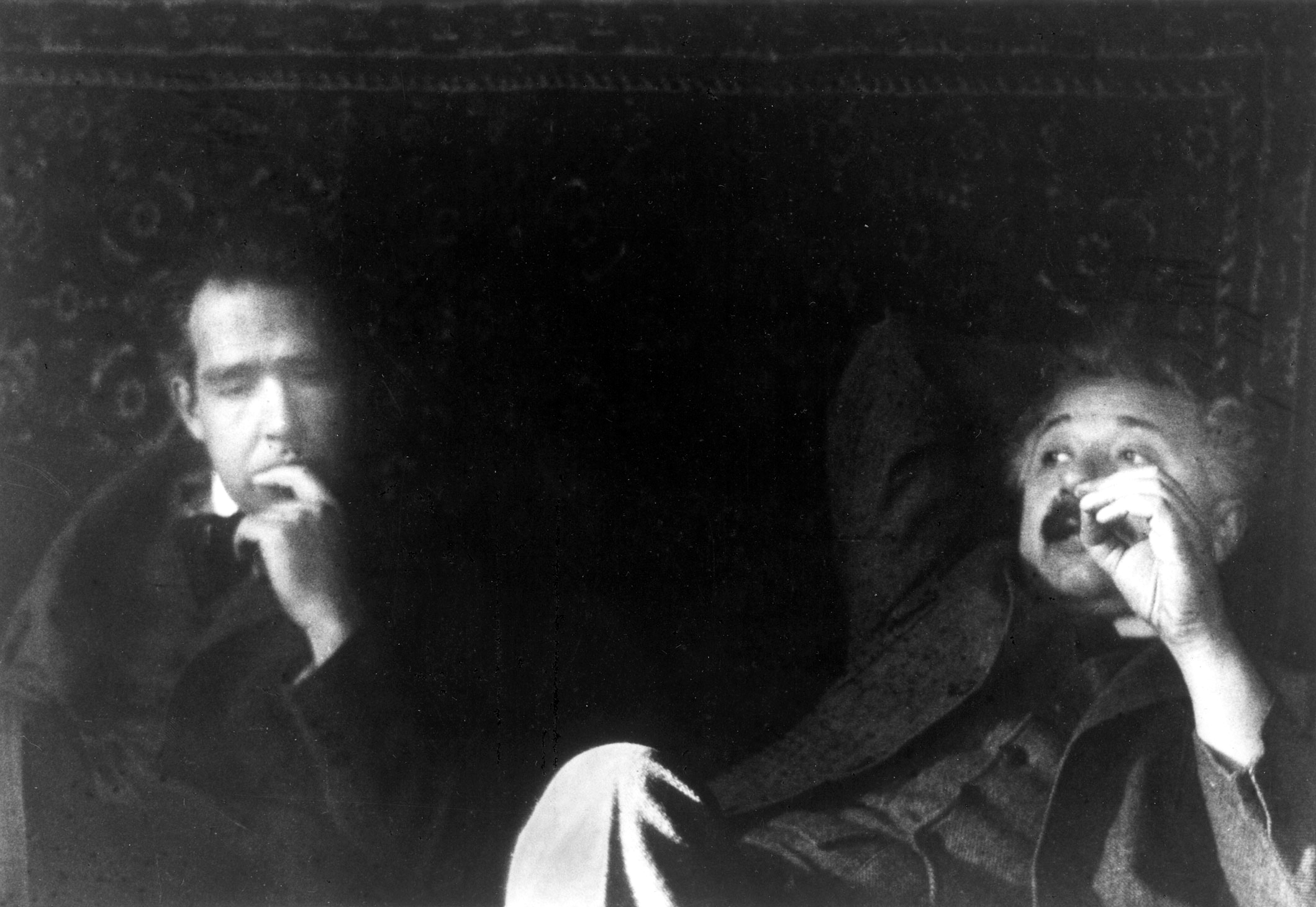
In one corner, we have a German-born theoretical physicist famous for his discovery of the photoelectric effect and his groundbreaking research on relativity theory. In the opposite corner, hailing from Denmark, we have a theoretical physicist famous for his transformational work on quantum theory and atomic structure. Albert Einstein and Niels Bohr frequently butted heads over the interpretation of quantum mechanics and even over the scope and purpose of physics, and their debates still resonate today.

Niels Bohr and Albert Einstein (photo by Paul Ehrenfest, 1925).

Niels Bohr and Albert Einstein (photo by Paul Ehrenfest, 1925).

In a class on “Waves, Optics, and Modern Physics,” I am teaching my students fundamentals about quantum physics, and I try to incorporate some of this important history too. In the early 20th century, physicists gradually adopted new concepts such as discrete quantum energy states and wave-particle duality, in which under certain conditions light and matter exhibit both wave and particle behavior. Nevertheless, other quantum concepts proposed by Bohr and his colleagues, such as non-locality and a probabilistic view of the wave function, proved more controversial. These are not mere details, as more was at stake—whether one can retain scientific realism and determinism, as was the case with classical physics, if Bohr’s interpretation turns out to be correct.

Bohr had many younger followers trying to make names for themselves, including Werner Heisenberg, Max Born, Wolfgang Pauli, and others. As experimental physicists explored small-scale physics, new phenomena required explanations. One could argue that some of Bohr and his followers’ discoveries and controversial hypotheses were to some extent just developments of models that managed to fit the data, and the models needed a coherent theoretical framework to base them on. On the other hand, Einstein, Erwin Schrödinger, and Louis de Broglie were skeptical or critical about some of these proposals.

The debates between Einstein and Bohr came to a head as they clashed in Brussels in 1927 at the Fifth Solvay Conference and at the next conference three years later. It seems like all of the major physics figures of the day were present, including Einstein, Bohr, Born, Heisenberg, Pauli, Schrödinger, de Broglie, Max Planck, Marie Curie, Paul Dirac, and others. (Curie was the only woman there, as physics had an even bigger diversity problem back then. The nuclear physicist Lise Meitner came on the scene a couple years later.)

Conference participants, October 1927. Institut International de Physique Solvay, Brussels.

Conference participants, October 1927. Institut International de Physique Solvay, Brussels.

Einstein tried to argue, with limited success, that quantum mechanics is inconsistent. He also argued, with much more success in my opinion, that (Bohr’s interpretation of) quantum mechanics is incomplete. Ultimately, however, Bohr’s interpretation carried the day and became physicists’ “standard” view of quantum mechanics, in spite of later developments by David Bohm supporting Einstein’s realist interpretation.

Although the scientific process leads us in fruitful directions and encourages us to explore important questions, it does not take us directly and inevitably toward a unique “truth.” It’s a messy nonlinear process, and since scientists are humans too, the resolution of scientific debates can depend on historically contingent social and cultural factors. James T. Cushing (my favorite professor when I was an undergraduate) argued as much in his book, Quantum Mechanics: Historical Contingency and the Copenhagen Hegemony.

Why do the Einstein vs Bohr debates still fascinate us—as well as historians, philosophers, and sociologists—today? People keep discussing and writing about them because these two brilliant and compelling characters confronted each other about issues with implications about the scope and purpose of physics and how we view the physical world. Furthermore, considering the historically contingent aspects of these developments, we should look at current scientific debates with a bit more skepticism or caution.

Implications for Today’s Scientific Debates

In recent years, we have witnessed many intriguing disagreements about important issues in physics and astrophysics and in many other fields of science. For example, in the 1990s and 2000s, scientists debated whether the motions, masses, and distributions of galaxies were consistent with the existence of dark matter particles or whether gravitational laws must be modified. Now cosmologists disagree about the likely nature of dark energy and about the implications of inflation for the multiverse and parallel universes. And string theory is a separate yet tenuously connected debate. On smaller scales, we have seen debates between astrobiologists about the likelihood of intelligent life on other planets, about whether to send missions to other planets, and even disagreements about the nature of planets, which came to the fore with Pluto‘s diminished status.

Scientists play major roles in each case and sometimes become public figures, including Stephen Hawking, Neil deGrasse Tyson, Roger Penrose, Brian Greene, Sean Carroll, Max Tegmark, Mike Brown, Carolyn Porco, and others. Moreover, many scientists are also science communicators and actively participate in social media, as conferences aren’t the only venues for debates anymore. For example, 14 of the top 50 science stars on Twitter are physicists or astronomers. Many scientists communicate their views to the public, and people want to hear them weigh in on important issues and on “what it all means.” (Contrary to an opinion expressed by deGrasse Tyson, physicists are philosophers too.)

In any case, as scientific debates unfold, we should keep in mind that sometimes we cannot find a unique elegant explanation to a phenomenon, or if such an explanation exists, it may remain beyond our grasp for a long time. Furthermore, we should keep our minds open to the possibility that our own interpretation of a scientific phenomenon could be incomplete, incoherent, or even incorrect.

Some Resources and Advice about Science Writing

Last week I enjoyed traveling to Santa Fe, the oldest capital city in the United States and a center of art, architecture, and literature. At an elevation of 7200 ft (2200 m), Santa Fe rises high above the desert floor at the southern edge of the massive Rocky Mountains. It presents an inspiring and scenic venue for the 20th annual Science-Writing Workshop, organized by renowned science writers Sandra Blakeslee and George Johnson.

A photo I took of the Ancestral Pueblo village, Tyuonyi, in the Bandelier National Monument near Santa Fe, NM (May 2015)

A photo I took of the Ancestral Pueblo village, Tyuonyi, in the Bandelier National Monument near Santa Fe, NM (May 2015)

The workshop included a variety of friendly and encouraging instructors: Pam Belluck, a medical writer for the New York Times; Alan Boyle, science editor for NBC News Digital (whose group I was in), Adam Rogers, science writer and editor for Wired, and David Corcoran, editor emeritus for the NYT‘s Science Times. It also included a day at the Santa Fe Institute, an interdisciplinary research and education center founded by physicists (including the Nobel laureate Murray Gell-Mann), which hosts scientists and authors in a variety of disciplines, including Cormac McCarthy and playwright Sam Shepard. The week included an afternoon excursion to the Bandelier National Monument as well.

We learned from the experts about: how to write a good pitch (or a bad pitch) for an article or feature story; how to conduct an effective interview; how to structure a story for a newspaper, magazine, or online media; how to write a simultaneously compelling and accurate science story; how to work with an editor and iteratively improve a story; how to deal with hype versus reality of popular and complex subjects; how to develop a successful book proposal and actually write the book; and more. I found it to be a helpful and stimulating workshop.

This is just an example of many opportunities for exploring and learning science writing skills and for meeting and networking with other science writers and communicators. For example, much further north, in the upper end of the Rockies, there will be a science communication workshop in Banff, Alberta at the end of July. If you live in a major city or near a university, you can probably find local resources and events as well. (I attended inspiring talks by Lynne Friedmann in San Diego.) Moreover, although science writing has its unique tools and skills, it can be useful to explore opportunities for developing fiction writing or general reporting techniques too.

It turns out that people follow a diverse variety of paths to become science writers and communicators. Some people begin as nonfiction writers or journalists and later realize that science is awesome and focus their energy on writing about scientists and scientific discoveries. Others are involved in technology or health-related fields and try to satisfy the demand for news and stories in these subjects. And some publicly engaged scientists (like Neil deGrasse Tyson) involved in outreach, education, or policy seek to expand or extend their efforts along these lines. Furthermore, keep in mind that there are proliferating ways to communicate science: with magazine and newspaper articles, online articles, blog posts, nonfiction and fiction books, children’s books, podcasts, videos, social media, and various combinations of these.

logo

If you are thinking about learning more or becoming more involved in science writing, I strongly suggest that you avail yourself of the resources of the National Association of Science Writers and the Council for the Advancement of Science Writing, and consider joining NASW especially if you’re based in the U.S. Their meetings are very useful, and they also organize activities and resources at American Association for the Advancement of Science (AAAS) meetings. Check out the World Federation of Science Journalists too. Depending on your field or beat, you also may be interested in the Society of Environmental Journalists or the Association of Health Care Journalists.

To get started, I recommend pursuing any writing and communication opportunities you can find, however small. If you have your own blog or occasionally write guest posts for other blogs, continue with this and use it as a springboard to hone your skills and determine whether you enjoy it. If you are more confident about your voice or speaking skills, then look for opportunities to give public talks or to volunteer at a museum or library or zoo or planetarium. Many institutions develop online videos as well. If you prefer writing, your local newspaper or magazine could be a good place to start too. You could try working as an intern there or with public information officers at your local college or university.

Needless to say, science writers write. I suggest checking out these compendia of resources: A Field Guide for Science Writers and the Science Writers’ Handbook. I’ve just begun to explore the annual anthologies, Best American Science Writing (with editors such as Alan Lightman and Rebecca Skloot) and Best American Science and Nature Writing (also with impressive editors like Elizabeth Kolbert and E. O. Wilson) too, and I recommend them.

When you find science writers you like, follow them and read more of them, and try to figure out what they do that piques your interest. Stay open-minded, and you might find that they lead you in a variety of fruitful directions. Also take a look at these resources here (Ed Yong), here (Carl Zimmer), here, and here.

Finally, if you have developed your skills and networks, consider trying your hand at freelance writing to see what it’s like. In addition, many universities offer one- or two-year graduate programs in science communication, writing, and journalism, and they may be a good investment of your time and effort. Rob Irion, the head of the UC Santa Cruz program, offers excellent advice about that, and if you are a scientist, read this article too. Whatever path you choose, I wish you good luck. The world needs more science communicators!

Does your social circle bias your view of the world?

You know who your friends are. You have common interests with them as well as some things you disagree about, and they’re the ones who respond to your texts, tweets and Facebook posts. You know how you compare to the Joneses next door, but what about to the rest of the neighborhood? It turns out that, based on extensive research by Dr. Mirta Galesic and other social psychologists, most people tend to be more similar to their social circle than to the general population, and this influences their views of others’ experiences. In other words, our limited social experiences affect how we perceive other people.

According to Dr. Mirta Galesic, one's social circle affects one's views and assessments of the general population.

According to Dr. Mirta Galesic, one’s social circle affects one’s views and assessments of the general population.

Mirta Galesic, now the Cowan Chair in Human Social Dynamics at the Santa Fe Institute in New Mexico, previously worked at the Max Planck Institute for Human Development in Berlin, Germany, and earned her Ph.D. in Croatia. She has lived and worked in a variety of places and accrued experience working with researchers around the world.

Many psychologists pry into the human mind, while many social scientists ask the question, “What is in the environment?” Galesic’s approach seeks to combine these viewpoints by both exploring the mind and environmental influences on social behavior as well as the complex interactions between them. She attempts to navigate the difficult path between nature and nurture.

Focusing only on the mind when studying human cognition only tells part of the story, according to Galesic.

Focusing only on the mind when studying human cognition only tells part of the story, according to Galesic.

Over the course of decades of research on human cognition, social psychologists have identified and coined more and more biases in how we interpret social interactions and the wider world. As Galesic put it, every year a researcher announces, “Oh, I’ve discovered a new bias!” Some of the biases seem contradictory too, such as false consensus and false uniqueness, where one overestimates how one’s views are similar to others’ or how unique they are.

Galesic’s recent research, which she presented to us in a fascinating lecture at the Santa Fe Institute on Monday, includes too opposing biases. She refers to the first one, self-enhancement, as the “Lake Wobegon effect,” which refers to the amusingly optimistic motto in Prairie Home Companion, where “all the women are strong, all the men are good-looking, and all the children are above average.” The glass is at least half full.

Steve Loughnan, a social psychologist at University of Edinburgh, has observed this effect in his independent research as well. In 2011, he found greater self-enhancement “in societies with more income inequality, and income inequality predicted cross-cultural differences in self-enhancement better than did individualism/collectivism.” In contrast, however, sometimes people exhibit the opposite, self-depreciation bias, in which one pessimistically believes that they or their group is below average. This tends to happen when one imagines that one is worse than others with apparently difficult tasks, where success is relatively rare. (How do your skills compare when it comes to understanding calculus or cooking a souffle?) Moreover, some people appear to be “unskilled and unaware of it,” according to University of Michigan professor Katherine Burson.

In two recent studies, Galesic collaborated with Henrik Olsson, a colleague at her former institute in Berlin, and Jörg Riesskamp, a psychologist at the University of Basel, Switzerland. They published their research on Dutch, German, and US populations in Psychological Science and Cognitive Science Society Proceedings. They start with the well-known observation of “homophily,” in which interactions between like-minded individuals creates a tendency for people to associate with others similar to themselves, for example with respect to socioeconomic status and ideology. Galesic and her co-workers perform a rigorous statistical analysis of thousands of randomly selected respondents with a “social sampling model,” in which people infer how others are doing by sampling from their own immediate social environments.

Galesic, Olsson & Riesskamp (2012): self-enhancement and self-depreciation in people's estimates of household wealth, work stress, and number of friends in their social circles and general population.

Galesic, Olsson & Riesskamp (2012): self-enhancement and self-depreciation in people’s estimates of household wealth, work stress, and number of friends in their social circles and general population.

It turns out that, as Galesic concludes, that “people are well attuned to their immediate social environments but not as well to broader society.” For example, people exhibit self-enhancement when it comes to work stress: they view their own position as better than it really is, especially for those who experience relatively high levels of stress. On the other hand, people have an apparent self-depreciation with respect to household wealth, in which one’s position appears worse than it really is, especially those who are better off. Both effects could be explained by Galesic’s model, which appears to demonstrate that a more complete picture of the nature of human cognition requires understanding people’s inference processes and their environments.

Although knowing one’s social circle does not translate into accurate knowledge of characteristics of the general population, with which they have less contact, that is not necessarily a problem especially if one is aware of the effect. In addition, one can attempt to reduce that bias by enlarging and diversifying one’s social circle. Galesic herself described how, since moving to the US last year, she has been trying to immerse herself in a wide range of social and political environments and expose herself to a variety of news sources, even going so far as to include Fox News and Sean Hannity.

These and related sociological and psychological effects continue to generate both scientific and public interest. Eytan Bakshy and collaborators recently found that Facebook and other social media tend to herd people into “filter bubbles,” where people selectively encounter news and views similar to their own, thus increasing political polarization. In addition, Shai Davidai and Thomas Gilovich polled 3,300 Americans and discovered that people overestimated upward economic mobility, especially if they are in poor or conservative groups. They continue to believe in the “American Dream.”

One can imagine important and interesting implications of this research, which Galesic outlined at the end of her presentation. For example, since beliefs travel through social networks, one might encourage support or awareness about particular policies through them. One could communicate important information, such as about medical screenings and vaccines, since “systematic peer-to-peer diffusion might be more effective.” Moreover, the differences between people’s immediate social circles and the larger society highlight the importance of encouraging diversity in neighborhoods and workplaces, communicating with people with different views, and the benefits of immersion in different communities.