Book Review: “Fukushima: The Story of a Nuclear Disaster”

First the ground shook violently, and then a succession of towering waves smashed the island of Honshu. As people sought shelter and braced themselves during a magnitude 9.0 earthquake and tsunami—the worst and deadliest experienced by Japan in a century—they had no idea what was yet in store for them. The rest of the world was transfixed as well by the unfolding events when on 11th March 2011, four years ago this week, multiple reactor cores at the Fukushima Daiichi nuclear power plant had meltdowns and threatened millions with radiation exposure. Today, scientists continue to assess the effects on public health and ecological damage, while the nuclear industry still reels from the worst disaster since Chernobyl.
fukushima-book

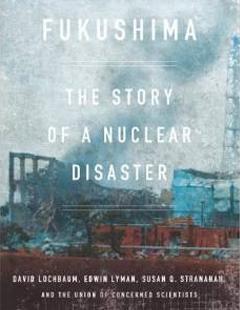
Fukushima: The Story of a Nuclear Disaster, published last year by Dave Lochbaum, Edwin Lyman, Susan Q. Stranahan, and the Union of Concerned Scientists (UCS) analyzes these events and their implications and consequences in detail. Japanese are still recovering from the disaster, and the rest of us are still coming to terms with it as well, making necessary a thorough accounting of it, Tokyo Electric Power Company’s (TEPCO) handling of it, and the nuclear industry’s response. This investigative and well-researched book manages to accomplish that. [Disclosure: I am a member of the UCS Science Network.]

Credit: International Nuclear Safety Center

Credit: International Nuclear Safety Center

Lochbaum and Lyman are both senior scientists and nuclear energy analysts for UCS, while Stranahan was the lead reporter of the Philadelphia Inquirer‘s Pulitzer Prize-winning coverage of the Three Mile Island nuclear accident. They appear to have written the book for a US audience, as they include investigations of the Nuclear Regulatory Commission (NRC) and the vulnerabilities of nuclear reactors in the US similar to Fukushima’s.

The authors describe the tumultuous week of 11th March 2011, as TEPCO workers with little information about what is happening inside Units 1-4 of the plant, scramble to contain the meltdown and prevent additional radiation spreading to a larger zone and getting into the air, water and land. (Residents who weren’t evacuated were told to stay indoors but remained in danger.) First flooding occurred throughout the plant, backup power generators available turned out to be inefficient, there was insufficient water to keep the reactors cool, workers couldn’t enter buildings as they had already exceeded their allowable radiation exposure, an explosion delayed recovery efforts and scattered more radioactive material, and spent fuel pools turned out to be as dangerous as the meltdowns themselves.

As they note in the first chapter and elaborate upon later in the book,

If a natural disaster could trigger a crisis like the one unfolding at Fukushima Daiichi, then, one might wonder, why aren’t even more safety features required to prevent such a catastrophic event from occurring? The short answer is that developers of nuclear power historically have regarded such severe events [“beyond design-basis” accidents] as so unlikely that they needn’t be factored into a nuclear plant’s design.

Lochbaum, Lyman, and Stranahan give a blow-by-blow of the worsening disaster, at times perhaps going into too much detail or giving more background than all but the most interested reader would want to follow. The writing style sometimes was a bit dry as well, though there were plenty of dramatic moments as well. For example, a particularly moving scene occurred when Katsunobu Sakurai, the mayor of Minamisoma, a devastated coastal community just outside the twelve-mile (twenty-kilometer) evacuation zone, took a video pleading for assistance from anyone. “With the scarce information we can gather from the government or TEPCO, we are left isolated,” Sakurai said. “I beg you to help us…Helping each other is what makes us human being[s].” He posted the recording on YouTube, which was viewed by more than two hundred thousand people, and then relief finally poured in.

The authors also describe debates and disagreements between TEPCO and NRC officials, such as about which of the four most damaged reactors and spent fuel pools were at risk of releasing more radiation and which presented the most pressing danger, as they could not focus on all four units at once. They also disagreed about an appropriate evacuation zone, as the NRC eventually recommended a larger zone, and about what officials should tell the public and US citizens in the area.

Following the disaster, antinuclear protesters resisted re-opening plants or continuing construction on new ones. As nearly three fourths of the Japanese public supported an energy policy that would eliminate nuclear power, on 6th May, Prime Minister Naoto Kan announced, “Japan should aim for a society that does not depend on nuclear energy.” The Japan Times stated in an editorial, nuclear power “worked for a while, until, of course, it no longer worked. Now is the time to begin the arduous process of moving towards safer, renewable and efficient energy resources.”

The NRC outlines four or five levels of nuclear power reactor “defense-in-depth,” where first an event occurs, then it could be followed by core damage, radiation release, and exposure to the public. Safety measures at each level are intended to prevent the accident from worsening to the next level, but each level has more and more uncertainty. More importantly, beyond design-basis accidents could exceed all levels of safety measures at once.

Credit: International Nuclear Safety Advisory Group (INSAG)

Credit: International Nuclear Safety Advisory Group (INSAG)

It turns out that in the US, there are numerous Mark I boiling water reactors similar to the ones in Japan. They have similar safety measures as well, as the international nuclear industry generally has the same regulations in both countries. Following Fukushima, some analysts argue that many nuclear reactors throughout the US could be vulnerable to floods, fires, and earthquakes, and people are not sufficiently prepared for such events. For example, 34 reactors at 20 sites around the US are located downstream from large dams, and “the threat posed by the failure of those dams was not taken into account when the plants were licensed.” The authors highlight a particular example: the three-unit Oconee Nuclear Station in South Carolina is especially at risk. The Prairie Island nuclear plant southeast of Minneapolis is another. People think that “it can’t happen here” in the US, but apparently it can, so that leads to the critical question, “how safe is safe enough?” This is a complicated question, and it remains unanswered.

The Japanese continue to recover from the real and figurative fallout at Fukushima. Four years after the disaster, while scientists assess the damage and recovery, sailors sue TEPCO after radiation exposure, the NRC can’t decide how to proceed, and scientists study possible contamination to food supplies and the ecological toll. The thorough analysis in Fukushima remains extremely relevant today, and those interested in the risks and challenges of the nuclear industry will do well to read it.

My Views

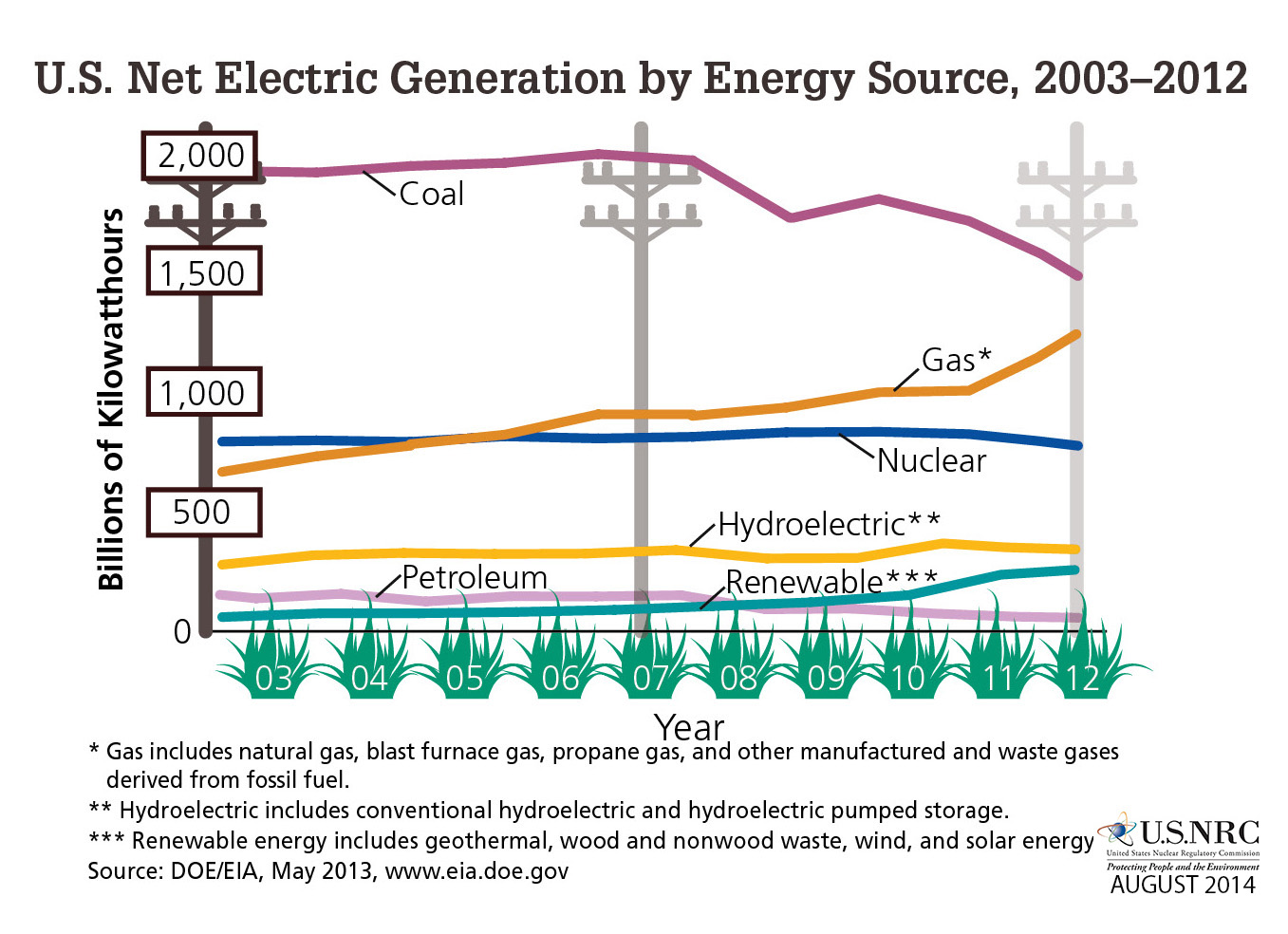
In my opinion, the authors could have included a little more discussion about nuclear energy in the context of energy policy and implications for it as we move to a carbon-limited economy. But this was beyond the scope of the analysis in their book. In the US, in spite of Three Mile Island, Browns Ferry, and other accidents or near-accidents, nuclear energy remains a primary energy source. Many countries oppose nuclear energy, while others such as France, Russia, China, and South Korea, have many plants and have more in construction.
Source: NRC, DOE/EIA

Source: NRC, DOE/EIA

At this point, it might not be possible to transition to a low-carbon economy in the US without including nuclear energy as part of the transition. In the long term, I believe that solar and wind power have the most potential with the least risk, and countries such as Germany have shown that it is possible to ramp up investment in wind and solar in a short period of time. Who knows–maybe fusion energy may be a possibility in the very long-term future, but as I’ve noted before, the ITER experiment is behind schedule, over budget, and has management problems. Finally, we must focus on energy demand, not just supply. We should work on making our cities, industries, transportation, and communities less energy intensive, and it will be worth the effort.

NASA Missions Exploring Dwarf Planets Ceres and Pluto

Now I’m not a planetary astronomer, but like you, I’m excited by any kind of space exploration, and this year the NASA missions, Dawn and New Horizons, will give us the closest and most detailed views of dwarf planets yet.

What is a “dwarf planet,” you ask? Excellent question. Until about ten years ago, astronomers usually referred to small planet-like objects that were not satellites (moons) as “planetoids.” In some ways, they resembled the eight more massive planets in our solar system as well as Pluto, which had a borderline status. Astronomers discovered Charon, Eris (previously called 2003 UB313), and Ceres, and they expected to discover many more, likely rapidly expanding the ranks of our esteemed class of planets. Either they all had to be included, or a clear classification system would have to be determined and Pluto would be reclassified.

Courtesy: IAU

Courtesy: IAU

At the International Astronomical Union (IAU) meeting in Prague in 2006, astronomers opted for the latter in Resolution 5. They demoted poor Pluto, but I think they did the right thing. (I was working in Heidelberg, Germany at the time, and if I’d known how historic this IAU meeting would be, maybe I would’ve tried to attend!) The IAU’s defines a dwarf planet as “a celestial body that (a) is in orbit around the Sun, (b) has sufficient mass for its self-gravity to overcome rigid body forces so that it assumes a hydrostatic equilibrium (nearly round) shape (c) has not cleared the neighbourhood around its orbit, and (d) is not a satellite.” The criterion (c) is the important one here, because it means that the object has not become gravitationally dominant in its orbital zone, which is the case for Pluto and the other planetoids beyond Neptune and for Ceres, the only dwarf planet in the asteroid belt between Mars and Jupiter. These are contentious issues, and the debate even made it into the New Yorker. But let’s be clear: these things are small, and they’re all less massive than Earth’s moon.

We don’t know as much about dwarf planets as we do about the planets in our system, so let’s go exploring! What do these new space missions have in store for us?

Ceres

In 2007, NASA launched the Dawn spacecraft to study Ceres up close. A couple days ago, two centuries after Sicilian astronomer Father Giuseppe Piazzi discovered Ceres, Dawn became the first spacecraft to orbit a dwarf planet. As the deputy Principal Investigator Carol Raymond put it on Friday, this is an “historic day for planetary exploration.” Jim Green, NASA’s Planetary Science Division Director, says that with Dawn, we are “learning about building blocks of terrestrial planets in our solar system.”

Dawn has obtained excellent detailed images already, as you can see in the (sped up) animation below.

Credit:  NASA/JPL-Caltech/UCLA/MPS/DLR/IDA

Credit:
NASA/JPL-Caltech/UCLA/MPS/DLR/IDA

The pair of bright spots in a crater stand out, and astronomers are trying to figure out what they are. They might be an indication of geological activity on it’s changing surface. Ceres has a rocky core and an ice layer, and it’s also possible that these are reflective patches of ice that have been exposed by space rocks falling in and striking the surface. For more information, check out this blog post by Emily Lakdawalla and these articles in the LA Times and Wired.

As Dawn uses its propulsion systems to reshape its orbit and get closer views, astronomers expect to learn more about those spots, look for plumes, and examine the surface for strange craters or other distinguishing features. The spacecraft will later turn on its spectrometers and determine which minerals are present and how abundant they are.

Pluto

NASA launched New Horizons in 2006, and it had much farther to travel to reach Pluto. In January, NASA announced that New Horizons is making its approach to the erstwhile planet, though it’s still about 200 million kilometers away. Mark your calendars: it will fly by Pluto (as it will be traveling too fast to orbit) on 14th July, and at a distance of only 13,000 km, New Horizons’ instruments will obtain the best images yet of it. For more information, check out this article by Jason Major in Universe Today and Phil Plait in Slate.

Distant image of Pluto by New Horizons. Credit: NASA/Johns Hopkins APL/Southwest Research Institute.

Distant image of Pluto by New Horizons. Credit: NASA/Johns Hopkins APL/Southwest Research Institute.

A couple ago, leaders in planetary astronomy highlighted the importance of Dawn and New Horizons in their Decadal Survey. I think both space missions will turn out to be worthwhile, and let’s stay tuned to see what they discover over the next few months.

Geoengineering and Climate Interventions: Too Risky or Needs More Research?

At the American Association for the Advancement of Science (AAAS) meeting in San Jose in February, scientists from the US National Research Council released two high-profile reports on climate interventions and geoengineering techniques. The most thorough evaluation of its kind, this pair of studies assesses proposed climate intervention approaches including their cost, technological capacities, uncertainties, impacts, challenges, and risks. As the Earth and its inhabitants experience a changing climate nothing like any in recorded human history, and as concentrations of greenhouse gases in the atmosphere continue to rise, scientists are interested in considering all possible responses.

The research committee consists of an impressive array of experts from a variety of institutions and universities, including Ken Caldeira (Carnegie Inst. for Science), Lynn Russell (Scripps Inst. of Oceanography) and David Titley (Penn State), and it is chaired by Marcia McNutt, editor-in-chief of Science and former director of the US Geological Survey, and they are informed by numerous analysts and staff. The National Academy of Sciences (NAS), the US intelligence community, NASA, NOAA, and the Dept. of Energy sponsored the studies. One can access both full reports and a 4-page summary at the NAS website.

Photograph: Frank Gunn/The Canadian Press/Associated Press

Photograph: Frank Gunn/The Canadian Press/Associated Press

The authors avoid the more commonly-used term “geoengineering,” which they also used in previous reports, because they consider the atmosphere and not just the Earth and because engineering “implies a greater degree of precision and control than might be possible.” Instead, they propose the term “intervention,” with its connotation of “an action intended to improve a situation.”

Through these reports, the committee makes three main recommendations and conclusions. First, the authors argue that there is no substitute for climate change mitigation and adaptation. Second, they recommend research and development investment to improve methods of carbon dioxide removal and disposal at scales that would have a significant global climate impact. Third, they oppose deployment of albedo-modification techniques but recommend further research.

Carbon dioxide removal and sequestration

NAS report: "Climate Intervention: Carbon Dioxide Removal and Reliable Sequestration"

NAS report: “Climate Intervention: Carbon Dioxide Removal and Reliable Sequestration”

Carbon dioxide removal (CDR) strategies involve capturing carbon in the terrestrial biosphere or the ocean after it’s been emitted. These approaches are intended to mimic or accelerate processes that are already occurring as part of the natural carbon cycle. The authors consider five types of CDR techniques: land-management approaches such as forest restoration; accelerated weathering techniques (allowing the oceans to absorb more CO2 than normal); ocean iron fertilization (so that more microorganisms such as plankton consume CO2, like a “biological pump”); bioenergy (using biomass) followed by CO2 capture and sequestration; and direct air capture of carbon.

The authors describe ocean fertilization and direct air capture as “immature technologies,” while land management and weathering processes have only been carried out on a limited scale, and bioenergy is limited by the availability of land for biomass and by the need to transport it to processing facilities. The barriers to CDR deployment involve slow implementation, limited capacity, policy considerations, and high costs of currently available technologies. The committee concludes the report with the following recommendation:

Recommendation 2: The Committee recommends research and development investment to improve methods of carbon dioxide removal and disposal at scales that would have a global impact on reducing greenhouse warming, in particular to minimize energy and materials consumption, identify and quantify risks, lower costs, and develop reliable sequestration and monitoring.

Albedo-modification research

NAS report: "Climate Intervention: Reflecting Sunlight to Cool Earth"

NAS report: “Climate Intervention: Reflecting Sunlight to Cool Earth”

Albedo-modification techniques ignore the greenhouse gases and instead seek to avoid global warming by blocking the sun to prevent light from reaching the Earth’s surface. Such methods could lower average global temperatures in a couple years, like the effects of volcano eruptions, such as Mount Pinatubo in the Philippines in 1991. The authors mainly consider two methods for scattering sunlight: injecting millions of tons of aerosol-forming gases into the stratosphere; or marine cloud brightening, increasing the efficiency with which the ocean clouds reflect sunlight. They also briefly consider other techniques including: space-based methods, placing scatterers or reflectors in the atmosphere; and cirrus cloud modification, such that more long-wave radiation can flow up into space.

The authors acknowledge that albedo-modification techniques only temporarily mask the warming effect of greenhouse gases and would be needed to be sustained indefinitely. In addition, there could be unanticipated and unmanageable risks and consequences, “including political, social, legal, economic, and ethical dimensions.” Therefore, the committee comes to the following simple conclusion:

Recommendation 3: Albedo modification at scales sufficient to alter climate should not be deployed at this time.

Media Response

It’s interesting that with the same pair of reports, journalists at different media outlets present the study’s results in a variety of ways, demonstrating the many perspectives with which people approach these issues. For example, journalists and editors at the New York Times, Los Angeles Times, Science, and National Geographic point to the need for more research, primarily on carbon dioxide removal techniques. On the other hand, Suzanne Goldenberg at The Guardian writes that the consideration of planetary-scale interventions shows how concerned scientists have become about advancing climate change, while Alexandra Witze at Nature writes about how these reports legitimize geoengineering, though many of the climate intervention approaches are deemed too risky.

I would argue that most of these journalists describe the study correctly, but since the study has multiple recommendations that are somewhat at odds with each other and since the committee includes people with different views and backgrounds, it’s inevitable that some people would be more responsive to some aspects of the report over others. You may also be interested in critical responses by people blogging with the Union of Concerned Scientists and the National Association of Science Writers.

Moving Ahead

Finally, I’ll end with my view of this study and of climate interventions. I’m not sure that the term “climate interventions” itself is an improvement over “geoengineering”: I think that the former amounts to re-branding the issue and that it sounds less serious. Make no mistake, what scientists consider in these reports are serious stuff indeed. And as some have mentioned before, such a scheme has been imagined before—by “The Simpsons” villain Mr. Burns.

The study’s authors state that there is no substitute for climate mitigation and that we should focus on the root cause of climate change, which is the carbon dioxide in the Earth’s atmosphere. However, the carbon emissions are themselves caused by human society’s growing energy demand and the widespread use of fossil fuels: coal, oil, and gas.

The authors point out that most geoengineering schemes are too risky, involve immature technologies, have high costs, and could have unknown consequences on a planet-wide scale. Is it really worthwhile to invest in more research of them? The only exception is forest restoration and other land management methods, which would help when combined with reduced carbon emissions, and I wouldn’t group them with these other carbon-capture climate interventions.

I worry that this report would pave the way for wasting large investments of funding and effort researching these schemes, rather than focusing on the goal of slowing and eventually stopping climate change by transitioning to a low-carbon economy. Moreover, if people believe that a technological solution is possible in the distant future, they will not strive so hard to reduce carbon emissions today and will continue with business-as-usual. Above all, we should be focusing on expanding climate mitigation efforts. We should also work on climate adaptation, since the carbon already in the atmosphere will cause some warming in the coming decades no matter what.

How Scientists Engage with the Public, Media, and Policy

Scientists frequently use social media and engage with journalists, policy-makers, and the public. At the same time, many people have a thirst for reliable cutting-edge results on the latest scientific findings and on pressing questions such as responses to the Ebola crisis, climate change, and the drought in California. However, scientists themselves do not sufficiently value public outreach and policy advocacy among their peers. And the pressures of competition and the fast-paced news cycle can distort the scientific messages that reach people.

Courtesy: Pew Research Center

Courtesy: Pew Research Center

Lee Rainie, director of internet, science and technology research at the Pew Research Center, just released the results of a survey of 3,748 scientists in the American Association for the Advancement of Science (AAAS) this week at the annual meeting in San Jose. He and his colleagues find that 87% believe that scientists should take an active role in public policy debates about science and technology, 51% of scientists talk to journalists, 24% of them blog, and 47% of scientists use social media—a higher fraction than five years ago. Social scientists, earth scientists, and physicists and astronomers engage in these activities more than those in other fields. (You can read the full report here.)

Courtesy: Pew Research Center

Courtesy: Pew Research Center

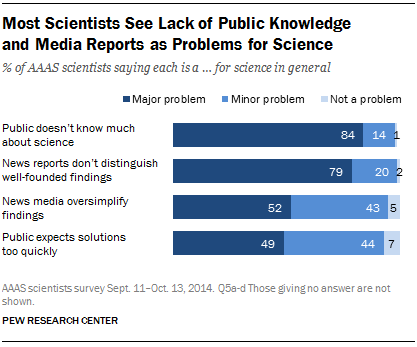
That’s the good news; now for the bad news. The majority of scientists believe that the limited public knowledge about science and the fact that the public expects solutions too quickly are major problems. Furthermore, although scientists interact with reporters, many criticize news media: they believe that news reports oversimplify findings and don’t distinguish well-founded findings, and they believe that this too is a problem for science. In addition, many scientists surveyed do not think that the best scientific information is used for crafting policies, such as those involving clean air and water, food safety, and medical treatments.

Courtesy: Pew Research Center

Courtesy: Pew Research Center

Here’s where we transition from the survey results to my opinions about their implications..

Many people love science and they can’t get enough of it. In my field of astrophysics, I see people inspired by stories about the comet landing, theories about black holes, and observations of galaxies colliding with each other. People consume science news on newspapers like the LA Times, magazines, websites, blogs, television, podcasts, videos, and elsewhere. People want to know the latest science on important subjects, especially those that could directly affect them, including health and environmental issues. If, say, a psychologist at UCLA, an astrophysicist at Jet Propulsion Laboratory, or a climate scientist at the Scripps Institution of Oceanography has an exciting new result, they would like to advertise it and people would be interested in hearing about it.

Politicians also want to hear about the most up-to-date science when they develop new policies and regulations and when they determine budgets for relevant agencies and initiatives. Science journalists and advocates attempt to fulfill these demands by communicating research on fields from astronomy and biology to psychology and sociology, but it’s often not easy.

Some aspects of the scientific process itself complicate the situation. When presenting scientific research, it can be difficult to communicate the context of a contentious question, the assumptions of an analysis, and the statistical and systematic uncertainties that might be involved. One may describe competing scientists’ interpretations, but then one must be careful about creating a false equivalency between them if an interpretation is more well-founded than another.

Moreover, excitement over the announcement of a potentially groundbreaking result, such as neutrinos supposedly traveling faster than the speed of light, is often not sustained for long, which is problematic if the result is later retracted. In addition, debates between scientists, such as the recent one about the expansion of the early universe based on results from BICEP2 and the Planck telescope, may take years or even decades to resolve. Scientists compete to get their new results out first, and media outlets compete to get the story out first. In this situation, it can be difficult to communicate nuance and subtlety.

In short, we have plenty of blame to spread around. Scientists should continue to engage but could work on improving the ways in which they communicate. They should encourage each other to get of the lab and office and participate in public outreach, communicate with policy-makers, and interact more with local media. Scientists currently consider these kinds of work as much less important than working on research, and everyone would benefit if they valued them more highly. Scientists should also be as clear as possible about their uncertainties and about when they are presenting not just facts but also expressing opinions about their interpretation

Scientific research isn’t of much use to anyone if no one effectively communicates it and its implications. We should encourage science journalists to take the time necessary to investigate and clearly communicate relevant information in plain language, and when we read or watch those stories, we should try to pay attention to the important caveats. It’s great to get excited about each new science story and discovery, but we would all benefit from a bit of caution and patience.

Models Predict “Megadrought” Risk for American Southwest This Century

Near the beginning of the American Association of the Advancement of Science (AAAS) conference in San Jose, CA, on a winter day that happened to be warm, dry, and sunny, research scientists held a press conference to announce the conclusions of their work on predicting the risks of future “megadroughts.” They published their paper with the ominous title, “Unprecedented 21st-Century Drought Risk in the American Southwest and Central Plains,” in the first issue of Science Advances, a new digital, open-access journal. (The publisher, Marcia McNutt, gave brief opening remarks about how the journal will “showcase new and exciting research.”)

Benjamin Cook (NASA Goddard Institute), Toby Ault (Cornell University), and Jason Smerdon (Columbia University) obtained surprising results from computer model simulations. According to Cook and Smerdon, who videoconferenced with a shared microphone, previous models—such as those used for the IPCC’s 4th Assessment Report—underpredicted drought risks. Cook and his colleagues used drought records documented in more than 1800 tree-ring chronologies over the the past millennium, where ring width decreases in dry years, to develop 17 model projections of 21st century climate in the American Southwest and Central Plains. Their disturbing findings include predictions of megadroughts, lasting 35 years or longer, in both regions worse than any seen in the last 1000 years. In short, they expect climate change to increase drought length and severity in the coming decades.

Mean summer soil moisture and Palmer Drought Severity Index out to 2099. Courtesy: Cook et al. (2015)

Mean summer soil moisture and Palmer Drought Severity Index out to 2099. Courtesy: Cook et al. (2015)

The drought risk is twofold, due to reduced precipitation and to warmer temperatures drying out soils of rivers and lakes, in which models predict increasing evaporation. Long droughts due to climate variations have occurred in the past, such as those occurring during the 12th and 13th centuries (the Medieval Climatic Anomaly) that serve as important benchmarks. But with their tree-ring based reconstruction of the climate history, in a “business-as-usual” emissions scenario, they predict a “persistent shift in the future toward longer droughts” that could exceed even those of these extremely dry centuries.

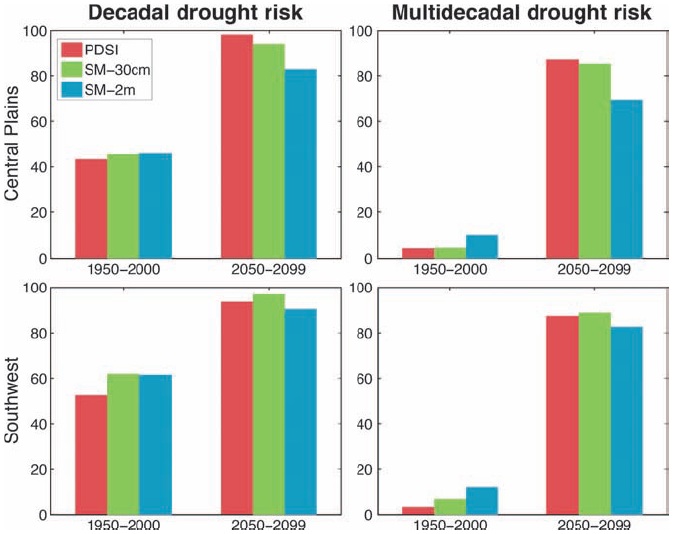
Ault described how risk assessments are made, in terms of the magnitude of impact and the likelihood. “The levels [of risk] that we see are striking,” with an 80% or higher risk of a drought 35 years or longer in duration by the end of this century if climate change is not mitigated. He described the situation like a golf course, which an initial 10% of it consisting of sandpits. If climate change continues unmitigated, the golf course will gradually become almost entirely sandpits!

Risk (%) of decadal and multidecadal drought calculated from three sets of models. Courtesy: Cook et al. (2015)

Risk (%) of decadal and multidecadal drought calculated from three sets of models. Courtesy: Cook et al. (2015)

In the paper, Cook and his co-authors comment on the difficulties people in the Southwest and Central Plains will face when attempting to adapt to these climate conditions. In particular, the current depletion of nonrenewable groundwater reservoirs “will likely exacerbate the impacts of future droughts.” They discussed implications for both the water supply and food supply in the press conference, considering the dependence on agriculture in California and the breadbasket in the Central Plains. “Water security is food security,” as Ault put it, and people need to “take a no-regrets attitude toward preparedness.” Droughts will inevitably occur, and some of them could be as destructive as large earthquakes and hurricanes.

Their ongoing research will focus on examining the future severity, persistence and geographical scope of droughts, and they will attempt to improve the spatial resolution of their simulations, which currently employ coarse-grained averaging. They also plan to consider hydrology and snowpack, in addition to soil moisture. In any case, the soil moisture metrics and PDRI all point to one conclusion: unless people find a way to substantially mitigate climate change and prevent rising temperatures, the American Southwest and Central Plains can expect to face megadroughts like they’ve never seen before.

Finally, if you’re interested, below you can see my photo from the press conference (and I’m the one in the lower left with a cellphone in front of his face.) In other coverage of these results, see this nicely written Science article by Emily Underwood, and I saw a Washington Post reporter writing an article about it too (but I forgot his name), so watch for that.

pressconf_photo

The Science of Citizen Science: Meetings in San Jose This Week

[This is adapted from a post I wrote on the Zooniverse blog.]

I’m excited about attending the Citizen Science Association (CSA) and American Association for the Advancement of Scientists (AAAS) meetings in San Jose, California this week, and I thought I’d tell you a bit about the citizen science-related events I’m looking forward to. I’ll write about other events and science news later, and in any case, check out the hashtags #CitSci2015, #AAASmtg and #AAAS2015 on Twitter for live updates.

As I mentioned in an earlier post last fall, we’ve organized an AAAS session that is titled, “Citizen Science from the Zooniverse: Cutting-Edge Research with 1 Million Scientists,” which will take place on Friday afternoon. It fits well with the AAAS’s them this year: “Innovations, Information, and Imaging.” Our excellent line-up includes Laura Whyte (Adler Planetarium) on Zooniverse, Brooke Simmons (Oxford) on Galaxy Zoo, Alexandra Swanson (U. of Minnesota) on Snapshot Serengeti, Kevin Wood (U. of Washington) on Old Weather, Paul Pharoah (Cambridge) on Cell Slider, and Phil Marshall (Stanford) on Space Warps. I’ll be chairing the session, but they’ll be doing all the hard work.

And in other recent news, citizen scientists from the Zooniverse’s Milky Way Project examined infrared images from NASA’s Spitzer Space Telescope and found lots of “yellow balls” in our galaxy. It turns out that these are indications of early stages of massive star formation, such that the new stars heat up the dust grains around them. Charles Kerton (Iowa State) and Grace Wolf-Chase (Adler) published the results last week in the Astrophysical Journal.

Courtesy: JPL

Courtesy: JPL

But let’s get back to the AAAS meeting. It looks like many other talks, sessions, and papers presented there involve citizen science too. David Baker (FoldIt) will give plenary lecture on post-evolutionary biology and protein structures on Saturday afternoon. Jennifer Shirk (Cornell), Meg Domroese and others from CSA have a session Sunday morning, in which they will describe ways to utilize citizen science for public engagement. (See also this related session on science communication.) Then in a session Sunday afternoon, people from the European Commission and other institutions will speak about global earth observation systems and citizen scientists tackling urban environmental hazards.

Before all of that, we’re excited to attend the CSA’s pre-conference on Wednesday and Thursday. (See their online program.) Chris Filardi (Director of Pacific Programs, Center for Biodiversity and Conservation, American Museum of Natural History) and Amy Robinson (Executive Director of EyeWire, a game to map the neural circuits of the brain) will give the keynote addresses there. For the rest of the meeting, as with the AAAS, there will be parallel sessions.

The first day of the CSA meeting will include: many sessions on education and learning at multiple levels; sessions on diversity, inclusion, and broadening engagement; a session on defining and measuring engagement, participation, and motivations; a session on CO2 and air quality monitoring; a session on CS in biomedical research; and sessions on best practices for designing and implementing CS projects, including a talk by Chris Lintott on the Zooniverse and Nicole Gugliucci on CosmoQuest. The second day will bring many more talks and presentations along these and related themes, including one by Julie Feldt about educational interventions in Zooniverse projects and one by Laura Whyte about Chicago Wildlife Watch.

Furthermore, a couple sessions include some presentations that will interest southern Californians. Barbara Lloyd (Ocean Sanctuaries) will give a talk about “Identifying Sevengill Sharks in San Diego with Wildbook,” and Mark Chandler (Earthwatch Institute) will talk about “Engaging a Diversity of Citizen Scientists around Urban Trees in Greater Los Angeles.”

I also just heard that the Commons Lab at the Woodrow Wilson Center is releasing two new reports today, and hardcopies will be available at the CSA meeting. One report is by Muki Haklay (UCL) about “Citizen Science and Policy: A European Perspective” and the other is by Teresa Scassa & Haewon Chung (U. of Ottawa) about “Typology of Citizen Science Projects from an Intellectual Property Perspective.” Look here for more information.

New Science at the American Astronomical Society Meeting

I’d just like to summarize some of the exciting new scientific results presented at the American Astronomical Society meeting in Seattle last month. I think it will be interesting to those of you science lovers who’re wondering what all the hubbub was about and for you astronomers who weren’t able to make it.

This is my third and final post in a series about the AAS meeting. The first two dealt with science policy, and diversity and sustainability. As I mentioned in a previous post, I enjoyed attending as both a scientist and science writer, and I was happy to personally meet the journalists writing excellent stories about the meeting (some of which I’ve linked to below).

I’ll start with some special sessions and other sessions focused on interesting science that included results I hadn’t seen before, and then I’ll end with some interesting plenary talks given by great speakers. It was a busy meeting and many of the sessions ran in parallel, so it’s inevitable that I missed some things and that this summary is incomplete. (Plus, I’m usually drawn to the sessions about galaxies, dark matter, and cosmology, and I often miss the other ones.) If you know of interesting announcements or talks that I missed here, you’re welcome to comment on them below.

Sloan Digital Sky Survey (SDSS)

After 15 years of great science, it was exciting to see the SDSS have its final public data release—until SDSS-IV data eventually come out, that is. At the press conference, Michael Wood-Vasey gave an overview, Constance Rockosi spoke about the data release, Daniel Eisenstein spoke about the Baryon Oscillation Spectroscopic Survey (BOSS), Jian Ge spoke about the Multi-object APO Radial Velocity Exoplanet Large-area Survey (MARVELS), and Steven Majewski spoke about the APO Galactic Evolution Experiment (APOGEE). According to Rockosi, more than 6,000 papers have been published using publicly released SDSS data. The SDSS has observed tens of thousands of stars, hundreds of thousands of quasars, and millions of galaxies.

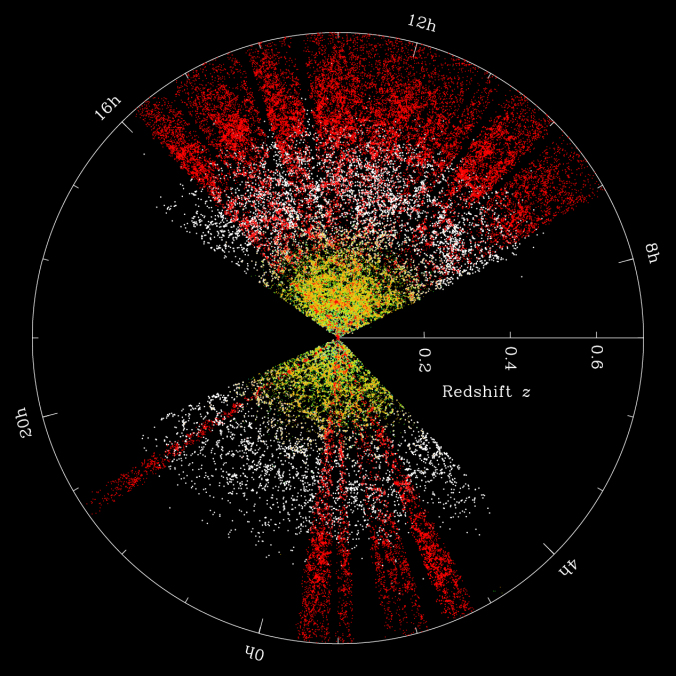
In addition, members of the BOSS collaboration presented (nearly) final results at a session dedicated to the survey. If you’re interested, check out this article I wrote about it for Universe Today. (Thanks to Nancy Atkinson for editing assistance.)

Distribution of galaxies in a slice of the BOSS survey. (Courtesy: SDSS-III)

Distribution of galaxies in a slice of the BOSS survey. (Courtesy: SDSS-III)

3D-HST

Researchers presented newly published results and interesting work-in-progress about the evolution of distant galaxies using spectroscopic data from the 3D-HST survey, which is led by Pieter van Dokkum (Yale Univ.) and Ivelina Momcheva (Carnegie Observatories), combined with imaging data from the Cosmic Assembly Near-infrared Deep Extragalactic Legacy Survey (CANDELS), taking advantage of instruments aboard the Hubble Space Telescope. The figure below shows the spectral features of tens of thousands of galaxies, which indicate star formation activity, active galactic nuclei activity, and stellar age. If you’re interested, I wrote an article about some of these results for Sky & Telescope. (Thanks to Monica Young for editing assistance.)

Spectral features of high-redshift galaxies. (Courtesy: Gabriel Brammer, 3D-HST)

Spectral features of high-redshift galaxies. (Courtesy: Gabriel Brammer, 3D-HST)

Andromeda Galaxy

In a session dedicated to Andromeda—known as M31 by astronomers—as well as in other related sessions, research scientists and Ph.D. students presented studies about the stars, globular clusters, molecular clouds, dust, structure, dynamics, surface brightness profile, and stellar halo of the galaxy. The continued interest in our fascinating neighbor is understandable; Andromeda’s only 2.5 million light-years away from our galaxy! Like our Milky Way, Andromeda is a spiral galaxy, and it’s the most massive galaxy in the Local Group.

Many of these AAS results came from the Panchromatic Hubble Andromeda Treasury (PHAT) Survey, which is led by Julianne Dalcanton (Univ. of Washington), who presented highlights in a press conference as well. Dalcanton and her colleagues released this PHAT panoramic image of the galaxy below, and it received well-deserved press attention, including in NBC and Sky & Telescope.

Map of Andromeda galaxy. (Courtesy: HST, PHAT)

Map of Andromeda galaxy. (Courtesy: HST, PHAT)

Exoplanets

Many people were understandably excited about extra-solar planets, or exoplanets, detected by scientists with NASA’s Kepler space telescope. Every day of the meeting included talks and posters about the masses, abundances, dynamics, compositions and other properties of exoplanets as well as those of stars and supernova remnants examined with Kepler. In addition, astronomers’ announcement that they now have more than 1,000 confirmed exoplanets with Kepler and follow-up observations garnered considerable media attention (including these articles in Nature, BBC, and New York Times). They have at least 3,000 more planet candidates, and they will surely identify many more as Kepler continues its mission through 2016.

Of course, astronomers seek to find as many as possible Earth-like planets in or near the habitable regions orbiting Sun-like stars (often referred to as the “Goldilocks” zone). When these are successfully identified, the next step is to characterize their properties and try to assess the likelihood of life forming on them. Astronomers have found at least eight Earth-size planets in the habitable zone, including two of the newly announced ones, Kepler-438b and Kepler-442b. They also released these cool old-school travel posters. If you have a space ship that can travel 500 light-years a reasonable time, you should check out 186f on your next vacation!

Kepler's alien planet travel posters. (Courtesy: NASA)

Kepler’s alien planet travel posters. (Courtesy: NASA)

“Pillars of Creation”

On the 25th anniversary of the launch of the Hubble Space Telescope, astronomers released new images of the iconic star-forming region in the Eagle Nebula in the Serpens Cauda constellation, known as the “pillars of creation.” Journalists at Slate, CBS, and elsewhere shared these amazing images. At first I thought not much science was done with them, but by combining observations at visible and infrared wavelengths, astronomers can investigate what’s happening with the cold gas clouds and dust grains and assess how rapidly new stars are forming and where. For more, you can also see Hubble’s press release, which coincided with the press conference on the first day of the meeting.

Image of "pillars of creation." (Courtesy: NASA and ESA)

Image of “pillars of creation.” (Courtesy: NASA and ESA)

Other Results

I saw many other interesting talks and posters at the meeting, but I don’t have the time/space to get into them here. On galaxies and the large-scale structure of the universe (which I’m interested in), I saw talks involving modeling and measurements with the Galaxy And Mass Assembly (GAMA) survey, the Six-degree Field Galaxy Survey (6dF), and I presented research using the PRIsm MUlti-object Survey (PRIMUS). But the SDSS dominated the field.

In addition, Joss Bland-Hawthorn, Sarah Martell, and Dan Zucker presented some impressive early science results from the GALactic Archaeology with HERMES (GALAH) survey of the Milky Way, which uses an instrument with the Anglo-Australian Telescope. (GALAH is named after an Australian bird.) Astronomers combine GALAH observations with astrometry from Gaia and over the survey’s duration will produce detailed data for 1 million stars in our galaxy! In particular, they utilize a technique called “chemical tagging” to study the abundances of at least 15 chemical elements for each star, allowing for studies of stellar dynamics and merger events from infalling “satellite” galaxies. I look forward to seeing more results as they continue to take data and analyze them; their first public data release is planned for 2016.

PLENARY SESSIONS

I’ll briefly describe a couple of the plenary talks below, but I missed a few others that sounded like they could be interesting, including “The Discovery of High Energy Astrophysical Neutrinos” (Kara Hoffman); “Gaia – ESA’s Galactic Census Mission” (Gerry Gilmore); and “The Interactions of Exoplanets with their Parent Stars” (Katja Poppenhaeger).

Also, Paul Weissman (JPL/Caltech) gave an overview of the Rosetta mission and the comet C-G/67P, and Al Wootten (NRAO) gave an overview of many recent science papers using the Atacama Large Millimeter Array (ALMA). Rosetta and its lander Philae has run a few experiments already, and scientists with the mission have found that the bulk density of the nucleus is less than half the density of water ice and that its D/H ratio is different than the abundance ratio of the Earth’s oceans. More recently, Rosetta detected a crack in the “neck” of the comet, and they’ve abandoned an idea for a close flyby search for the lost lander, which might wake up in a few months when it receives more solar power. And if you’re interested in ALMA science, such as involving the gas kinematics of protostars and protoplanetary disks and the gas and dust clouds of distant galaxies, watch for proceedings from their recent Tokyo meeting, which are due to be published next month.

Cosmology Results from Planck

Martin White (UC Berkeley) gave an excellent talk about cosmological results from the Planck telescope, which he described as having the “weight of a heavy hippo and the height of a small giraffe.” Based on analyses of the power spectrum of the cosmic microwave background (CMB) radiation, so far it seems that the standard model of cold dark matter plus a cosmological constant (ΛCDM) is still a very good fit. Scientists in the collaboration are obtaining tighter constraints than before, and the universe still appears very flat (no curvature). They are planning a second data release this year, including more simulations to assess systematic uncertainties and more precise gravitational lensing measurements. White ended by saying, “I can explain to you what really well, but I can’t tell you why at all.”

White also hinted at, but didn’t reveal anything about, the joint analysis by Planck and BICEP2 astrophysicists. That analysis was completed recently, and now it seems that the detected polarization signal might be at best a mixture of primordial gravitational waves produced by inflation and of Milky Way dust, and they’ve obtained only an upper limit on the tensor-to-scalar ratio. Check out my recent article in Universe Today about this controversy.

Courtesy: ESA

Courtesy: ESA

Inflation and Parallel Universes

Max Tegmark (MIT) has talked and written about both inflation and the multiverse for many years, such as in a 2003 cover article and a recent blog post for Scientific American and in his book, “Our Mathematical Universe.” From the way he presented the talk, it was clear that he has discussed and debated these issues many times before.

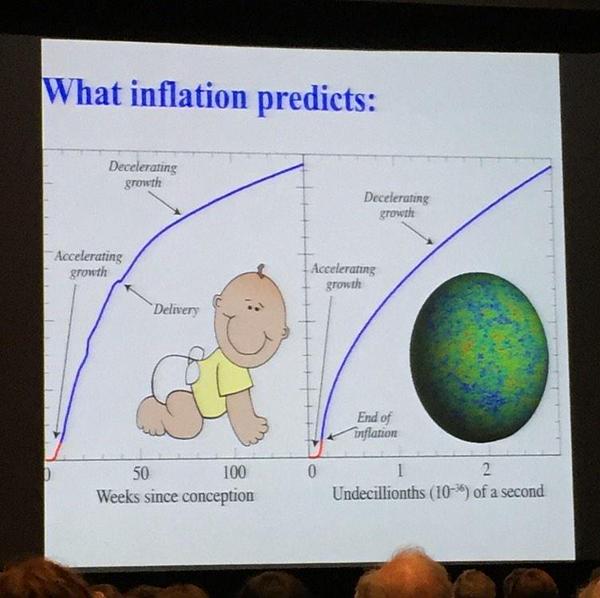
Tegmark began by explaining models of inflation. According to inflation, the universe expanded for a brief period at an exponential rate 10-36 seconds after the Big Bang, and the theory could explain why the universe appears to have no overall curvature, why it approximately appears the same in all directions, and why it has structures of galaxies in it. In one entertaining slide, he even compared the expansion rate of a universe to that of a fetus and baby, but then he said, “if the baby kept expanding at that rate, you’d have a very unhappy mommy.”

Expansion rates of a baby (human) and a baby universe

Expansion rates of a baby (human) and a baby universe

He subtitled his talk, “Science or Science Fiction?”, and that question certainly came up. Tegmark argued that inflation seems to imply at least some levels of a multiverse (see his slide below), which makes many astrophysicists (including me) nervous and skeptical, partly because parallel universes aren’t exactly testable predictions. But he made the point that some general relativity predictions, such as about what happens in the center of a black hole, aren’t testable yet we accept that theory today. He discussed “modus ponens” arguments: once we accept “if p then q,” then if p is asserted, we must accept q, whether we like it or not. In other words, if inflation generally predicts parallel universes and if we accept inflationary theory, then we must accept its implications about parallel universes. This is an important issue, and it’s another reason why BICEP2 and Planck scientists are trying to resolve the controversy about polarization in the CMB.

Predictions of different levels of the multiverse.

Predictions of different levels of the multiverse.

The Dark and Light Side of Galaxy Formation

Finally, in another interesting talk, Piero Madau (UC Santa Cruz), who was recently awarded the Heineman Prize for Astrophysics, spoke about galaxy formation and dark matter. In particular, he spoke about difficulties and problems astrophysicists have encountered while attempting to model and simulate galaxies forming while assuming a cold dark matter (CDM) universe. For example, he described: the cusp-core controversy about the inner profiles of dark matter clumps and galaxy groups; the problem of angular momentum, which is conserved by dark matter but not gas and stars; the missing satellites problem, in which more simulated dark matter subclumps (“subhaloes”) than observed satellite galaxies are found; and the “too-big-to-fail” problem, such that simulated subhaloes are much more dense than the galaxies we see around the Milky Way. These problems motivated astrophysicists to rethink assumptions about how galaxies form and to consider warm or self-interacting dark matter.

Madau ended by saying that evidence that the universe conforms to expectations of the CDM model is “compelling but not definitive,” and warm dark matter remains a possibility. Considering all of the exciting work being done in this field, this could be “the DM decade”…but then he said people have been talking of a DM decade for the past thirty years.

Jim Toomey, Cartoonist and Marine Conservationist, Speaks at Scripps

[This is adapted from an article I wrote for the La Jolla Light. Special thanks to the editor, Susan DeMaggio. I recommend checking out the article on LaJollaLight.com, and if you quote it, cite the article there. The low-quality photos are my own.]

“It’s the first time I’ve been a distinguished anything!” says Jim Toomey, beginning his presentation as the distinguished speaker for the annual Knowlton-Jackson Lecture of the Center for Marine Biodiversity and Conservation (CMBC) at Scripps Seaside Forum Auditorium last Friday afternoon. The speaker series, which began in 2013, is named after Nancy Knowlton, founder of CMBC, and Jeremy Jackson, both marine biologists.

Just outside the auditorium, people appreciated the sunny day on the beach and sounds of the crashing waves, making the place a fitting venue for Toomey’s lecture, titled “Drawing Inspiration from the Sea.”

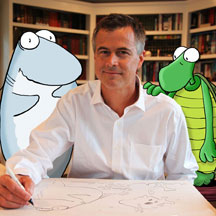
For the past 20 years, Toomey has been writing and drawing the daily comic strip, Sherman’s Lagoon, which is syndicated in over 250 newspapers in North America and in 30 foreign countries. Its cast of sea creatures includes a lazy great white shark, Sherman, his wife Megan, the sea turtle Fillmore, and the selfish hermit crab Hawthorne.

toomeywtoonsr

Toomey joked with the audience that he often speaks before younger crowds and at aquariums, so it was like a nightmare speaking in front of real marine biologists at Scripps, and he thanked the organizers for making his nightmare come true. Sherman’s Lagoon brings together two of his life-long passions—art and the sea—and he claimed to be “equally incompetent in both areas.”

Toomey holds a Masters of Arts from Stanford University, and recently, he earned a Masters of Environmental Management from Duke University. The son and grandson of engineers, Toomey said he considered going into engineering as well, but the ocean fascinated him at a young age, and he enjoyed doodling in class, sharing some of his earliest drawings of sharks.

When holding a globe in his hands, he said he realized that most of it consists of water and that, “if I had a boat, I could go anywhere.”

The audience followed as Toomey told a riveting story about learning to fly small airplanes and struggling with the stall recovery. To attempt the maneuver, he descended in a spiral from 6,000 feet, and while facing the rapidly approaching ocean below, he somehow managed to recover control. Afterward, on his way to the bar, he saw birds spiraling downward to eat with ease and natural skill, and he realized, “I’m being humbled by sparrows!”

He also became aware of the “incredible powers” of ocean creatures. For example, about Sherman he said, “he’s talented without motivation—like some human characters.” He could easily catch more prey if he weren’t so lazy. Fillmore, the turtle, has an incredible ability to navigate; he also has terrible pickup lines. He named many of his characters after streets in San Francisco, where he was living at the time.

photo 4

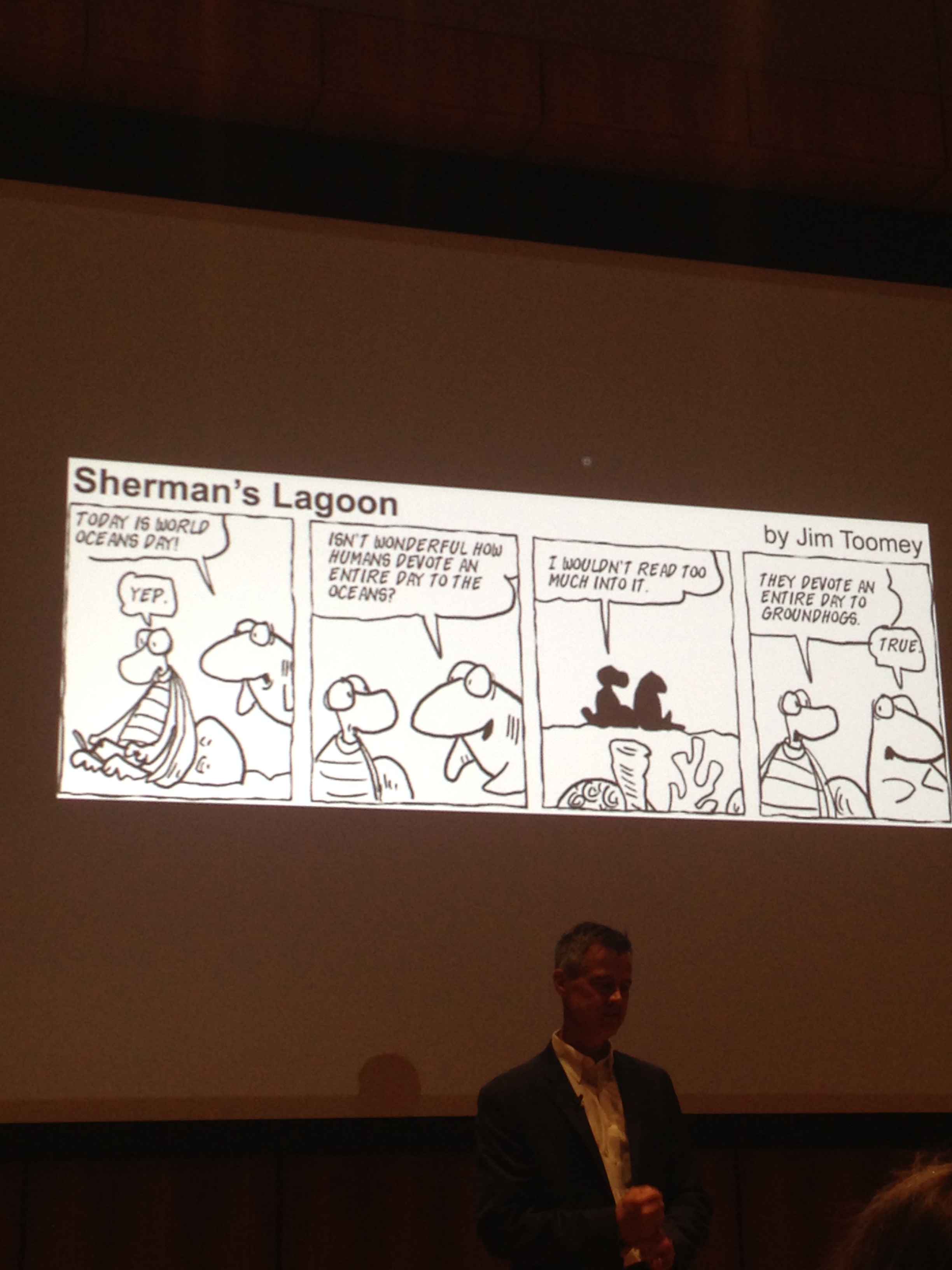
To make his cartoons, Toomey starts with the dialogue, “though for me, the hard part’s the writing.” He then demonstrated with Photoshop by drawing the strip above, as the audience watched it take shape on the screen. (He switched from pen and paper to drawing on the computer in 2002.)

With his cartoon, artistic abilities, and speaking skills, Toomey works toward communicating science and environmental issues to a wide audience. For example, he recently conveyed how ocean acidification affects sea creatures, including Sherman’s and other sharks’ ability to smell. He also drew a series of strips about the BP gulf oil spill.

Toomey’s comics and illustrations appear in educational materials published by the National Oceanic and Atmospheric Administration (NOAA), and he partnered with the United Nations Environmental Program to create videos to raise awareness of the importance of oceans and the coastal environment.

He also created a video about threatened coral reefs with Céline Cousteau, granddaughter of famed ocean explorer, Jacques Cousteau, and the World Resources Institute. Efforts like these earned him the Environmental Hero Award in 2000 and 2010, presented by NOAA, “for using art and humor to conserve and protect our marine heritage.”

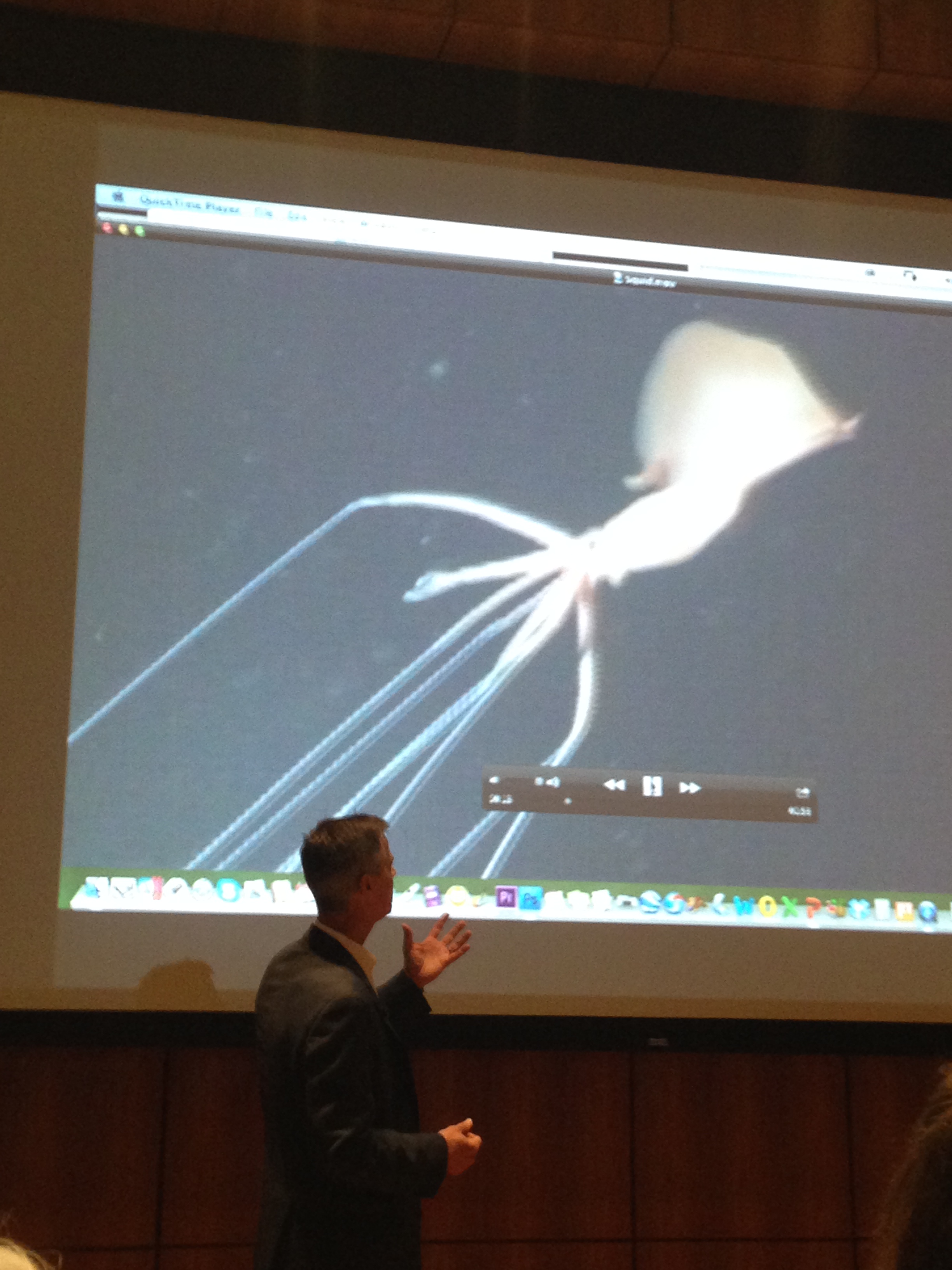
Last summer, Toomey dove to the depths of the Gulf of Mexico in Alvin, a Navy deep-ocean submersible vehicle. He described his experience and showed videos of the area teeming with life, including tube worms and a squid with incredibly long tentacles.

photo 1

The scientists aboard had technology to allow him to call his 10-year-old son’s science class in Annapolis, Maryland from the bottom of the ocean. He has plans to take his family on a boat for a year, and will describe their experiences with autobiographical comics.

Just as he advised scientists trying to engage with the public, “if you want to reach people, you need to be honest, tell a story, and connect with your audience in a human way.” Toomey reaches and inspires many people with his entertaining cartoons and as a passionate and outspoken advocate for ocean conservation.

Reporting from the American Astronomical Society Meeting: Impostor Syndrome, Publishing Changes, Sustainability

[This will be the first of a series of three posts about interesting events at the American Astronomical Society meeting. I plan on writing about some policy issues and scientific results in separate posts.]

When I was taking the train north, I fell asleep in northern California and awoke to sunrise in Oregon. The dry desert-like environment was replaced by the foggy forests and mountains one typically associates with the northwest. You won’t be surprised that it was rainy when we arrived.

promo_aas225_365x115_0

In any case, it was great to visit Seattle. Thousands of American and international astronomers, as well as educators and journalists, converged on the convention center downtown two weeks ago for a busy and exciting American Astronomical Society (AAS) meeting, which is annually one of the world’s largest astronomy meetings. I’ll describe a couple of the interesting sessions that involve scientists’ activities and concerns beyond scientific research here and that you might not have heard about elsewhere. (A separate post will address new scientific results and plenary sessions.)

You can view the AAS meeting’s program online, and you can check out everyone’s live-tweeting at #aas225 too.

Impostor Syndrome

Jessica Kirkpatrick, Caitlin Casey, and Kartik Sheth organized an excellent session on the impostor syndrome, and from what I could tell, it was very successful. They packed a large room, and graduate students as well as more senior scientists actively participated in the event. The organizers will soon be posting about it and about survey results on the Women in Astronomy blog, so watch for that.

Many people working in academia have experienced what some psychological researchers refer to as “impostor syndrome.” According to Langford & Clance (1993),

the impostor syndrome is defined by ‘believing that one’s accomplishments came about not through genuine ability, but as a result of having been lucky, having worked harder than others, and having manipulated other people’s impressions.’

As Rachel Ivie and Arnell Ephraim (American Institute of Physics) put it in 2011, “One key aspect of the imposter syndrome is the attribution of your own success to factors beyond your control, such as luck, while attributing the success of others to skill or knowledge.” Based on a survey, they argue that impostor syndrome manifests itself more strongly in women and therefore contributes to a higher
drop-out rate among women than men in astronomy.

Consequently, impostor syndrome is not just harmful to the health and success of the many people who experience it but is also harmful to science in general. Men (including me) experience impostor syndrome too, as do many minority groups such as black and Latino scientists. According to a survey of astronomers planning to the attend the AAS session, 56% of them are experiencing or have experienced severe impostor syndrome. This is clearly an issue we must try to address, and this involves identifying, assessing, and reversing the effects of impostor syndrome.

The session mostly consisted of the participants interacting with each other and going through a series of steps in which everyone talked about the sources of their impostor syndrome feelings and doubts, how they cope with them, and figuring out what to do in order to break the cycle. That last part involves great advice: “Start talking about it. Accept that this is normal. Rewrite your script. Think positive. Redefine success. Stop unrealistic comparisons. Self care. Find a support network. Fake it.”

In my opinion, all of this is great, and more sessions like this should be organized in future AAS meetings. Encouraging everyone and dealing with sources of doubt will help all scientists and students to gain confidence, and this is an important step toward achieving equality in STEM fields. In addition, people at universities and other educational institutions should make an earnest effort especially at the level of graduate programs to discuss and address these issues. Unfortunately, straight white privileged men seem to be the most unaware of these issues are also the people most often in leadership positions and most unlikely to have attended this session. Talking about these issues openly and consistently should help to make everyone more aware of them.

AAS Publishing

In a town hall-style session, people from the AAS publishing program described potential changes to the main journals, including the Astronomical Journal (AJ) and Astrophysical Journal (ApJ) (where I have published papers before). I expect that many of these changes will be officially announced in more detail later this year.

The details will mostly just interest professional scientists who frequently read and publish in these journals. There are plans to balance content in ApJ and AJ and to have one centralized portal for submitting papers. They will eventually do away with ApJ Supplements, as the distinction between them and regular ApJ papers is not as clear as before, and in any case, in an age where most papers are accessed online, the distinction is basically irrelevant. They are planning on technological enhancements in the journals in the future, such as including 3-dimensional figures, video abstracts, and staff support with graphics. Finally, rather than just having ApJ Letters, they proposed the creation of AAS letters, which would highlight the most important research of both the AJ and ApJ and which would not have as strict a length limit.

During the Q&A period, there were comments about open access and about the contrast between the AAS business model and that of the Royal Astronomical Society, which publishes the Monthly Notices of the RAS. In my personal opinion, I think open access journals are generally a good thing, and I prefer the MNRAS model, in which scientists do not have to pay to publish papers; in effect, the cost is paid by libraries and other institutions. In other publishing-related news, a new open-access scientific journal, Collabra, was just introduced in the UK, in which they plan to pay peer reviewers and editors.

Sustainability Efforts

As I wrote in my previous post, where I described my train trip to the AAS, I recently joined the AAS Sustainability Committee. The committee organized a splinter session called “Teach Climate Change!” that was led by James Lowenthal (Smith College), Katy Garmany (NOAO), and others. The session mainly consisted of: (1) discussions about how to teach climate change in an introductory astronomy course; (2) how astronomers can engage in public debate on climate change issues; and (3) how we can address sustainability through control of “light pollution,” though we ended up having not much time for that topic.

We had many lively discussions about these topics and audience members had many excellent ideas. Many people advocated for astronomers to engage in more public outreach programs, including with museums such as the California Academy of Sciences. When teaching a class, it’s useful to assess students’ views anonymously such as with “clickers,” and students can calculate their own carbon footprint on the Environmental Protection Agency’s (EPA’s) website, which would help make these issues more concrete. For interested readers, Lowenthal recommended the 2010 book, Merchants of Doubt, by Naomi Oreskes and Erik Conway, which compares climate change misinformation to that of the tobacco industry.

We will make more information and resources available in the future, and in the meantime, I suggest checking out the Sustainability Committee’s website and blog.

Other Sessions

I’ll just briefly mention a few more sessions at the AAS meeting. On the pre-meeting days, there sessions on astrostatistics and databases with R and Python codes, and one on “distributed collaboration” with Github. There also was a two-day teaching workshop organized by the Center for Astronomy Education; I attended it in 2012 and strongly recommended it. There were other teaching and outreach-related sessions too, including one about the Astronomy Ambassadors, but I only could attend a few of them this time. There were also a few events related to the International Year of Light. Finally, the Historical Astronomy Division (HAD) organized many interesting sessions I was sad to miss—you can’t go to everything when there are many parallel sessions—with titles such as “Astronomy and the First World War” and “Preserving the Material Legacy of the American Observatory Movement.”

Science Writing Awards

Finally, at a reception on 6th January, Rick Feinberg, the AAS Press Officer, announced the science writing awards. Alexandre Witze won the 2014 American Institute of Physics (AIP) Science Communications Award for her excellent article, “Spinning the Core” in Science News, on magnetic dynamos. Lee Billings won the award in the book category for his “Five Billion Years of Solitude”, published by Current/Penguin. I look forward to reading it!

You could say that I attended the AAS meeting as an astronomy researcher, astronomy policy analyst, and beginning science writer. Here’s my badge—for the first time, I was registered as both press and as an astronomer. It’s interesting seeing things from the other side.

B6jHchmCcAEa_o7

Reporting from the National Science Writers Meeting in Columbus, Ohio

As someone who’s still learning the ropes, I was excited to attend my first science writers meeting in Columbus this weekend. The National Association of Science Writers (NASW) and Council for the Advancement of Science Writing (CASW) organized the meeting, which included a nice variety of professional development workshops, briefings on the latest scientific research, and some field trips. It included a couple parties at a nearby brewery too, so I knew I was in good company, and I was happy to make some new friends and contacts. Here’s my name tag, which was a convenient little book of the program (and you can guess who I wrote down as my science hero):

photo 1

I’ll give you some highlights of a couple sessions that interested me. People “live-tweeted” most of the sessions too at #sciwri14.

NASW Meeting

One of the most useful sessions for me was the “pitch slam,” where writers had a single minute to pitch a story idea to editors, who gave feedback in real time. (The editors came from Slate, NPR, Popular Science, Discover, NOVA, Scientific American, and New York Times.) Speaking in front of the microphone understandably made people nervous, but I think I heard some pretty good pitches. Since I’m trained as a scientist, my approach to a science story or issue is to keep asking questions, but it sounds like editors want answers too! It’s important to be concise and clearly state at the beginning what the narrative thrust is and why the story is interesting. One should also describe the implications of the scientific result are why they’re surprising or new. Science stories need characters too, but that can come afterward. And one should keep in mind the audience of readers who would most likely read it, since some stories are more appropriate in particular news outlets rather than others. For example, Popular Science usually publishes “forward-looking” stories, so they’d be less interested in pieces focused on historical scientific advances.

The session on “diving into controversy and politics” was popular too, and it included Coral Davenport (New York Times), David Malakoff (Science Insider), and Nancy Shute (NPR). They spoke about hot-button topics in the news today—mainly climate change and Ebola. Davenport argued that climate change (along with energy and environment policy) is now a top-tier election issue and that this is mainly due to President Obama’s Environmental Protection Agency (EPA) regulations for coal-fired power plants, Tom Steyer’s money, and current weather events. She made a fairly convincing argument, but I think she overstated how new this development is, as fracking and the Keystone XL pipeline have been polarizing issues well before this midterm election campaign. Malakoff spoke about related topics and suggested that one should never pitch a “science policy” story (that is, one should frame the story differently). He pointed out that some stories are about a disagreement while others are about setting priorities. It’s important to state as clearly as possible who believes what and what their agenda is. We should ask whether the data and scientific results lead us to a particular policy prescription, and we should distinguish between scientists’ research and their opinions about which policy to advocate. We should write about the effects and impacts of particular policies, and then the reader can make his/her own decision.

The awards night took place on Saturday, and I was inspired to see so many excellent award-winning science writers. The winners included Azeen Ghorayshi for the Clark/Payne Award, Elisabeth Rosenthal for the Cohn Prize in medical science reporting, and the following Science in Society Journalism Award winners: Sheri Fink, Amy Harmon, Phil McKenna, Cally Carswell, and Charles Seife.

CASW Meeting

Getting back to climate change, on Sunday we toured the impressive Byrd Polar Research Center of Ohio State University. Lonnie Thompson and Ellen Mosley-Thompson, who have published numerous influential papers in Science and Nature, showed us the center and explained their research to us, which involves many fields but especially ice core climatology. Since the 1970s, they have conducted research at the poles as well as on mountains near the equator (in Peru and Tibet), where they drill down and pull up the ice cores, then bring them down the mountain on yaks and trucks and eventually store them in a huge freezer, which you can see below. (Our brief tour of the freezer was the only time I wore my hat on this trip.) Drs. Thompson and Mosley-Thompson use the ice cores to infer details about the climate and history of a particular regionTEXTsort of like using tree rings. For example, from ice cores taken from Kilimanjaro, they found evidence of a 300-year drought 4000 years ago (evidenced by less snow and ice accumulation), which would have had a dramatic effect on societies at the time. With rapid climate change, unfortunately the glaciers are rapidly retreating, but a silver lining is that they’ve uncovered 5000 to 6000-year-old plants!

photo 7

Finally, I had looked forward to the discussions of the ongoing BICEP2 controversy, and I was not disappointed. Marc Kamionkowski (Johns Hopkins University) gave an excellent overview of the basics of cosmology, the expanding universe, cosmic microwave background radiation (CMB), which is sort of an “afterglow of the Big Bang.” Many collaborations using different telescopes (including researchers at UC San Diego) seek to detect CMB “B-mode” polarization of the CMB due to primordial gravitational waves, which would constitute evidence supporting the rapid “inflation” of the early universe and would be a momentous discovery! At the BICEP2’s press conference in March at Harvard and in the preprint, the scientists did say “if confirmed…”, but of course everyone was excited about the implications of the result. However, new measurements from the Planck collaboration (see below) suggest that the polarization might not be due to the CMB’s gravitational waves but to foreground emission from dust grains in our own galaxy, though their calculation of the dust contribution is highly uncertain.

Map

A short discussion with Matthew Francis (freelance) and Betsy Mason (Wired) followed Kamionkowski’s talk, where they tackled questions that scientists and science communicators frequently face. Scientists want press attention and news outlets want headlines, so how should one describe and report caveats and uncertainties, especially when the implications (if confirmed) are so exciting? What is the best way to express skepticism of a particular aspect of a scientific result? And a question that I often ask: how can we communicate the messiness or “self-correcting” nature of science? In any case, we’ll all continue to follow the ongoing CMB debate in the scientific community and the media.

Now I’m looking forward to doing much more writing (and reading) and to participating in next year’s meeting!